Your creative output is not just a product of your mind and software. It is profoundly shaped by your physical environment, the light that illuminates your work, the soundscape that fills your headspace, and the atmospheric cues that guide your energy. The right ambient tools don’t just facilitate work; they architect the conditions for deep focus, accurate perception, and sustained inspiration.
Moving beyond the computer and desk, here are the environmental tools that transform a workspace into a creative sanctuary.
1. The Foundation of Sight: A High-Fidelity Task Light
Your most critical tool is your vision, and it is betrayed by poor lighting. Overhead office fluorescents cast harsh shadows and distort colors. A dim room forces eye strain. The solution is a dedicated, high-quality task light that brings the truth to light.
The Problem It Solves:Color Accuracy and Eye Fatigue. Standard lights have a low Color Rendering Index (CRI), a measure of how accurately a light source reveals the true colors of an object. A low CRI (below 80) will make that vibrant brand crimson you’re selecting look muddy or orange. It also creates glare and contrast issues on screens.
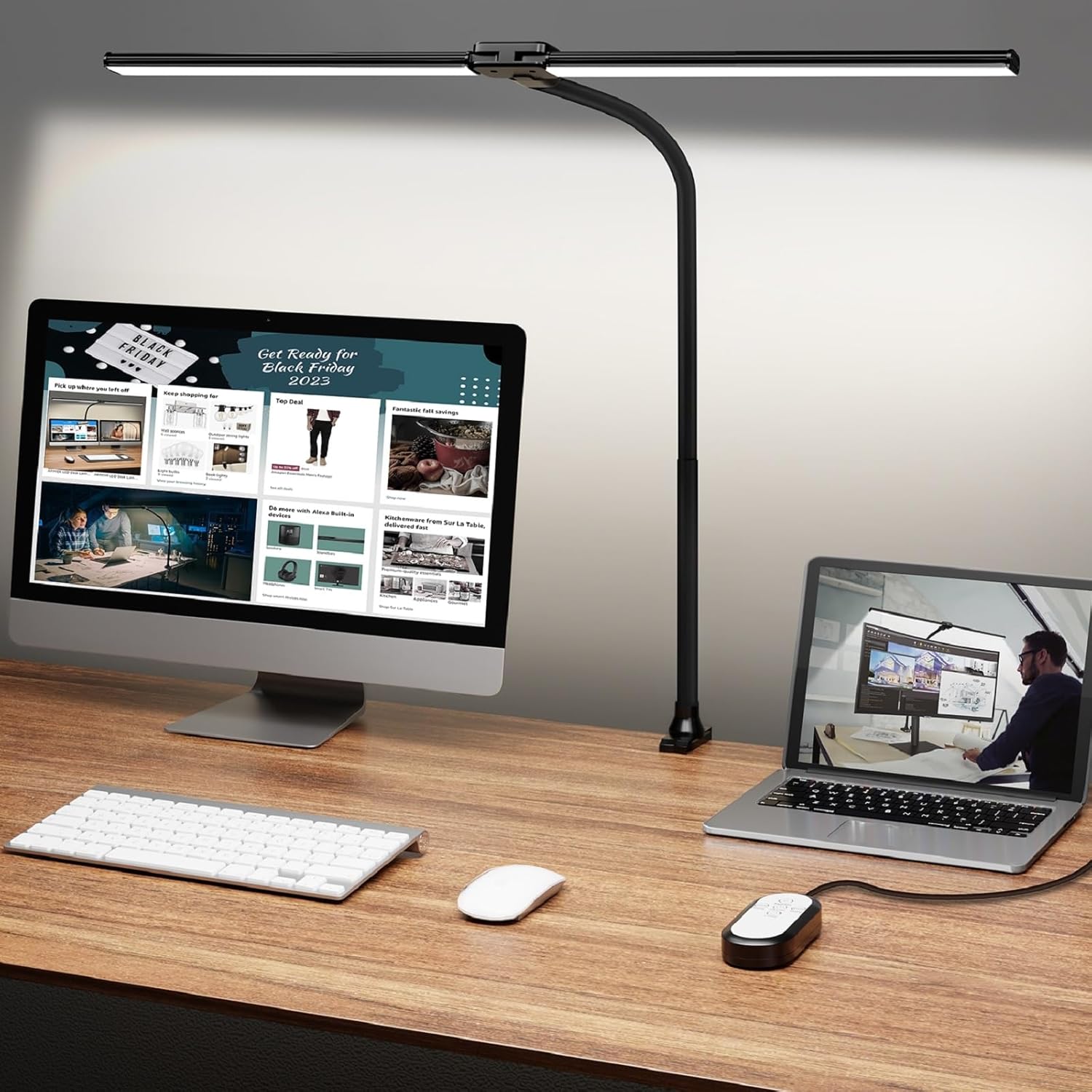
The Tool: BenQ ScreenBar Halo Task Light This isn’t a desk lamp. It’s a color-accurate illumination system. The BenQ ScreenBar Halo mounts directly to the top of your monitor, eliminating desk clutter.
Why It’s Essential: It provides a wide, even field of 95+ CRI light across your entire desk without creating screen glare. You see your physical sketches, your keyboard, and your desk surface in their true colors, perfectly matching the colors on your calibrated monitor. Its asymmetric optical design lights your work, not your screen. With adjustable color temperature (from warm to cool white) and brightness, you can tune it for focused afternoon work or a relaxed evening sketching session.
The Creative Impact: It eliminates the subconscious cognitive load of “squinting” at your work. You make confident color decisions. You work longer without headache or strain. Your physical and digital worlds exist in the same, true light.
2. The Architecture of Sound: Professional Noise-Canceling Headphones
Creative focus is a fragile state, shattered by a distant conversation, street noise, or office clatter. The ability to control your auditory environment is the ability to protect your flow state.
The Problem It Solves:Cognitive Fragmentation and Context Switching. Unwanted noise forces your brain to continually process irrelevant information, draining the mental energy reserved for complex visual problem-solving.
The Tool: Sony WH-1000XM5 Headphones The Sony WH-1000XM5s are the industry benchmark for a reason. They offer best-in-class active noise cancellation (ANC) that creates a cone of silence around your mind.
Why They’re Essential: With a single button, you can switch from “Focus Mode” (maximum ANC, total immersion in your work or a deep-focus playlist) to “Ambient Mode” (letting in environmental sound for a quick chat). Their sound quality is exceptional, making them perfect for critical listening to sound design, video edits, or simply getting lost in an inspiring soundtrack. Comfort is paramount for all-day wear, and these deliver.
The Creative Impact: You gain absolute control over your attention. You can create a sonic mood board with curated playlists for different tasks (e.g., instrumental for layout, upbeat for ideation). They signal to others that you’re in deep work. They are, effectively, a “Do Not Disturb” sign for your brain.
3. The Rhythm of the Day: Smart, Adaptive Lighting
Static lighting works against your body’s natural circadian rhythms. Your energy and creative mode change from the focused morning to the winding-down evening. Your lighting should flow with you.
The Problem It Solves:Atmospheric Rigidity and Energy Misalignment. A single, harsh light setting all day can lead to afternoon slumps and makes it difficult to mentally transition between different kinds of creative work (e.g., energetic brainstorming vs. meticulous detailing).
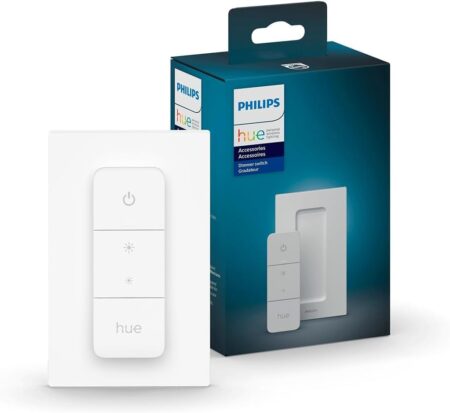
The Tool: Philips Hue Smart Dimmer Switch & Ecosystem The Philips Hue Dimmer Switch is the tactile remote for your room’s mood. Paired with smart bulbs, it unlocks environmental design.
Why It’s Essential: Mount it next to your desk. Program it with scenes: “Focus” (bright, cool white at 100%), “Creative Flow” (softer, neutral white at 80%), “Wind Down” (warm, dim amber for late-night work). With one click, you change the entire vibe of your studio. You can sync lights to your calendar (brighter for meetings, dimmer for solo work) or even to the sun’s position (warmer as the evening sets in).
The Creative Impact: Lighting becomes a proactive tool for managing creative energy. You use cool, bright light to attack a complex problem and warm, dim light to journal or sketch freely. It helps regulate your circadian rhythm, leading to better sleep and more consistent daily energy. It turns your space from a static office into a dynamic, responsive studio.
9:00 AM – Deep Work Sprint:BenQ Light on (Cool, 100%). Sony Headphones on (Noise Cancellation: Max, Playlist: “Deep Focus”). Hue Lights set to “Concentration” scene.
1:00 PM – Ideation & Brainstorming:BenQ Light adjusted (Neutral, 80%). Headphones switch to “Ambient Sound” for collaboration or an upbeat playlist. Hue Lights shift to “Flow” scene (softer, full spectrum).
6:00 PM – Reflective Work & Sketches:BenQ Light off or very low. Headphones on with calm, instrumental music. Hue Lights on “Sunset” scene (warm, dim amber). The environment now supports open, associative thinking.
The Philosophy: Environment as a Co-Creator
These tools do not do the creative work for you. They do something more important: they remove the friction between intention and action. They clear the static, both visual and auditory, so your mind can operate at its highest fidelity. By investing in the sensory quality of your environment, you are not just buying gadgets. You are engineering the optimal conditions for your own genius to emerge. You are crafting the stage, so you can perform your best work.
About the Author
Peter Makeshoff
Peter Makeshoff is the founder and main author of Designer Daily.