
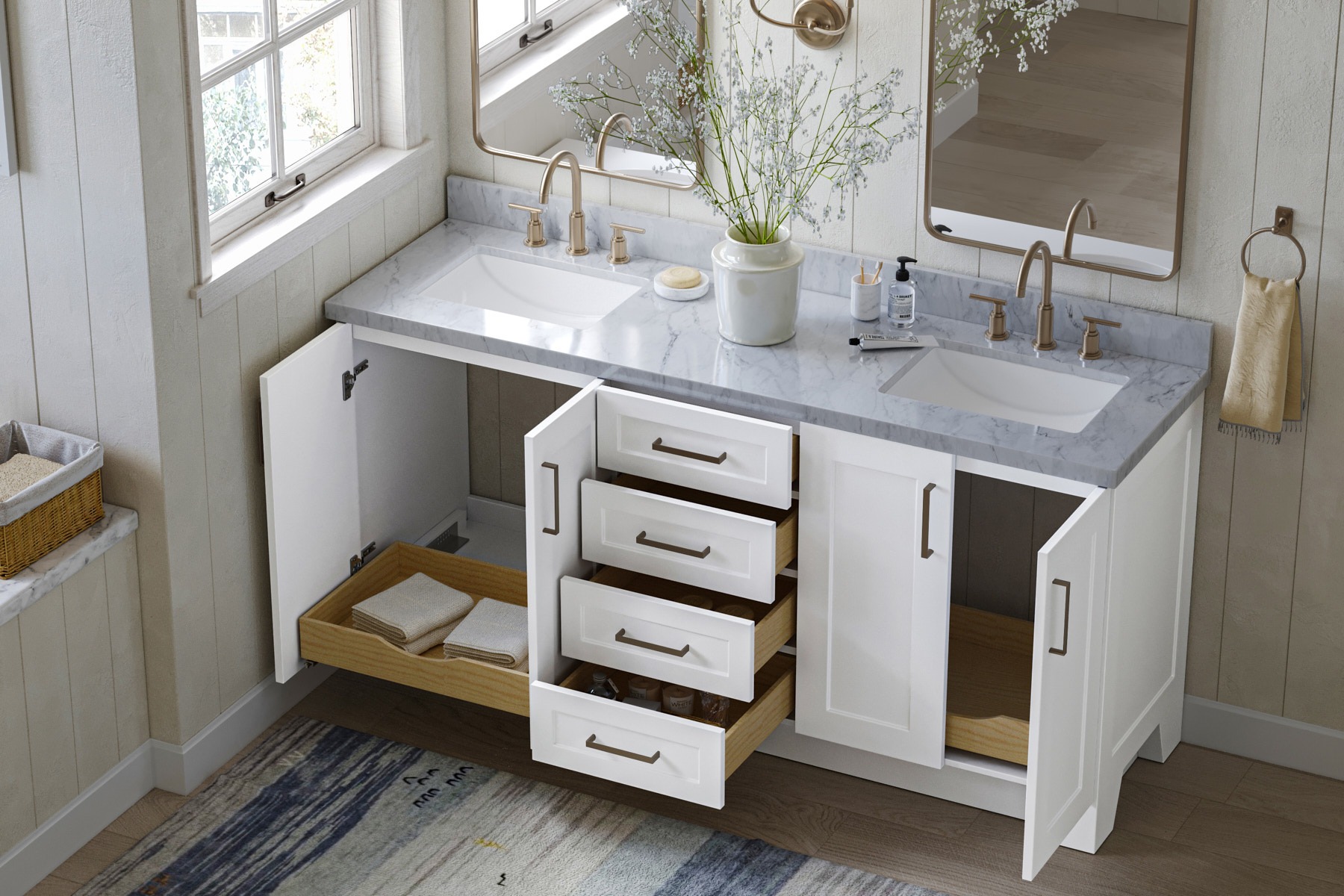
Most people pick a bathroom vanity the same way they pick a sofa. They see something they like, check if it fits, and buy it. But if you work in design, architecture, or any creative field, you already know that is not really how good spaces come together.
A vanity is not just a piece of furniture. It is the visual anchor of the entire bathroom. Get it right and everything else in the room feels intentional. Get it wrong and no amount of nice tile or good lighting will fix the imbalance you feel every time you walk in.
Proportion Is the First Thing to Get Right
Before color, before material, before anything else, proportion determines whether a bathroom feels considered or accidental.
A vanity too small for the wall it sits against creates dead space that feels unresolved. A vanity too large crowds the room and makes movement uncomfortable. The right size creates visual balance between the bathroom vanity, the wall space above it, and the floor around it.
A good rule is to leave roughly equal breathing room on each side. Measure twice, mock it up if you can, and trust your eye.
Negative Space Is What Makes a Room Feel Calm
Designers understand negative space instinctively. In a bathroom it shows up in the open floor area, the wall above the vanity, and the counter surface itself.
A bathroom vanity cabinet with too much visual detail or oversized hardware leaves no room for the eye to rest. The result is a bathroom that feels busy even when it is tidy.
Clean lined cabinetry with simple hardware lets the negative space do its job. The empty wall beside a floating vanity is not wasted space. It is breathing room that makes the piece feel deliberate rather than crammed in.
Material Contrast Creates Visual Depth
Flat rooms feel flat because everything reads the same. A matte cabinet paired with a polished countertop. A warm wood finish against cool white walls. A stone top sitting on a painted base. These contrasts give the eye something to move between and make a space feel layered and alive.
When choosing a bath vanity with a top, think about the relationship between the two materials. They do not need to match. They need to be complemented. A slight tension between materials is often what makes a bathroom feel designed rather than just decorated.
Color Pairing That Goes Beyond Safe Choices
Most vanities for bathrooms end up white, grey, or navy. Those are not bad choices, but they are default choices. Creative professionals tend to want something with a stronger point of view.
Warm greige cabinetry with unlacquered brass. Deep forest green against white oak. Charcoal with matte black hardware and a white stone top. These combinations take a position and commit to it, which is exactly what separates a well-designed bathroom from a generic one.
In smaller rooms, lighter tones reflect light and keep the space open. In larger bathrooms with good natural light, you can go darker without the room feeling closed in.
Function Has to Live Inside the Aesthetic
This is where design-forward choices often fall apart. Something looks stunning in photos and then fails completely in daily use. No real storage. Hardware that is beautiful but awkward to grip. A countertop material that marks easily.
Good design does not sacrifice function for looks. A bathroom sink and vanity combination should feel as good to use as it looks to see. Drawers that open smoothly. A sink depth that makes washing your face comfortable. A counter height that actually works for the people using it.
Where You Buy Matters as Much as What You Buy
Knowing where to buy bathroom vanity pieces that are genuinely design-quality takes patience, especially once you understand how much daily use they need to handle. Big box stores tend to focus on volume rather than curation, which can limit your options. In contrast, dedicated bath retailers and online specialty stores offer far more variety in finish, proportion, and material.
It also helps to choose stores that present their products in real room settings. Seeing a bathroom vanity styled within an actual space gives a much clearer sense of scale and finish than a plain white background ever could. If you’re working within a budget, focus on reviews and construction quality rather than just surface appeal.
Some brands manage to strike this balance well. ARIEL bath vanity collections, for example, combine thoughtful design with practical features. Their pieces are built with proper proportions and finishes, while also offering reliable storage, good sink depth, and durability for everyday use. For anyone aiming to create a curated yet functional bathroom, they’re worth considering.
Final Thoughts
A vanity chosen carefully lasts years and makes every single day in that room feel a little more like the space was made for you. Take your time, trust your eye, and prioritize proportion and material quality above everything else.
About the Author

Mirko Humbert
Mirko Humbert is the editor-in-chief and main author of Designer Daily and Typography Daily. He is also a graphic designer and the founder of WP Expert.