

March 15, 2026 – Some careers follow a neat line and then others wander, like a woman out for a walk on a summer day. Designer Dhvani Shah has been more of a wanderer. She started out in the business world, cut across advertising into branding and packaging, and more recently got involved in redesigning digital public systems so that they work so smoothly, you barely notice.
“My career has taken me from advertising art direction to brand and packaging design to UX/UI for large-scale digital systems,” says Dhvani. “At every stop, the core work has been the same, making things that look right, work right, and serve real people.”
UX and UI
Dhvani, whose name means ‘sound’ in Sanskrit, could be said to embody many of the meanings of her name. Sound as in balanced, pragmatic, dependable. Sound as in something that carries and resonates. She has brought her balanced, resonant approach to various professional roles.
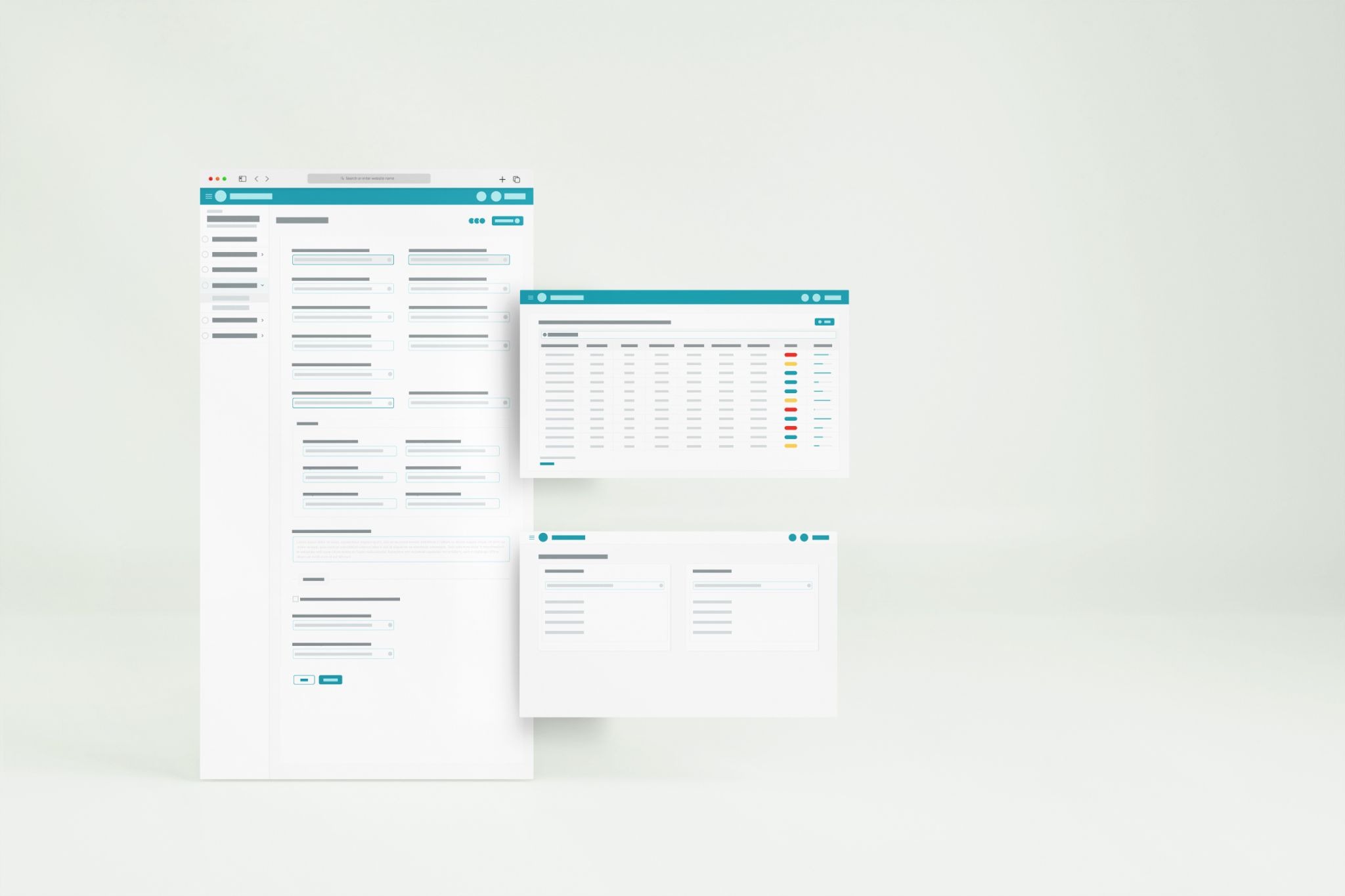
Currently, she works as a user experience (UX) and interface designer (UI) and is focused on modernizing digital systems for the US public sector. For Dhvani, this involves a day-to-day mix of research and craft. She combines user interviews and usability testing to determine where a system is failing. She then translates those findings into wireframes, prototypes, mockups, and interaction patterns.
At hand is a major overhaul of a system used by early childhood programs across the US. Dhvani also recently redesigned the UI of a complex underemployment insurance system. Before that was the modernization of a legacy compliance platform for financial institutions last updated in the 1990s. She says the work, while challenging, helped her to improve her craft.
First lessons
To hear Dhvani tell it, design has always been on the table. It’s been a part of her life for as long as she can remember. She was born and raised in India, where her family runs a cutlery manufacturing business. “My dad has been asking my opinion on product design since I was young,” recalls Dhvani. “That early exposure gave me an intuitive sense that how something looks and how something works are never separate questions.”
Even though she had a designer’s eye, Dhvani went first into business administration, studying it in college. She made sure her presentations were polished and designed to stand out. She took on a role as a business development specialist, but design kept drawing her in. “I kept gravitating toward the visual and creative side of the work, rather than the business side,” she remembers. Eventually, she had something of a reckoning and decided to dive into design.
“I was in the wrong field,” says Dhvani. “I needed to build the skills to match the instinct I’d always had.” She went to Miami Ad School, where her professional design journey commenced.
Big-canvas creative work
After her u-turn into design, Dhvani went to Ogilvy Mumbai, the headquarters and largest office of Ogilvy India, the prominent integrated creative, advertising, and public relations agency. There she took on the position of art director, working across TV, print digital, and out-of-home campaigns for brands like Cadbury, Unilever, and Tata Salt.
“This was big-canvas creative work,” says Dhvani. “It involved conceptualizing designs, developing brand books, designing 360-degree campaigns, and producing everything from billboards to social media assets.”
From there, she moved on to Ramson Industries, an Indian manufacturing company that specializes in producing stainless steel cutlery, flatware, and kitchenware. Dhvani served as lead designer. “This was a shift away from agency life and toward owning a brand’s entire visual identity,” she says. “It was the kind of role where you touch everything, from the label on a box to the homepage of the website and sometimes even product designs,” she remembers.

The shift to systems
After some time as a lead designer, Dhvani was hungry for new challenges. She took one on when she moved to the US to pursue a master’s degree in social design at the Maryland Institute College of Art (MICA). It was a move into a new discipline, and she also had to adjust to living in a new country. But it was the right move.
“That decision gave me the design research skills and systems thinking framework I now use every day,” remarks Dhvani.
In Dhvani’s words, going from advertising, where designers are taught to optimize for quick, creative impact to designing government systems, a more cumbersome administrative process with serious consequences should it go wrong, proved to be her “hardest professional shift.”
But making the transition, she feels, made me a better designer in the end. It taught Dhvani to invest in research before she started designing, to advocate for good design in environments that don’t always prioritize it, and to appreciate that some of the most impactful design work is the kind nobody notices, be it a form that’s easier to fill out, a workflow that eliminates an unnecessary step, or a color contrast that makes text readable for someone who couldn’t read it before.
Growing as a designer
And Dhvani now aims to continue that trajectory, to grow as a designer in the space where design, technology, and public impact overlap. “I have found what I love in UX design, and I want to continue taking on more complex modernization challenges,” she says. “There’s something deeply satisfying about taking a system that was designed decades ago and making it work for the people who actually use it today.”
Looking ahead, Dhvani says she is open to taking on more speaking opportunities and sharing what she’s learned from working across advertising, branding, product design, and UX. “The through-line in my career has always been the same: find the human problem, then find the simple, human-centered design solution,” she says. “I want to bring that perspective to more designers, especially those at the beginning of their careers who are figuring out which direction to take.”
About the Author

Peter Makeshoff
Peter Makeshoff is the founder and main author of Designer Daily.