
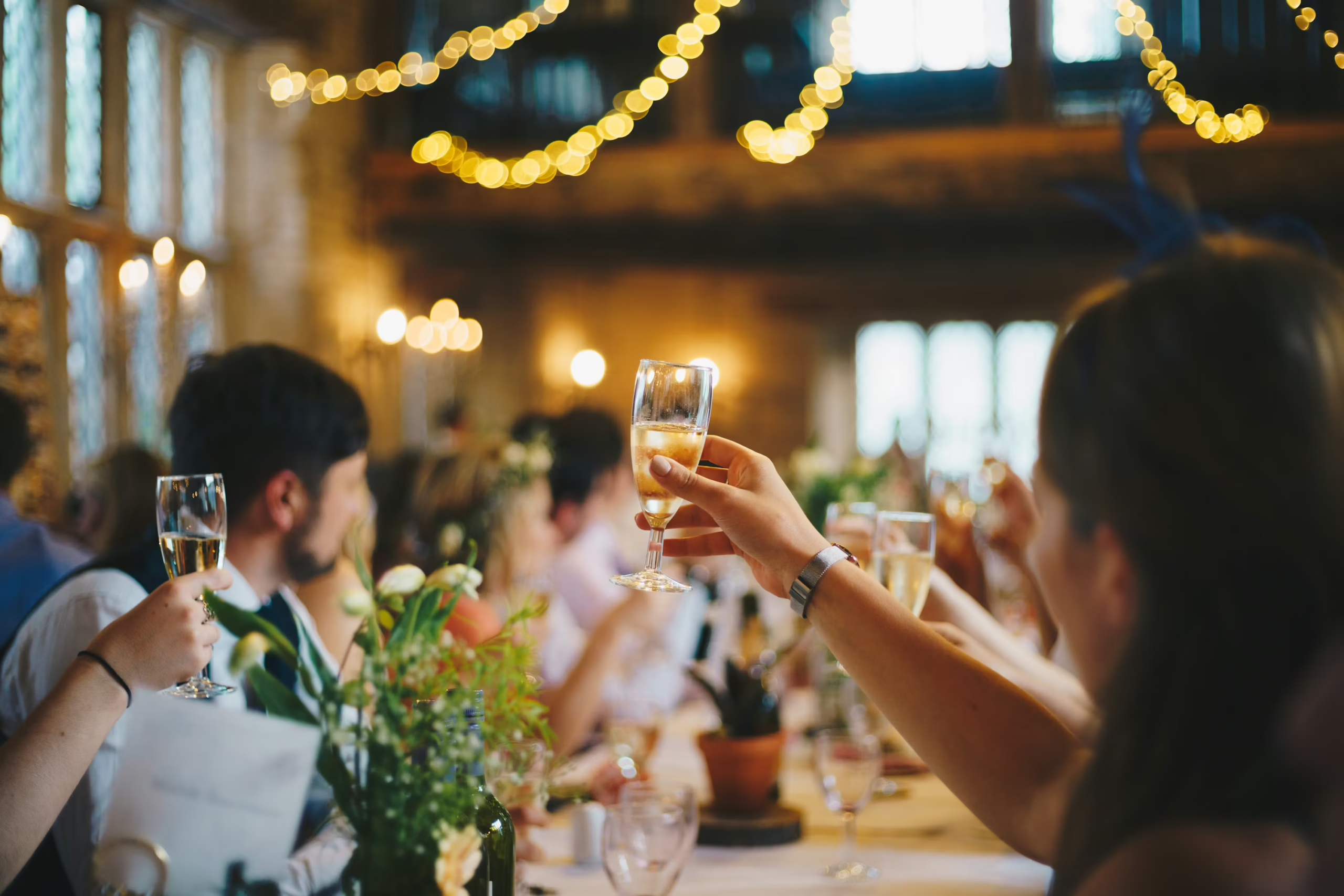
Event photography is unlike any other genre. You do not get a second chance. The handshake, the award presentation, the first dance, the keynote speaker’s punchline, these moments happen once. Miss them, and they are gone forever. You cannot ask for a reshoot.
Here is how to prepare, position, and shoot so you never miss the critical moment.
Pre-Event Preparation
The shoot does not start when you raise the camera. It starts when you accept the booking.
Research the schedule. Get the run of show before the event begins. Know when key moments are scheduled. Note transitions, the walk from the green room to the stage, the handoff of the award, the toast before dinner. Critical moments often happen between scheduled items, not during them.
Visit the venue. Shoot at the same time of day as the event. Note where the light falls. Identify backup locations for portraits. Find power outlets. Test your wireless trigger range. Discover the best angles for the main stage. A venue walkthrough the day before saves hundreds of missed shots.
Pack redundancies. Two camera bodies. Extra batteries charged and labeled. Memory cards formatted and organized. A backup lens for every critical focal length. Event photography is not the time to travel light. It is the time to travel prepared.
Gear Essentials for Event Work
Event photography demands speed and reliability over image quality extremes.
Two camera bodies. One with a 24-70mm f/2.8 for general coverage. One with a 70-200mm f/2.8 for stage moments and candid distance shots. Switching lenses during critical moments means missing them. Two bodies eliminate lens swaps.
Fast glass. F/2.8 or faster. Event lighting is rarely ideal. Fast apertures let you shoot at lower ISOs and faster shutter speeds. They also create separation between your subject and distracting backgrounds.
On-camera flash with a bounce card. Direct flash is harsh and unflattering. Bounced flash is soft and professional. A flash that tilts and swivels lets you bounce off ceilings, walls, or a handheld reflector.
Enough memory. Shoot dual cards (two slots writing simultaneously) for redundancy. A card failure should never lose a client’s images. Capacity for at least 2,000 RAW images per card.
Camera Settings That Work in Any Light
Event lighting changes constantly. You will move from a dimly lit cocktail hour to a brightly lit stage to a candlelit dinner. Your settings must adapt quickly.
Shoot in manual mode with Auto ISO. Set your shutter speed and aperture for the moment. Let the ISO float within a range you are comfortable with. This gives you control over motion and depth of field while letting the camera handle exposure fluctuations.
Shutter speed priority: 1/250 for moving subjects (speakers gesturing, award handoffs). 1/125 for posed subjects. 1/60 for static scenes. Do not go below 1/60 for people unless they are completely still.
Aperture: F/4 to f/5.6 for group shots where multiple faces need to be sharp. F/2.8 for individual portraits with blurred backgrounds. F/8 for stage setups where the entire scene matters.
Use back-button focus. Separate focusing from the shutter button. Your thumb focuses. Your index finger shoots. This prevents the camera from refocusing when you recompose or when someone walks between you and the subject.
Continuous focus mode. Servo or AF-C. People move. Even people who look still sway, blink, and shift weight. Continuous focus tracks them.
Positioning and Anticipation
Great event photography is 30% skill and 70% being in the right place at the right time.
Know where to stand. For a keynote speech, position yourself facing the speaker slightly off-center. Do not block the audience’s view. For an award handoff, stand perpendicular to the handshake line, capturing both faces in profile. For a first dance, stay low and shoot from the edge of the floor, not the center.
Watch body language. A speaker adjusts their notes. That is not the moment. A speaker looks up, takes a breath, and begins speaking. That is the moment. A couple leans toward each other before a kiss. That is the warning. Watch for the wind-up, then shoot the release.
Anticipate the peak. The peak of action is often just after the anticipated moment. The handshake is good. The embrace after the handshake is better. The laugh after the toast is more genuine than the toast itself. Stay ready for three to five seconds after the obvious moment passes.
Flash Techniques for Events
On-camera flash is a tool, not a crutch. Used poorly, it announces your presence and ruins the atmosphere. Used well, it is invisible.
Bounce flash. Point the flash head at the ceiling or a wall. The light spreads and softens. The result looks natural. Direct flash looks like a mugshot.
Use a bounce card or diffuser. When ceilings are too high or colored (bounce turns everything yellow), a small white card attached to the flash creates soft, directional light. A MagBounce or a simple index card rubber-banded to the flash head works.
Drag the shutter. Set your shutter speed slower than normal (1/30 to 1/60). The flash freezes your subject. The slow shutter lets ambient light fill the background. The result looks like an ambient room, not a dark cave with a floating subject.
Turn off the flash when possible. Candid moments feel candid because there is no flash announcing them. Bump your ISO (3200-6400 is acceptable on modern cameras) and shoot ambient. The grain is preferable to the glare.
Shooting the Details
Clients want photos of the people. They also want photos of the details they paid for. The floral arrangements, the place settings, the signage, the favors, the venue’s architecture.
Shoot details during quiet moments. Before guests arrive. During meal service when little else is happening. After the main event when the room empties. Detail shots require different settings: slower shutter, smaller aperture (f/5.6 to f/8), and careful composition.
After the Event
The shoot is not finished when the event ends. Back up your images immediately. Two locations. One local drive. One cloud or offsite drive.
Cull ruthlessly. Deliver only the best. The client does not need 2,000 images. They need 200 excellent images. Delete duplicates, soft focus shots, bad expressions, and moments that did not work.
Deliver within the promised timeframe. Event photography is time-sensitive. The client wants to share images while the event is still relevant. A week is standard. Two weeks is pushing. A month is unacceptable.
The Bottom Line
Event photography is anticipation. You cannot react to the moment because by the time you react, the moment has passed. You must anticipate. Know where to stand. Know what to watch for. Know your settings so well that you do not think about them.
The critical moment is not luck. It is preparation, positioning, and practice. Miss fewer shots. Deliver more value. And always have a second card slot.
About the Author
Peter Makeshoff
Peter Makeshoff is the founder and main author of Designer Daily.