
Executive headshots in 2026: the real price of looking like a pro
Remote work has turned LinkedIn feeds into our digital first impression, and executives everywhere got the memo. Slick portraits open doors, close deals, and shape how investors size you up. In 2026, a single headshot isn’t vanity—it’s table stakes for credibility.
Surveys back up the scramble. A Tech.co study found that 44 percent of job seekers plan to use AI-generated headshots, and 75 percent of recruiters say a polished AI image is perfectly acceptable. The message is loud: the market loves a sharp photo, no matter how it’s made.
Prices, however, are all over the map. A quick studio session in San Francisco can run $450, while an AI platform like Magic Studio promises 100 ready-to-post images for just $49. That gulf leaves most of us wondering what we’re paying for.
That’s exactly what we’ll unpack. We’ll compare every major path—traditional studios, on-site corporate shoots, AI generators, and high-touch branding agencies—so you can match the spend to your business goals instead of guessing.
Settle in. By the end, you’ll know where the dollars hide, which corners are safe to cut, and how to lock in a headshot strategy that builds trust without torching the budget. Let’s start with the four provider types competing for your camera time.
Traditional studio sessions
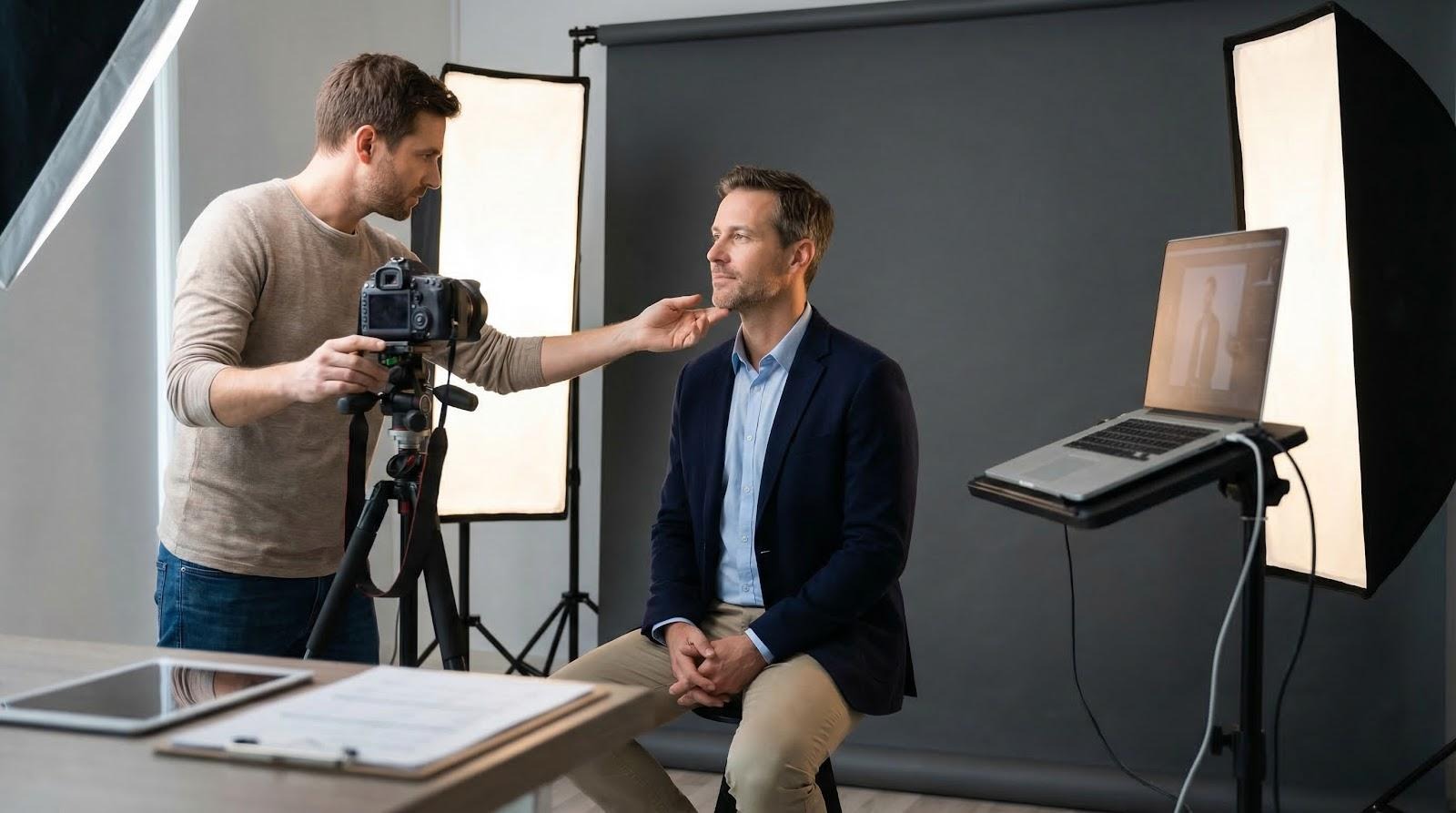
Walk into a brick-and-mortar studio, and you can hear soft boxes humming, see backdrops rolled tight, and feel a photographer nudging your chin until the light lands just right. That craft comes with sticker shock.
Across major U.S. cities, a solid studio package now sits in the $300–$500 range before extras, according to EasyHeadshots. The base fee buys 30–60 minutes in front of the camera, professional lighting, and a handful of proof shots. It rarely covers the file you later post online.
After the shoot, the meter restarts. Studios charge per retouched image, often $25 to $100 each, because editing time is billable talent. Want a second outfit? That’s a new “look” and usually another fee. Rushed delivery, background swaps, or full commercial rights add more line items.
Even so, many executives swear by the in-person method. A seasoned photographer can coax out confidence that AI tools miss, adjust posing on the fly, and fix a crooked tie before the shutter clicks. For people who sell trust face-to-face, such as fund managers, keynote speakers, or media CEOs, those subtleties justify the premium.
For purely digital roles or large teams, though, the math tilts the other way. As we move through the remaining provider types, remember that $300 floor. It’s the benchmark every alternative tries to beat.
Corporate on-site group sessions
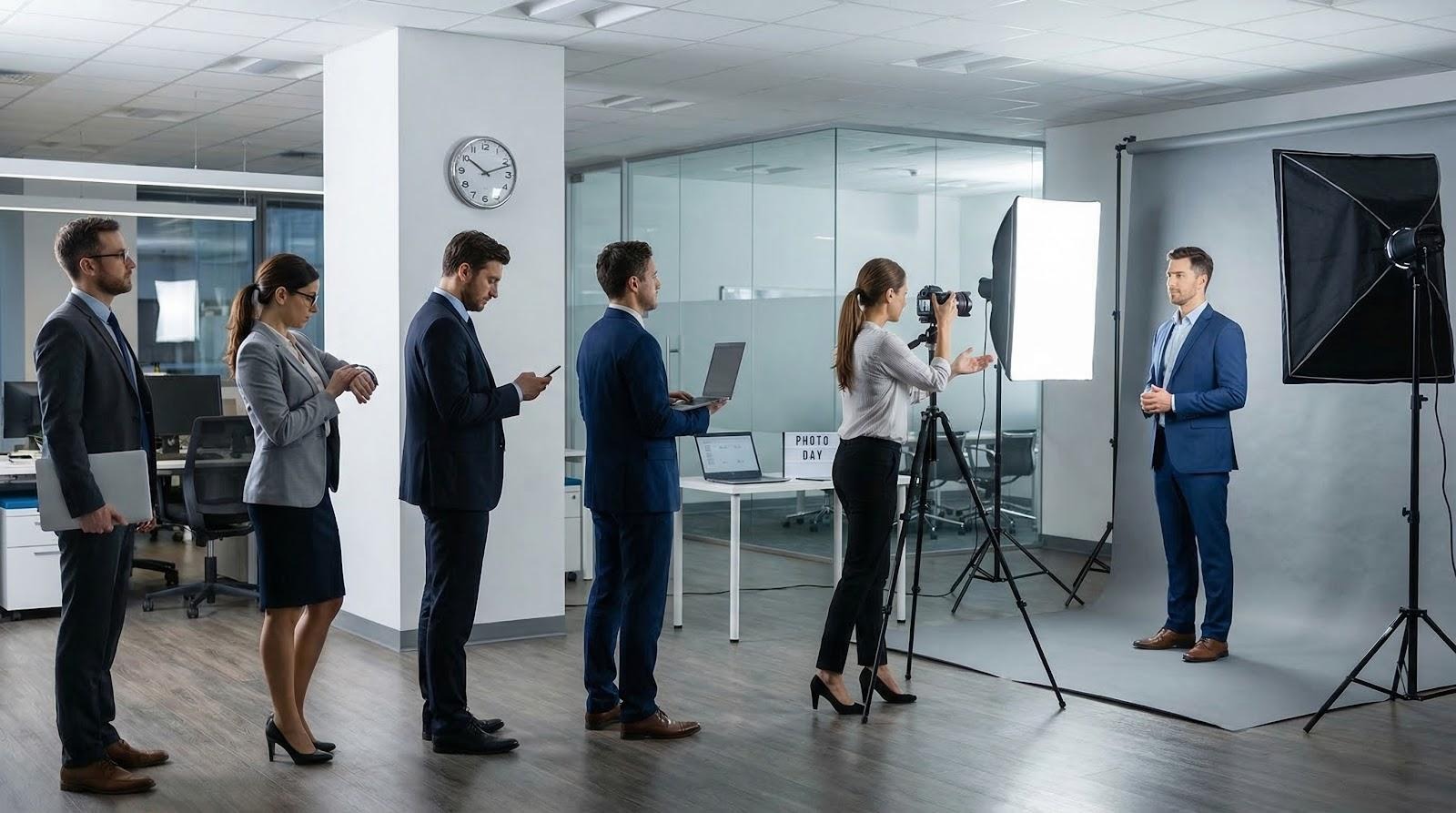
Scheduling a photographer to wheel studio lights into your office feels efficient at first glance. Everyone lines up, smiles, and gets back to work, right?
Reality costs more. Traditional on-site packages in major hubs average $200–$600 per person, reports TeamShotsPro. A 50-employee shoot can cross $20,000 once setup fees, travel, and editing hit the invoice.
Then come the invisible drains. Each employee burns two to three hours moving between desk, makeup chair, and photographer. At $50 an hour in loaded salary, that downtime alone adds another $100–$150 per head. TeamShotsPro tracked one consulting firm that lost $22,500 in productivity before paying a single photo fee.
Hidden line items pile up fast: rush edits for the CEO’s press kit, commercial usage rights so marketing can run ads, even extra lighting for a windowless boardroom. The supposed bulk rate quickly stops looking cheap.
Corporate shoots still make sense when you need brand-consistent portraits on the same backdrop and have everyone in one place, such as annual report day at headquarters. Just budget for the soft costs of coordination and brace for the true, all-in number, not the teaser rate that lands in your inbox.
AI headshot platforms
Upload a few selfies, grab a coffee, and within thirty minutes you’ll receive dozens of polished portraits. That’s the promise, and for many, the reality of AI headshot generators.
Pricing steals the spotlight. Services start around $19 and top out near $49 for 100 or more images. One standout platform, Magic Studio, turns about ten casual selfies into 100 executive-grade portraits in roughly fifteen minutes, placing it squarely in that sweet spot. Compared with the $300 studio benchmark, the gap is hard to ignore.
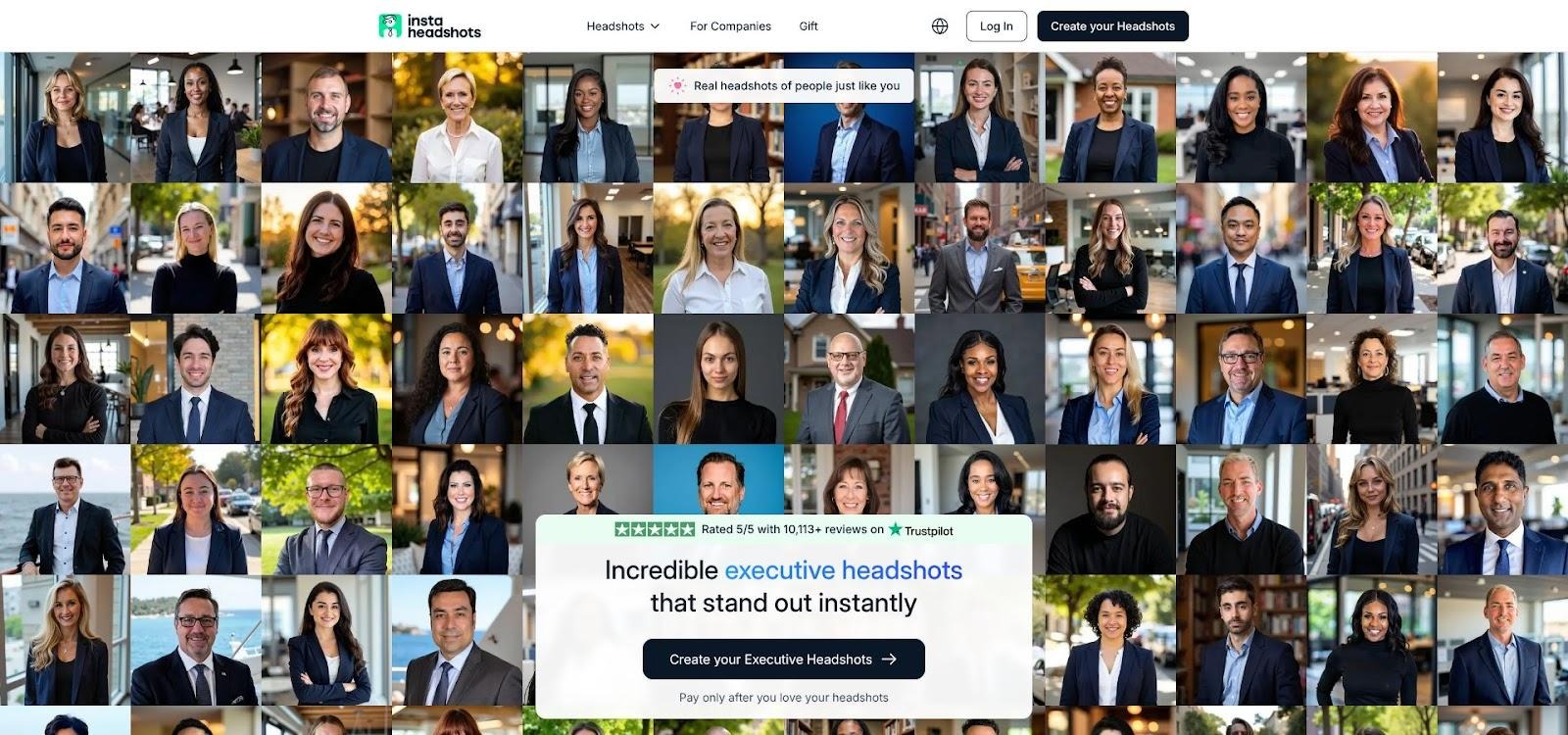
Magic Studio AI headshot platform pricing and executive portraits dashboard
Numbers at scale back that headline price. Magic Studio’s team portal lists more than 20 million professional headshots generated for over 200,000 users.
A built-in dashboard emails upload links, trains a custom model for each person, and returns 100 PNGs in roughly 15 minutes—fast enough for HR to refresh portraits during a lunch break instead of blocking off an entire workday.
Speed follows close behind. Because the system never books a calendar slot, you can refresh your portrait the moment you shave the beard or change the hairstyle. Full commercial rights are usually baked into the sticker price, so marketing can drop the image into presentations, investor decks, or paid ads without legal wrangling.
Quality has surged over the past year. Surveys show recruiters now accept high-end AI headshots with the same confidence they show traditional photos, especially for online profiles viewed at thumbnail size. Consistency is the one caveat: upload seven grainy selfies and you’ll get grainy art back. A short preset checklist solves that issue: use daylight, show multiple angles, and avoid busy backgrounds to tip the odds in your favor.
For solo founders, remote teams, and fast-moving startups, AI is today’s fastest route to a credible executive image. Still, the next section will show why price alone is only half the story.
Branding agencies and creative services
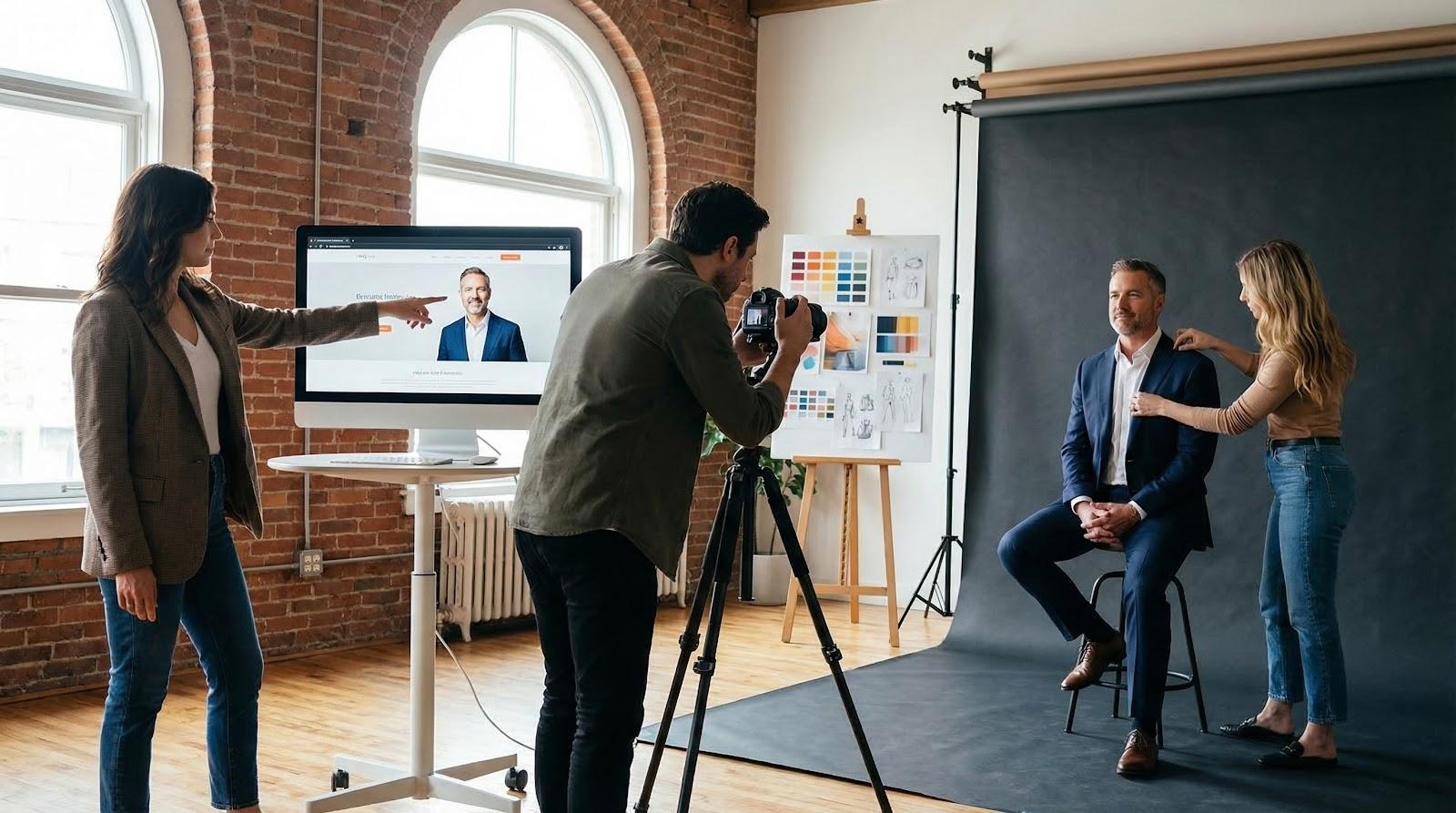
When a headshot turns into a brand asset, companies call the storytellers. Creative agencies bundle portrait sessions with identity workshops, social banners, and sometimes a sizzle reel that follows the CEO through the office.
That level of coordination starts around $800 and can break the $2,000 ceiling per person. The fee covers pre-production mood boards, professional styling, a senior art director on set, and a retoucher who polishes every pixel.
Agencies earn their keep when visual cohesion is non-negotiable. Investor roadshows, IPO filings, or Fortune cover pitches demand one look that flows through print, video, and keynote slides. Because an agency controls the entire pipeline, brand colors, lighting, and crop ratios match everywhere the photo appears.
The trade-off is cadence. These shoots run on agency timelines, not executive whim. Booking, concept approval, and post-production can stretch for weeks. If you only need a fresh LinkedIn avatar by Friday, this isn’t your lane.
Treat agency headshots as a marketing investment, not a simple photo expense. You’re paying for strategy, narrative, and the peace of mind that every public touchpoint carries the same visual note. That peace, like most luxuries, commands a premium.
Key cost factors and line-item breakdown
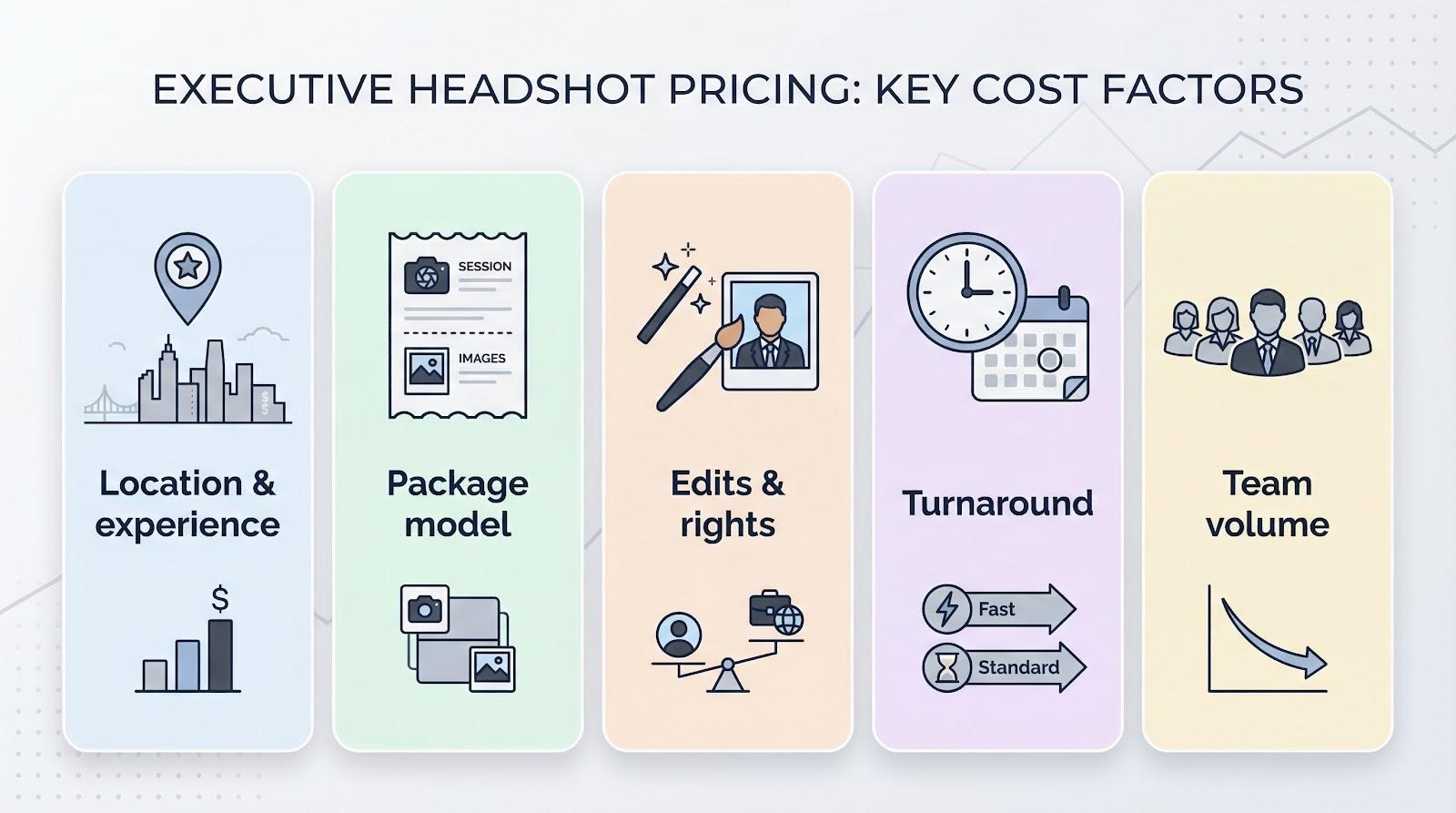
Location and photographer experience
Big-city glamour adds a surcharge. Studios in New York, San Francisco, and Los Angeles often add 50–100 percent to the bill, pushing a $300 session toward $600. Regional markets hover around $150–$350 for the same service, proof that a ZIP code alone can double your spend.
Reputation stacks on top of geography. A photographer with Fortune 500 logos in the portfolio may charge $500–$1,200 a sitting. A hobbyist advertising on community boards might shoot for $75 plus gas money. The skill gap shows up in lighting, direction, and post-production finesse, but the cost gap matters when you’re hiring for an entire leadership bench.
Combine both factors and the spread widens fast. A rising executive in Omaha can secure a polished portrait for the price of a single licensed image in Manhattan. Before you book, ask whether the extra shine of a marquee studio will translate into measurable business value, or if a mid-tier pro outside the high-rent district can deliver everything your LinkedIn profile needs at half the rate.
Package and pricing models
Most photographers split quotes in two: a “session fee” and a “selection fee.” The session fee covers time in studio and basic lighting, the cover charge to walk in the door. In most markets that ticket runs $200–$500.
The second fee starts when you pick favourites. Studios either bill per finished image or per “look.” A common arrangement is three retouched photos for $125 total. Need a fourth? That single file can add another $40. If you switch from blazer to hoodie mid-shoot, many pros label that a new look and restart the meter.
Extras show up quietly. Same-day turnaround costs editors sleep and you $100–$300. Hair and makeup artists add $75–$200 per sitter but save time in Photoshop. Rush delivery plus extra retouches can nearly double the original quote.
AI and DIY options dodge most of these à-la-carte charges because everything is baked into one flat fee. That simplicity helps, but it also hides the craft that studio photographers price out line by line. Pay only for what you need, and read every line before you sign.
Image edits and usage rights
The camera captures reality; retouching decides how polished that reality appears to the world. Basic blemish cleanup is often bundled into the session price, but advanced edits such as skin smoothing, stray-hair removal, and backdrop swaps run $25 to $100 per file and scale with the image count.
Licensing adds another layer of fine print. Many photographers quote personal-use rights by default. That lets you post on LinkedIn but bars the marketing team from dropping the photo on a billboard. Unlocking full commercial rights can add $100–$500 to the bill. Skip that clause and you risk an awkward cease-and-desist long after the shoot.
AI vendors flip the story. Because no human shutter was pressed, most platforms grant unlimited usage in the base fee. You can print five-foot posters or run paid social without returning to a lawyer’s inbox. Studios can match that generosity, but only if you negotiate before signing. Always confirm in writing where and how you’ll use the image. A ten-minute contract check today can save thousands in relicensing fees tomorrow.
Turnaround time and convenience
Time is money, and headshots spend both. Traditional studios book one to three weeks out, then spend another week polishing files. Need images tomorrow? Rush editing tacks on $100–$300 and rarely covers everyone on a large team.
Corporate on-site shoots reduce travel, but not the calendar. Each employee still loses two to six work hours between prep, waiting, and review—a hidden cost that can eclipse the photographer’s invoice.
AI turns the timeline upside down. Upload a batch of selfies before lunch and download finished portraits before your next meeting. No commute, no rescheduling when rain hits, and no productivity dip across the team. That immediacy is why fast-growing startups now refresh profiles quarterly instead of annually; speed keeps branding aligned with reality.
When deadlines rule, the fastest channel often wins, even if raw image quality lands a notch below a luxury studio’s best shot. The key is matching turnaround to the stakes. A global press tour can wait a week for bespoke lighting; a hiring sprint on LinkedIn can’t.
Team discounts and volume deals
Bulk buying changes the math. Photographers cut per-person rates when you guarantee a full day of back-to-back faces. A ten-person shoot might drop to $79 each, and a fifty-person lineup can slip below $60. The catch: savings hinge on flawless logistics. One late executive can stall the entire schedule and erase the discount in overtime fees.
AI services offer an even cleaner model. Many platforms sell “credits” in packs: pay for fifty, send a link to every employee, and watch portraits roll in at roughly $20 per head. No calendar coordination, no studio commute, and no risk that someone forgets it’s photo day.
If you manage a hybrid or global workforce, the AI bundle is hard to beat. For headquarters teams that need identical lighting and a shared group shot, a well-oiled on-site session still wins on brand consistency. Just run the numbers with lost productivity included; that invisible line item often tips the scale back toward virtual pixels.
Studio, AI, and hybrid costs side by side
To see where the dollars land, let’s line the three main paths shoulder to shoulder. Numbers below reflect national averages from 2026 pricing surveys.
| Method | Up-front cost | Images included | Per-image average | Turnaround |
| Traditional studio | $300 session fee + $125 for 3 retouched files | 3 | $142 | 1–3 weeks |
| AI platform | $49 flat for 100 files | 100 | $0.49 | 30 minutes |
| DIY hybrid (smartphone + paid retoucher) | $0 shoot + $25 per outsourced edit × 5 | 5 | $25 | 1–2 days |
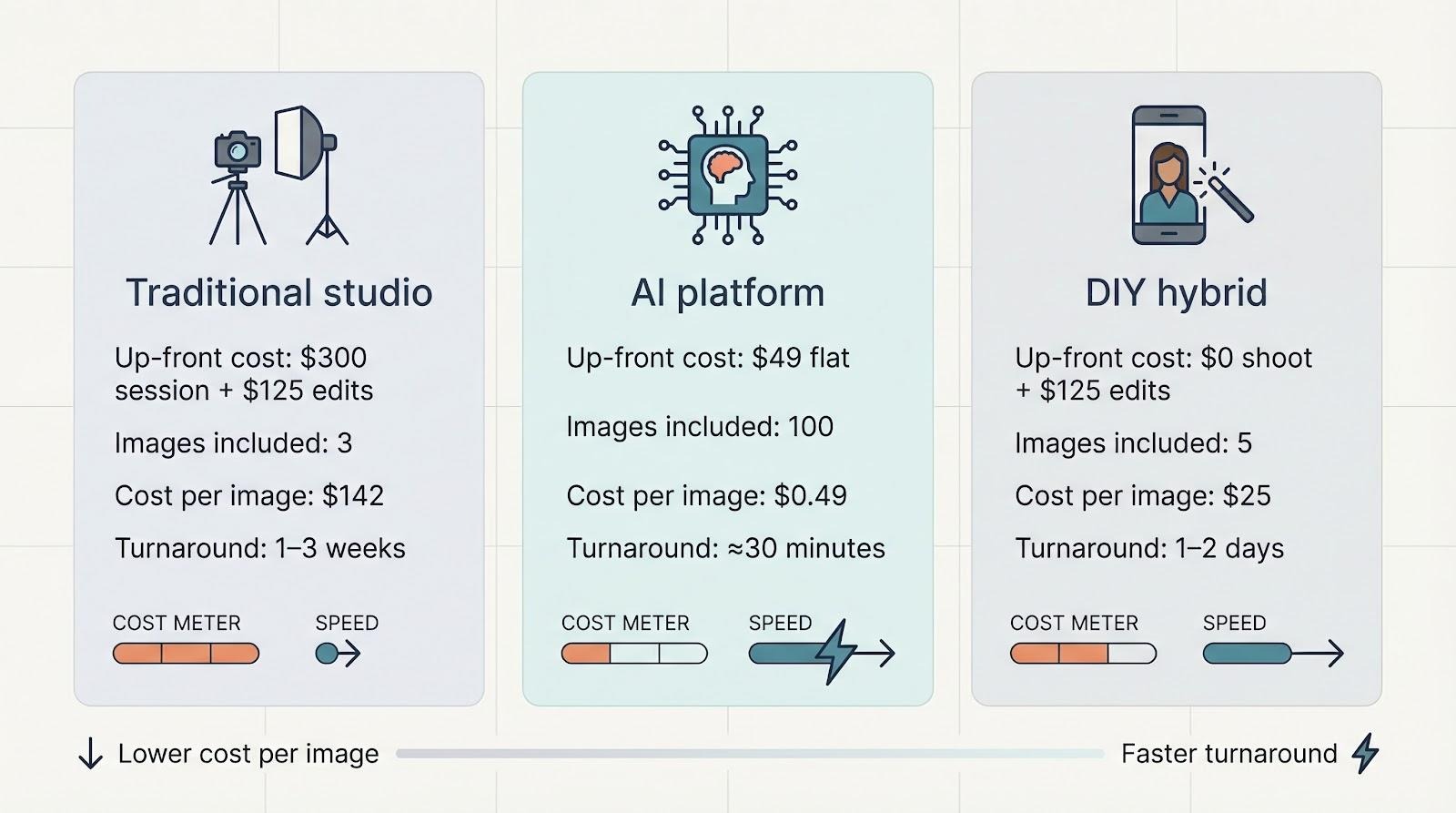
Two patterns stand out.
First, studios load most of the cost into the shoot, then add fees each time you need another file. AI flips that model: the algorithm costs little to run, so providers compete on volume.
Second, speed moves opposite to price. Budget-friendly AI delivers fast because bits travel faster than people. Higher pricing often buys creative direction, not just pixels: time in studio, live feedback, and bespoke retouching.
Use the table as a gut-check. If your team needs a banner image for next week’s investor deck, the studio’s hundred-plus dollars per file feels heavy. But if the CEO’s portrait will anchor a global ad campaign for the next three years, the math shifts toward craftsmanship.
Quality versus cost trade-offs
A headshot is more than pixels; it’s a first handshake. Top-tier studios justify their price with handcrafted lighting, subtle posing cues, and micro-retouching that leaves pores intact yet polished. On a Fortune 500 bio, that nuance signals authority.
AI, while far better than early face-filter apps, still leans on averages. Feed the engine crisp selfies in balanced light and it delivers results that fool most LinkedIn scrollers. Upload fuzzy phone snaps and you’ll get plastic skin or mismatched eye lines. The algorithm echoes whatever you provide.
Where’s the tipping point? Social-only roles thrive on volume, not perfection, so the $0.49 per-image AI rate from the comparison table feels like found money. High-stakes brand campaigns flip the equation: one impeccable portrait viewed by millions earns its $142 studio price tag in seconds.
Treat quality spend like insurance. Pay more when a mediocre photo could dent credibility. Pay less when the image fills a short-term need and will be refreshed in six months. Let your budget follow the headshot’s lifetime value, not the buzz around the newest tech.
Long-term ROI considerations
Headshots age like produce. New glasses, a different haircut, or ten pounds lost can date an image overnight. Traditional studios charge full price each time you step back in front of the lens, so three refreshes over five years can top $1,200.
AI rewrites that math. Once the model has your upload set, generating fresh looks costs pocket change and takes minutes. Some executives now spin seasonal portraits: winter blazer, summer linen, conference badge. The total five-year spend stays under $30.
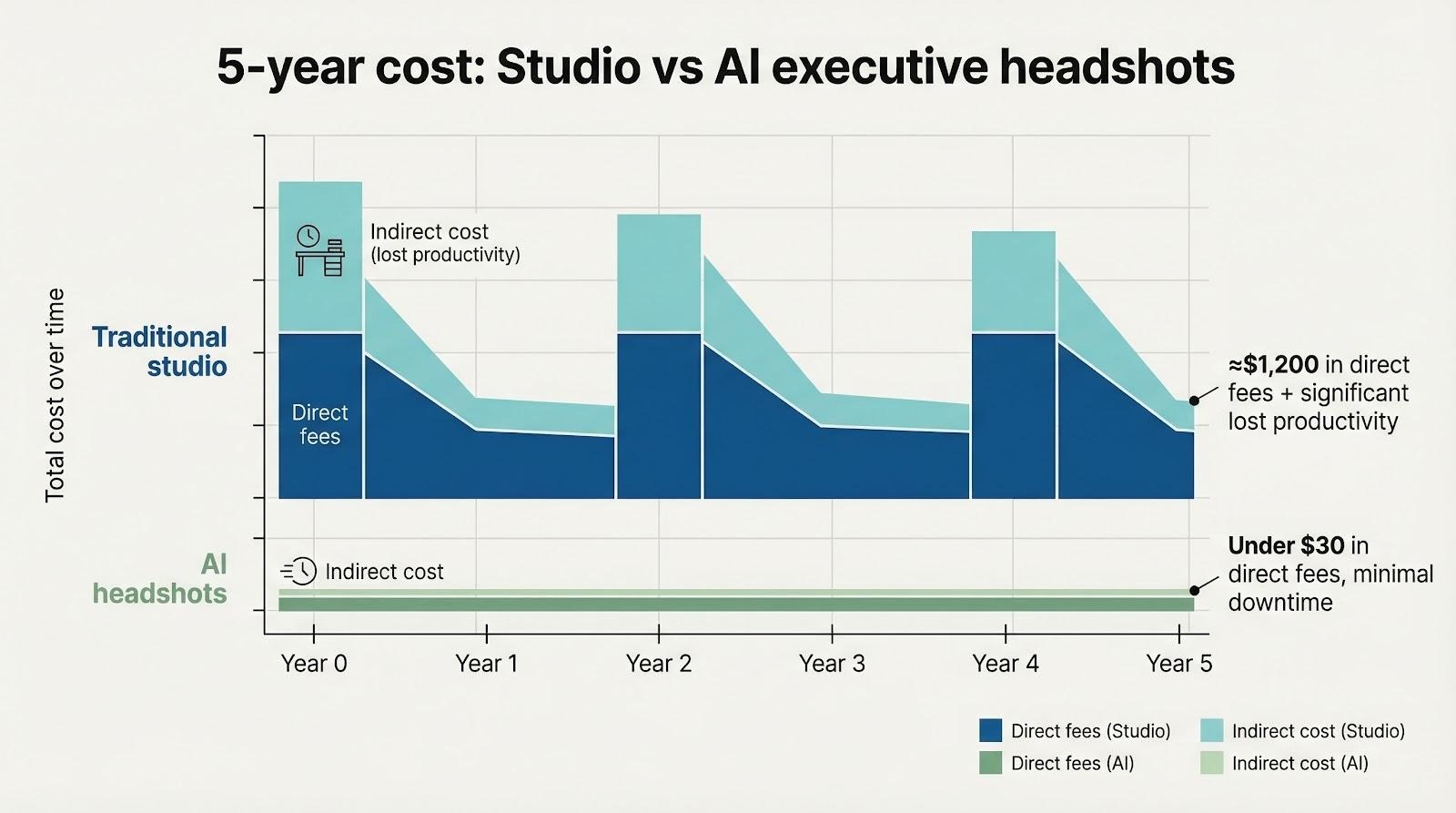
Then there’s opportunity cost. Every hour a vice president sits in a studio chair is an hour not closing deals. Multiply that by a 20-person leadership team and the “cheap” $300 session balloons into thousands in lost productivity. Virtual headshots run in the background while calendars stay billable.
The lesson is simple: track return in two columns—direct fees and indirect drag. Low sticker prices lose their charm if they pull people off revenue work. High fees can look like bargains when spread over a global PR cycle. Put a time horizon on your brand image and let the numbers choose for you.
Conclusion
Executive headshots now sit at the intersection of branding, technology, and efficiency. Traditional studios deliver handcrafted polish, on-site sessions scale that polish across teams, AI platforms democratize speed and cost, and branding agencies weave photography into a wider narrative. Match the channel to your timeline, audience, and budget, and you’ll capture an image that pays for itself long after the shutter—real or virtual—clicks.
About the Author
Peter Makeshoff
Peter Makeshoff is the founder and main author of Designer Daily.