
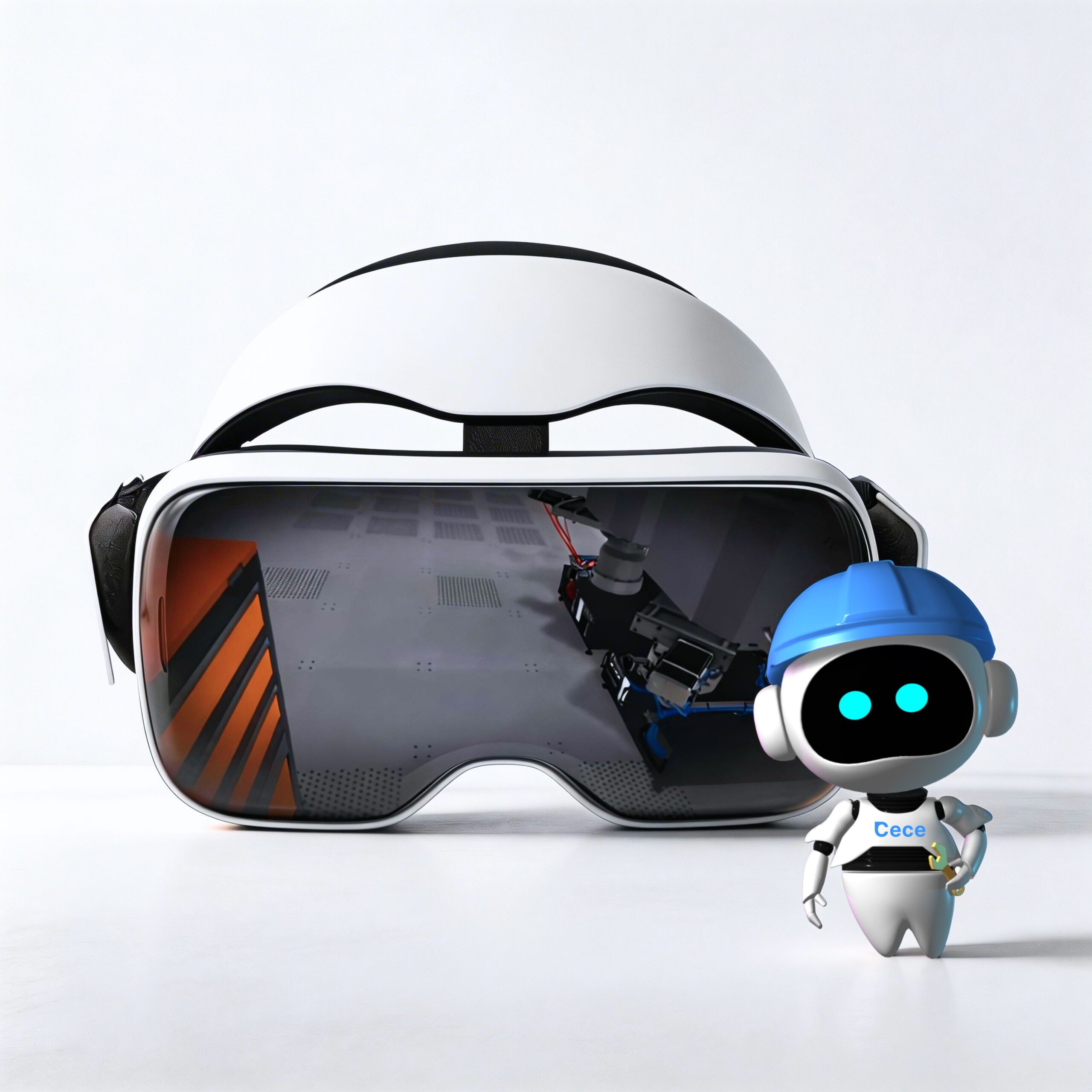
Product Designer Di Xia has been recognized with the 2026 A’ Design Award & Competition for his project Cece, an immersive career learning system designed to help users better understand complex career pathways through virtual reality and artificial intelligence.
As one of the world’s largest and most prestigious international design competitions, the A’ Design Award receives submissions from more than 180 countries each year and is evaluated by a jury composed of leading academics, industry experts, and media professionals. For Di Xia, the award represents more than recognition of a single project — it highlights a broader design philosophy that has guided his work across virtual world creation, human-computer interaction, and AI-driven experiences.
At the center of Di Xia’s design practice is a recurring question:
How can complex systems become more perceivable, explorable, and understandable to people?
This question became the foundation of Cece.
During his studies in the Master of Human-Computer Interaction and Design (MHCI+D) program at the University of Washington, Di Xia and his team conducted extensive field research into manufacturing workforce training environments. Their findings revealed a persistent challenge: while manufacturing careers often rely heavily on spatial awareness, collaborative workflows, and real-time decision-making, career education is still commonly delivered through text, diagrams, and video-based instruction. At the same time, significant gaps frequently exist between employer expectations and job seekers’ understanding of industry roles, as well as between educational preparation and workforce demands.
For Di Xia, this was fundamentally a design problem.
As industrial technologies continue to evolve rapidly, many graduates face information and understanding gaps when entering the workforce. Yet in an era defined by increasingly connected information systems, he believed these challenges could be addressed through thoughtful design.
Rather than relying on more explanations, his response was to create an immersive environment that users could enter directly.
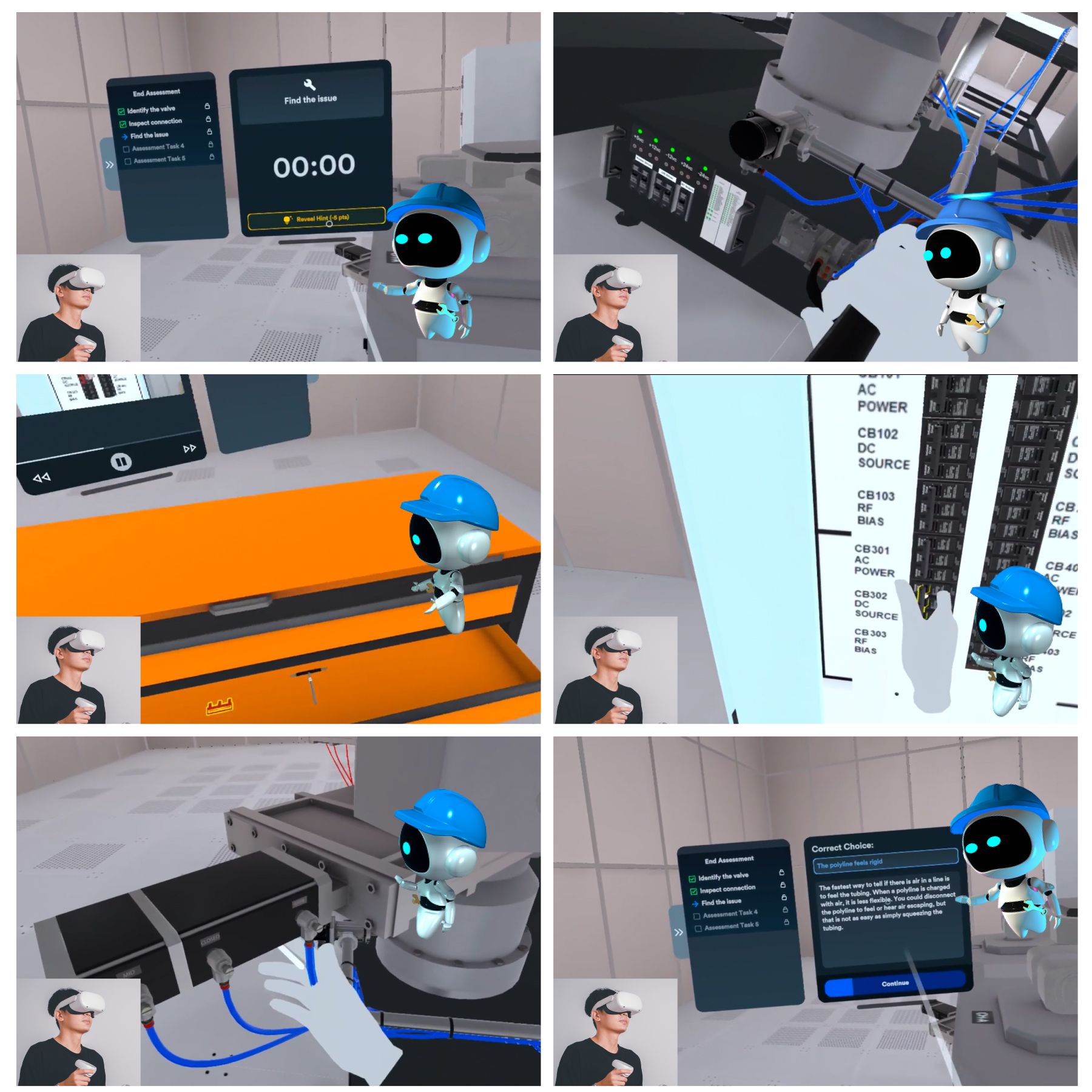
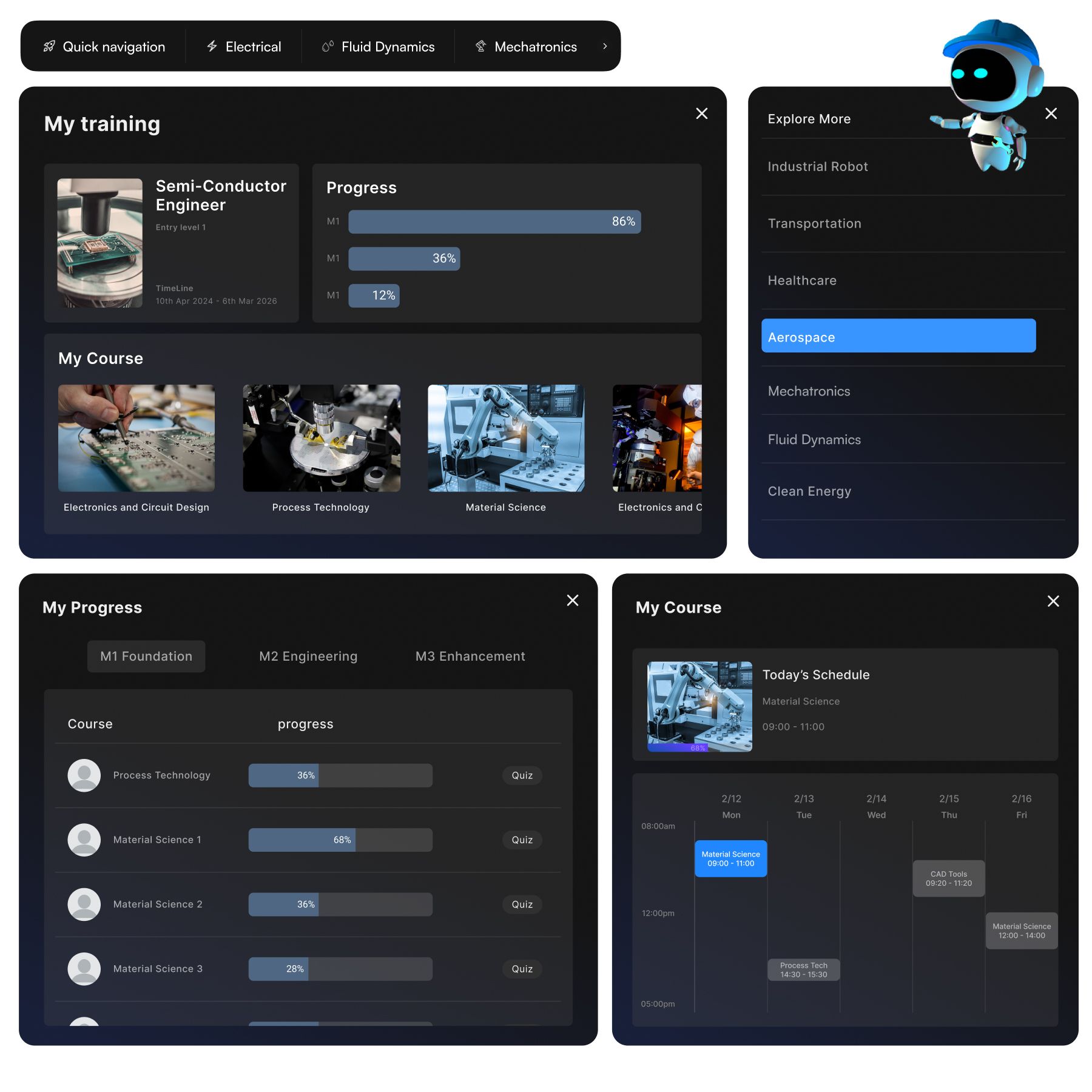
Within Cece, career exploration is no longer presented as abstract information. Instead, it becomes an interactive environment where users observe equipment, understand industry-standard workflows, make decisions, and experience the consequences of those decisions firsthand. Through direct participation, users gradually develop a more structured understanding of complex professional environments.
Di Xia’s design approach is grounded in a simple but enduring belief: design exists to solve real problems for real people.
From user research to interaction design decisions, every aspect of Cece reflects a human-centered methodology. Rather than beginning with technology and searching for applications, he starts with real user needs and works backward to determine the role design should play. This research-driven approach allowed Cece to identify a meaningful intersection between technology and human understanding — not by simplifying complexity itself, but by creating pathways through which complexity can be experienced, explored, and understood.
The ability to transform abstract systems into tangible experiences has remained a consistent theme throughout Di Xia’s career.
Before transitioning into human-computer interaction and cognitive experience design, he spent years working in the game industry, growing from a 3D artist into leadership roles on large-scale projects. His long-term involvement in building interactive virtual worlds helped shape a deep understanding of spatial experiences and user cognition.
He contributed to internationally recognized AAA franchises including Heroes of Might and Magic and the Fable series, serving as Lead Artist on Fable HD Remaster. As China’s online gaming industry expanded rapidly, he collaborated with multiple development teams on the release of large-scale online games. These experiences extended far beyond visual production. They provided years of practical exploration into spatial interaction, environmental storytelling, and player cognition — teaching him how space, interfaces, and environmental cues can guide behavior and create shared understanding among millions of users.
One notable example was Xian Meng Qi Yuan, a large-scale 3D fantasy MMORPG mobile game for which Di Xia served as Art Lead. He played a significant role in world-building, visual development, and UI interaction design. Supported by a mature production team, the title achieved substantial commercial success. According to third-party analytics platforms and public app store rankings, the game accumulated more than 20 million Android downloads and consistently ranked among leading fantasy MMORPG titles in China.
Working on projects at this scale required continuous exploration of how immersive worlds and real-time interactive systems influence user behavior and engagement. From globally recognized AAA franchises to live-service platforms serving millions of players, Di Xia accumulated extensive experience in designing environments that help users navigate complexity through interaction.
Yet for Di Xia, the ultimate focus of design has always been people.
His graduate studies at the University of Washington marked a significant turning point. Rather than concentrating solely on building virtual worlds for entertainment, he began exploring how the same principles of spatial storytelling, visual communication, and systems thinking could be applied to real-world challenges involving learning, decision-making, and understanding.
“I’ve always felt that I could do more meaningful work,” he says.
Drawing on years of experience in visual arts and interactive systems, he began systematically investigating how immersive technologies could help people better navigate information-dense environments and make more informed decisions.

Today, Di Xia works at Freemind Seattle as a Senior Product Designer, UX Designer, and Media Designer, where he contributes to enterprise technology experiences and multimodal AI interaction systems. His work spans digital interfaces, spatial media, and real-time visual systems, exploring how different forms of media can work together to support human understanding and decision-making.
From game artist to human-computer interaction researcher and AI experience designer, a consistent thread runs throughout his career: designing systems that help people better understand, navigate, and interact with increasingly complex technological environments.
As demand for skilled talent continues to grow across manufacturing and emerging industries, and as immersive technologies and artificial intelligence become increasingly integrated into education, projects such as Cece point toward a future in which interactive environments play a larger role in how people learn, understand, and engage with the world around them.
The design philosophy that continues to guide Di Xia’s work remains remarkably consistent: creating clarity within uncertainty, and using experience as a language through which understanding can emerge where misalignment once existed.
About the Author

Peter Makeshoff
Peter Makeshoff is the founder and main author of Designer Daily.