
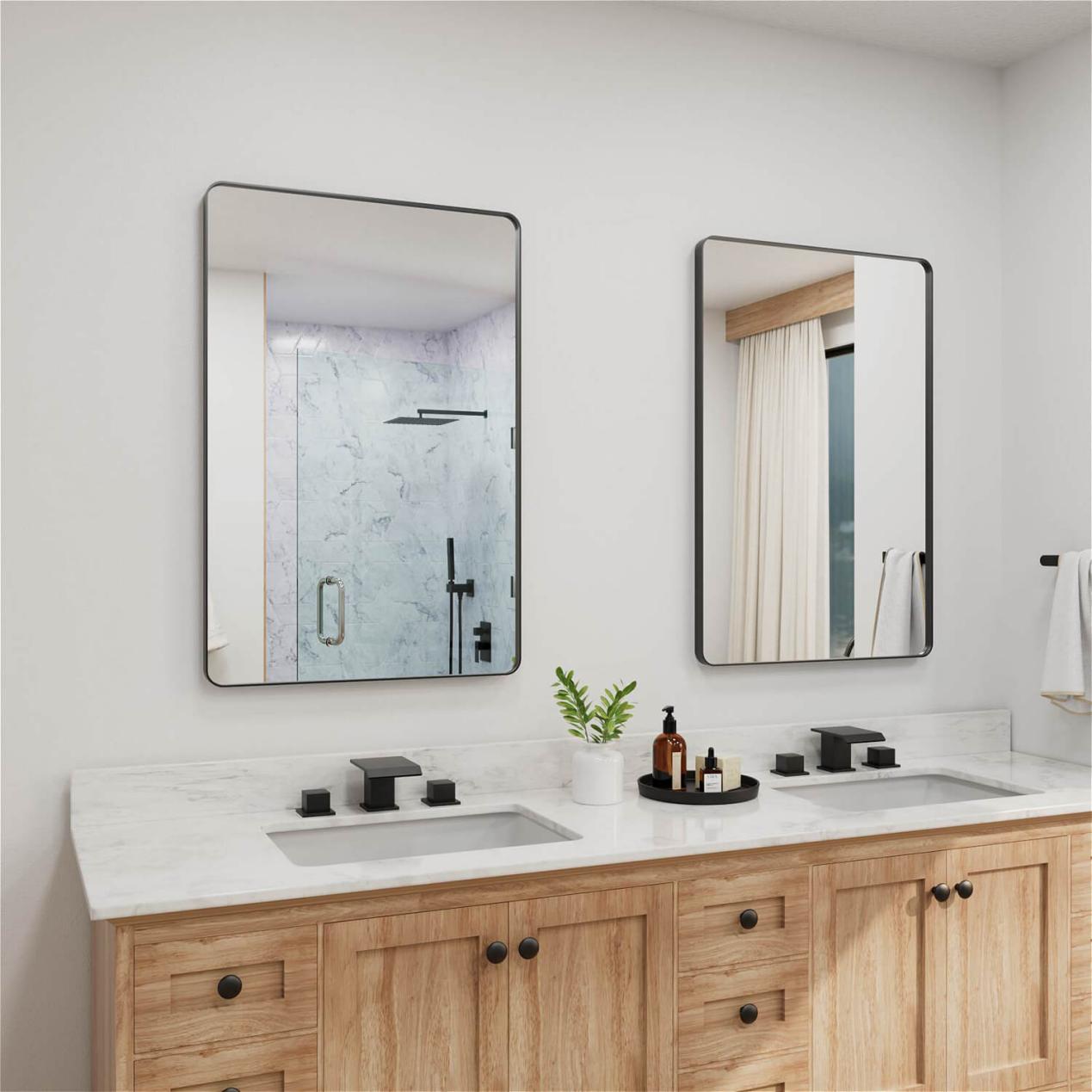
A bathroom can have beautiful tile, a stylish vanity, and well-chosen fixtures, yet the space may still feel unfinished. Sometimes, the missing piece is the mirror. The right bathroom mirror can reflect natural light, add visual depth, and help tie the vanity area together.
Choosing one involves more than finding a shape you like. Size, placement, frame style, and lighting all affect how the mirror works with the rest of the room. Here’s how to make those choices with your bathroom’s layout and everyday needs in mind.
1. Choose the Right Mirror Size for Your Vanity
The vanity is a good starting point when deciding how wide your mirror should be. A mirror that is too narrow can look disconnected from a wide countertop, while one that takes up nearly the entire wall may leave little room for lighting or other fixtures.
As a general guideline, a mirror slightly narrower than the vanity is a reliable starting point. You can also choose one closer to the vanity’s full width for a more continuous look, provided there is enough room around the edges.
For example, above a 48-inch vanity, a mirror around 36 to 44 inches wide may be worth considering. The right size will depend on the wall space, faucet placement, and whether you plan to install sconces beside it.
Double vanities offer two common options:
- One wide mirror: Creates a continuous look across both sinks and works well in bathrooms with a clean, streamlined design.
- Two individual mirrors: Gives each sink its own defined area and leaves space between the mirrors for wall sconces or other details.
Height matters, too. Make sure the mirror can be used comfortably by the people who share the bathroom. If you have tall faucets, a backsplash, or overhead cabinets, account for those before settling on a size.
2. Use Reflection to Make the Bathroom Feel Brighter
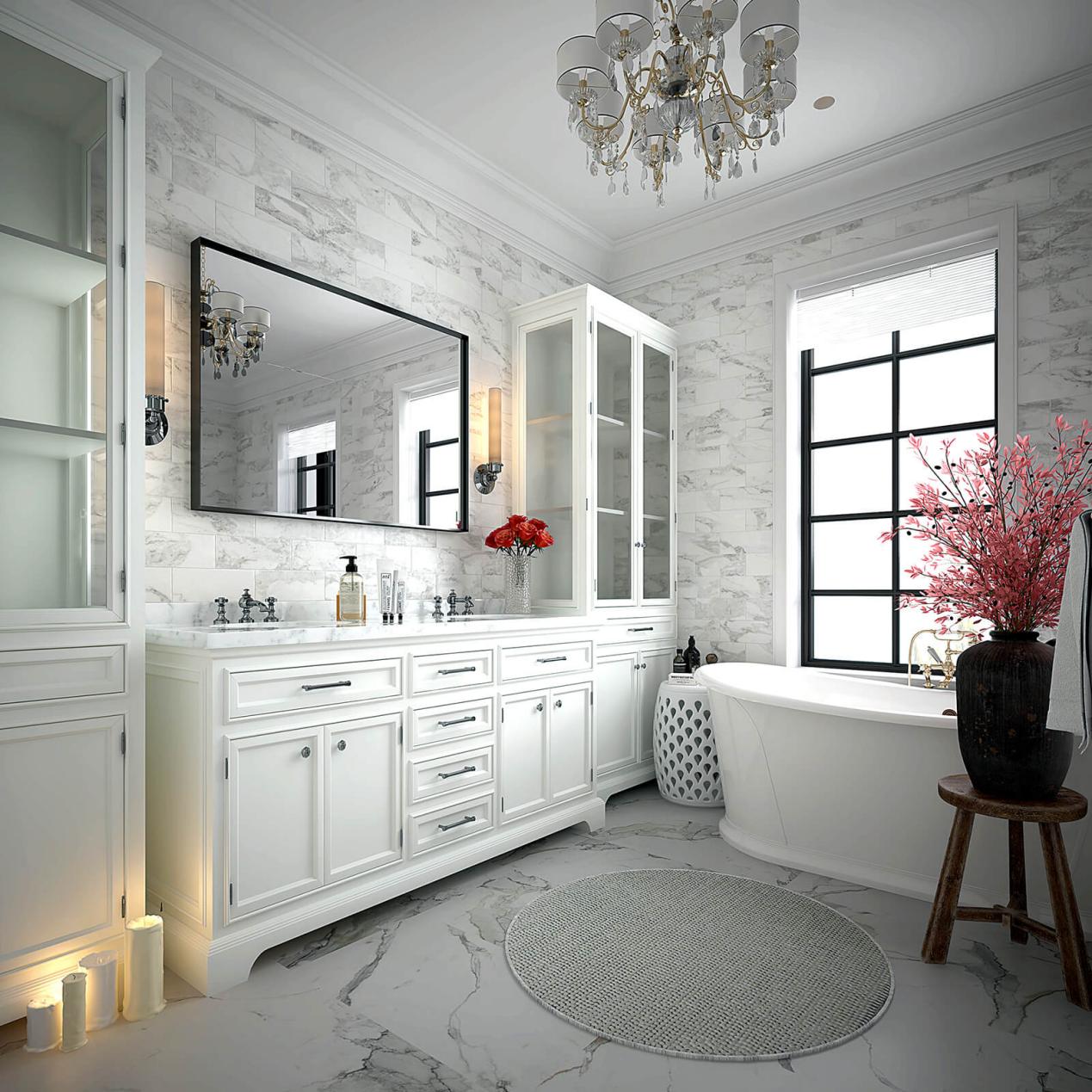
A bathroom mirror can help brighten the room by reflecting natural light from a nearby window. Before choosing its placement, consider what the mirror will reflect. A window or a bright, uncluttered area can make the space feel more open, while an awkward view may distract from the overall design.
In a small bathroom, a well-proportioned mirror can add visual depth without taking up floor space. If natural light is limited, consider how vanity lighting can help brighten the area.
3. Match the Mirror to Your Bathroom Style
The mirror doesn’t have to match every fixture and finish. It should, however, feel like it belongs in the same room. Its shape, frame, and finish can either reinforce the existing style or introduce a little contrast.
For a Modern Bathroom
Frameless mirrors suit bathrooms with clean lines, simple cabinetry, and minimal decoration. They keep the focus on the vanity, tile, and other finishes rather than adding another prominent feature.
An LED bathroommirror can also work well in a modern bathroom, particularly when you want integrated lighting and a streamlined appearance.
For a Traditional or Transitional Bathroom
A framed mirror adds definition above the vanity. Choose a frame that complements the cabinetry and hardware, or use a contrasting finish to give the space more character.
For example, a dark frame against a light wall can create a clear focal point without requiring changes to the rest of the bathroom.
For a Softer, More Organic Look
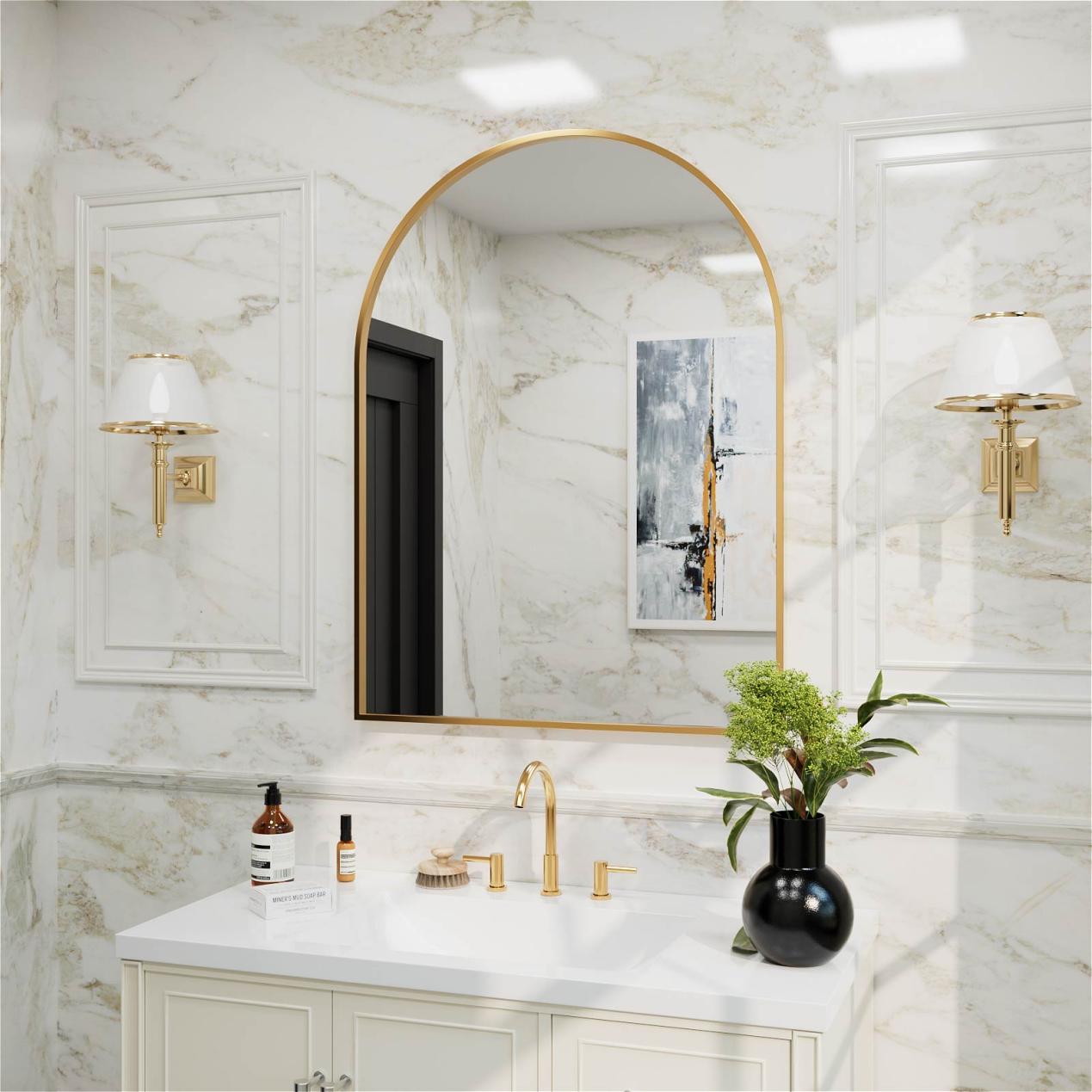
Round and arched mirrors can soften a bathroom filled with rectangular tiles, straight-edged cabinets, and angular countertops. They pair naturally with warm wood, neutral colors, and textured materials.
The same principle applies to finishes. If your bathroom already has patterned tile or distinctive countertops, a simple mirror can keep the design from feeling too busy. In a more understated room, an unusual shape or decorative frame can add interest.
4. Plan the Mirror and Lighting Together
The vanity is where many people shave, apply makeup, and get ready for the day, so lighting needs to do more than create a pleasant atmosphere.
Overhead lighting alone can cast shadows on the face, depending on its position. If you have room, wall sconces on either side of the mirror can provide more balanced illumination. A fixture above the mirror is another option when side-wall space is limited.
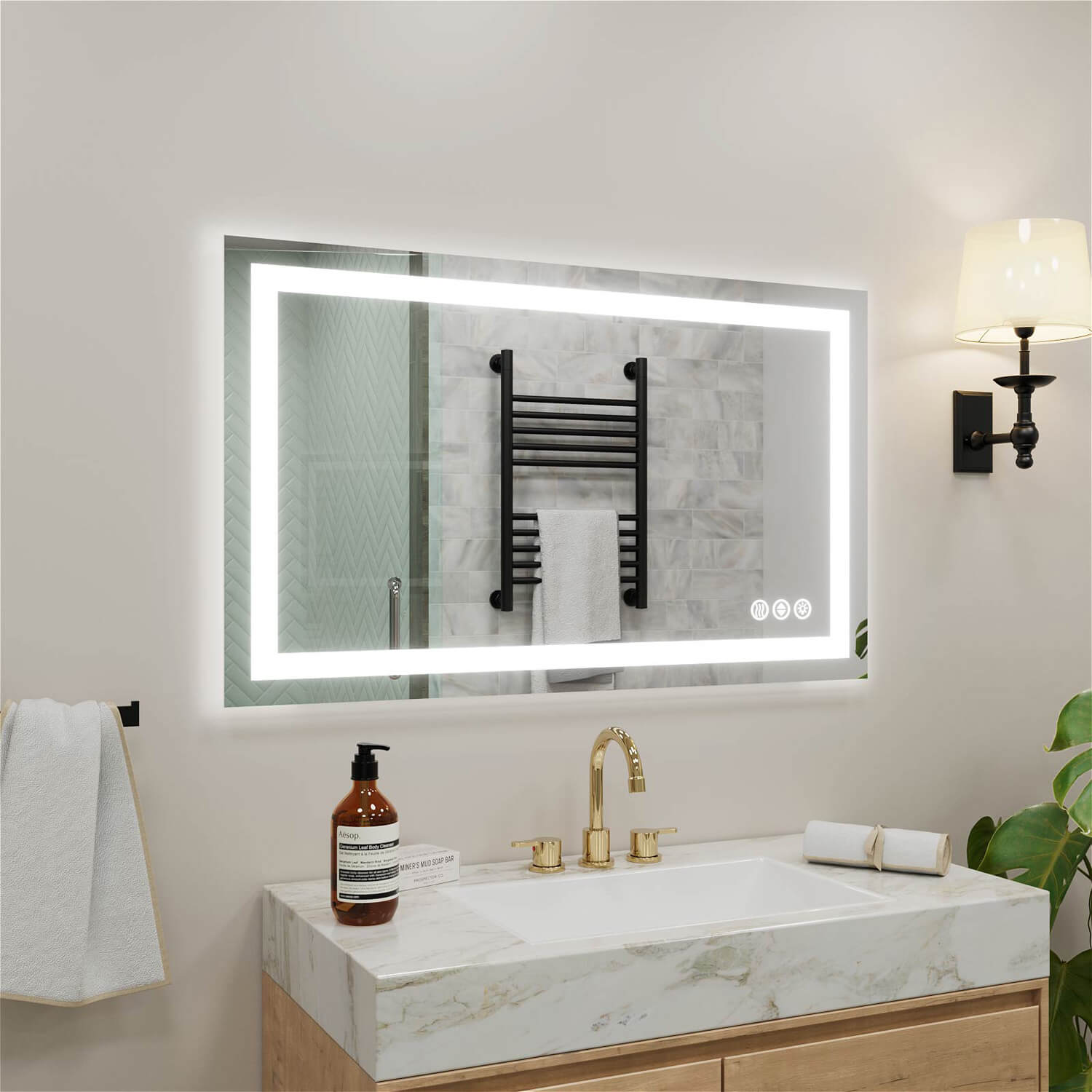
An LED bathroom mirror can be useful when you want integrated lighting without adding several separate fixtures. However, not every illuminated mirror provides the same kind of light.
- Front-lit mirrors direct light toward the user and may be better suited to grooming.
- Backlit mirrors create a soft glow around the mirror and can add ambient lighting to the room.
- Mirrors with both front and back lighting combine direct illumination with a decorative glow, depending on the design.
Check the product’s lighting specifications. Brightness, light distribution, and color temperature all affect how well it works for everyday tasks.
5. Consider Everyday Use and Storage
A mirror may look right in a photo but prove inconvenient once the bathroom is in use. Before finalizing your choice, consider how it will work with the rest of the vanity area.
Check that:
- The mirror is positioned at a comfortable height for the people using it.
- Cabinet doors, medicine cabinets, and nearby doors can open without hitting it.
- Faucets and backsplashes leave enough room for the mirror.
- Wall sconces and other fixtures fit without crowding the vanity.
- The mirror provides a useful view for everyday grooming.
Storage is another factor. In a shared family bathroom, a medicine cabinet can keep toiletries and daily essentials within reach while reducing clutter around the sink. This can be particularly useful when the vanity has limited drawer or cabinet space.
In a guest bathroom or powder room, storage may be less important. A simple framed or frameless mirror can provide what you need without adding the depth of a cabinet.
Think about how much storage you actually use and how much wall space you have before deciding between a standard mirror and a mirrored cabinet.
Final Thoughts
The best bathroom mirror is one that fits the vanity, works with the lighting, and suits the way you use the space. You don’t need to match every finish or choose the most elaborate design. Often, getting the proportions and placement right makes the biggest difference.
If you’re updating your vanity area, Giving Tree Home offers bathroom mirrors in a range of styles to suit different bathroom designs. Explore the collection to find an option that works with your space, lighting, and overall look.
About the Author

Peter Makeshoff
Peter Makeshoff is the founder and main author of Designer Daily.