
Are robot vacuums worth it? For many households, yes — but their value comes down to how well they fit your home’s floor layout, daily debris volume, and willingness to handle basic upkeep, not just whether the technology itself works. A robot vacuum excels at keeping daily crumbs, pet hair, and tracked-in dirt from building up into a bigger weekend cleaning job.
It has clear limits, though. It cannot climb stairs, clean upholstery, reach every tight corner, or handle wet spills. Think of it as a daily maintenance tool, not a full replacement for a stick or upright vacuum.
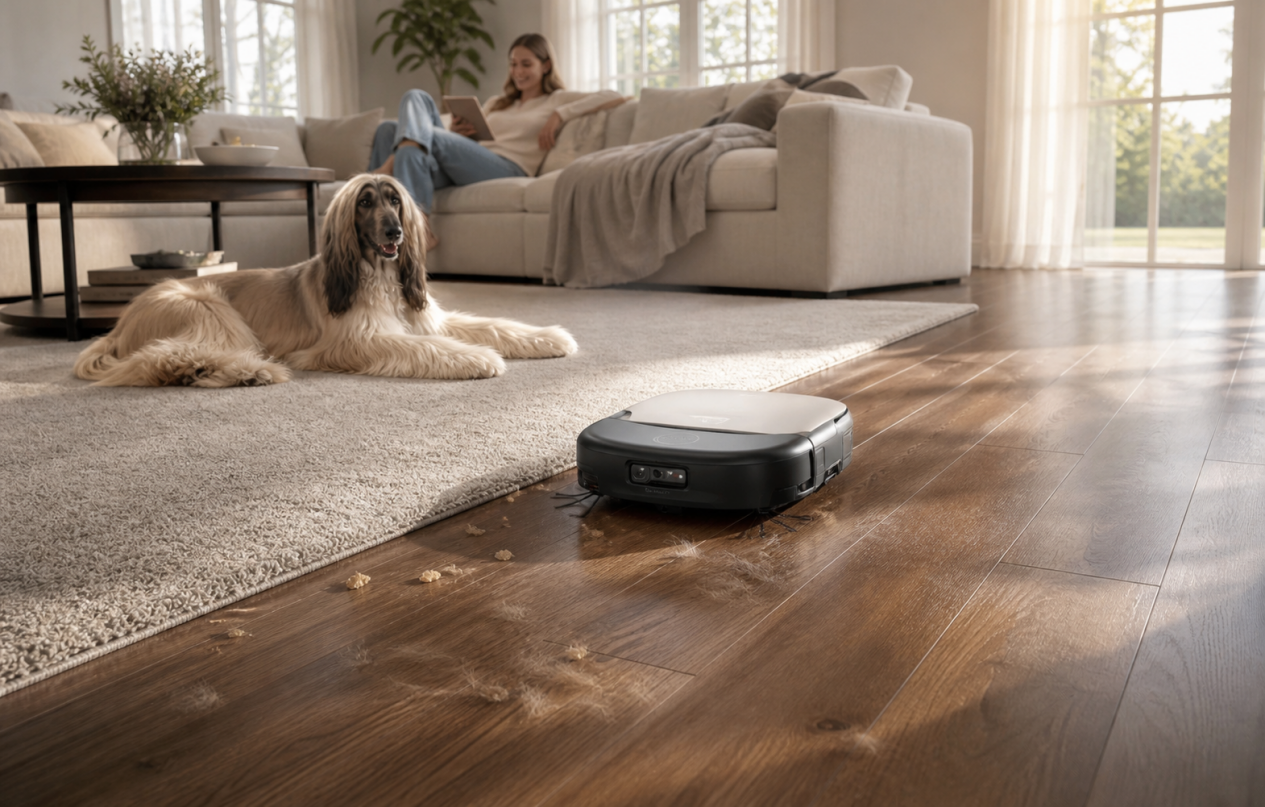
This robot vacuum buying guide starts before you compare suction specs or navigation features: first, figure out if a robot vacuum will have regular, meaningful work to do in your home. Use these five checks as a quick filter, not a strict scorecard. Two or three clear “good fit” signs usually mean it will earn its keep; multiple “wait” flags mean it’s worth holding off.
Quick rule of thumb: If you manually vacuum several times a week to keep up with recurring crumbs or pet hair, a robot vacuum is more likely to save meaningful time. If loose debris appears only occasionally, the benefit may be smaller.
No single check should make or break your decision. A home with open floors and daily pet hair can still be a poor fit if no one clears cords or maintains the brush. A few thick rugs are manageable, but a robot that runs only twice a month won’t change your routine. The sections below break down each check in detail, and you can explore compatible models in our full eufy Robot Vacuums.
Check 1: Can the Robot Reach Most of Your Floors?
Open hardwood, tile, and low-pile carpet give a robot a consistent cleaning path, while thick shag rugs, stairs, tall thresholds, and tight furniture gaps reduce its usable coverage. Measure clearance under low furniture, note barriers between rooms, and match the robot’s body height and features to your space. The key sign of a good fit is that it can reach most high-traffic areas without being carried or rescued.
Mixed flooring is not automatically a problem. Most robots transition smoothly between hard floors and low-pile rugs, but loose mats, long fringe, or mopping paths that cross carpet need extra consideration. Stairs, of course, still require manual cleaning; for multilevel homes, weigh whether carrying the robot between floors and managing separate maps still feels easier than vacuuming those spaces by hand.
Check 2: Does Loose Debris Return Often Enough?
Start by counting the dry, surface-level messes a robot can actually pick up: cereal crumbs, cat litter, pet hair, and tracked-in dirt all qualify. Wet spills, sticky residue, crumbs on upholstery, and dust on stairs do not. Even a busy household can be a poor fit if most of its cleaning needs fall outside the robot’s reach.
A kitchen that gathers crumbs by dinnertime, or a hallway with fresh pet hair every morning, gives scheduled cleaning a clear purpose — and a robot can help cut down on daily sweeping. Homes with shedding pets may see a faster payoff because recurring hair buildup gives scheduled cleaning regular work to do. [Source: Carpet and Rug Institute, Cleaning and Maintenance]
If floors stay clean for days at a time and a cordless vacuum handles the whole week in one pass, a robot may add more upkeep than it saves — even if it works well technically. If frequent runs make sense for your space, the next question is who will handle regular upkeep.
Check 3: Are You Willing to Do the Basic Upkeep?
Robot vacuums shift the type of cleaning work, rather than eliminating it entirely. Instead of pushing a vacuum through every room, you’ll prep the space before running and maintain the device itself. Cords, socks, small toys, and damp messes still need to be cleared before unattended runs, especially in the first few weeks while mapping is in progress.
Ongoing costs vary by model and cleaning load. Before buying, check current prices and replacement guidance for filters, brushes, dust bags, and mop parts, since homes with pets or frequent cleaning may replace them more often. App reminders help, but they can’t account for your home’s specific dust and hair levels. Easy, affordable part access matters more long-term than a long list of niche features.
A realistic weekly routine includes:
- Clearing wrapped hair from the main roller and side brush
- Emptying the onboard bin or checking the dock bag before it’s completely full
- Cleaning or replacing filters and consumables per the product manual
- Wiping down sensors and wheels, and tending to mop parts if applicable
Your first month of use will set the real schedule. A home with two shedding cats may need brush cleaning far more often than a small apartment, and large open floors can fill a dust bag faster than product estimates suggest. If no one in the household is willing to keep up with these small tasks, the robot will eventually become an unused appliance.
Check 4: What Still Needs a Stick or Upright Vacuum?
A robot vacuum doesn’t fully replace a stick or upright — that’s the most common source of buyer’s disappointment.
Assign the robot regular, predictable work: scheduled runs across accessible rooms, daily crumb and hair pickup, and open areas under low furniture.
Save your stick or upright vacuum for targeted, on-demand jobs: stairs, sofa cushions, car interiors, tight edges, dry spills and scattered debris, and deep cleaning after rearranging furniture.
It comes down to timing and reach: a stick vacuum is faster for sudden spills and tight spots, while a robot delivers steady value through consistent runs that prevent dirt and hair buildup.
This split isn’t duplicate tool ownership — it matches the right tool to the right job. If you need one single compact tool for stairs, floors, and your car, a stick vacuum may deliver more immediate value. If you already handle quick detail cleans but are tired of constant hair or dust across open floors, adding a robot vacuum makes clear sense.
Check 5: Is a Self-Emptying Dock Worth the Extra Space and Cost?
Once you’re clear on the cleaning split, the final question is how much dock automation is worth paying for.
Dock automation pays off when it cuts the task that most disrupts your routine. A basic charging dock works for light debris if you don’t mind emptying a small bin. Self-emptying makes more sense when hair or crumbs fill the bin daily, or if you want to avoid handling loose dust.
Self-emptying and automated mop care solve different pain points. If you only vacuum dry debris, water tanks and mop washing will go unused. If you have mostly hard floors and mop multiple times a week, an all-in-one station is a better fit. Paying for unused automation just wastes floor space.
Pick a Dock Based on the Chores It Handles
More station features mean a larger footprint and more parts to maintain. An all-in-one station that handles dust emptying and mop care cuts down on daily hands-on time, but bags, filters, tanks, and brushes still need regular service. Before upgrading, measure the full station footprint, leave room for tank removal and robot access, and confirm that replacement consumables are easy to order.
When choosing between a basic charger, self-emptying dock, or full mop-care station, focus on which regular chore you want to eliminate — not which model has the longest feature list.
All-in-One Automation for High-Frequency Use
For a high-automation reference point, the eufy Robot Vacuum Omni S2 combines vacuuming and mopping with a full all-in-one station. It includes automated dust emptying, self-cleaning roller mop care, and DuoSpiral detangling brushes to cut down on manual hair removal. This level of automation fits homes with frequent hard-floor cleaning needs and a preference for minimal hands-on upkeep, rather than users who only run a vacuum occasionally.
This follows the same rule as basic models: automation reduces specific chores, it doesn’t eliminate all maintenance entirely. Choose your station level only after confirming it fits your floor type, cleaning frequency, available space, and upkeep routine.
A robot vacuum is worth it when debris builds up frequently, most floors are accessible, and you’re okay with small regular maintenance in exchange for less daily sweeping. It’s a weaker fit for homes dominated by stairs, thick rugs, wet spills, or constant clutter.
Keep your stick vacuum for hard-to-reach spots, and only pay for automation that solves a regular frustration, not just for extra features. You won’t get a perfectly spotless home — but you will get consistently cleaner floors with far less daily effort.
About the Author

Peter Makeshoff
Peter Makeshoff is the founder and main author of Designer Daily.