
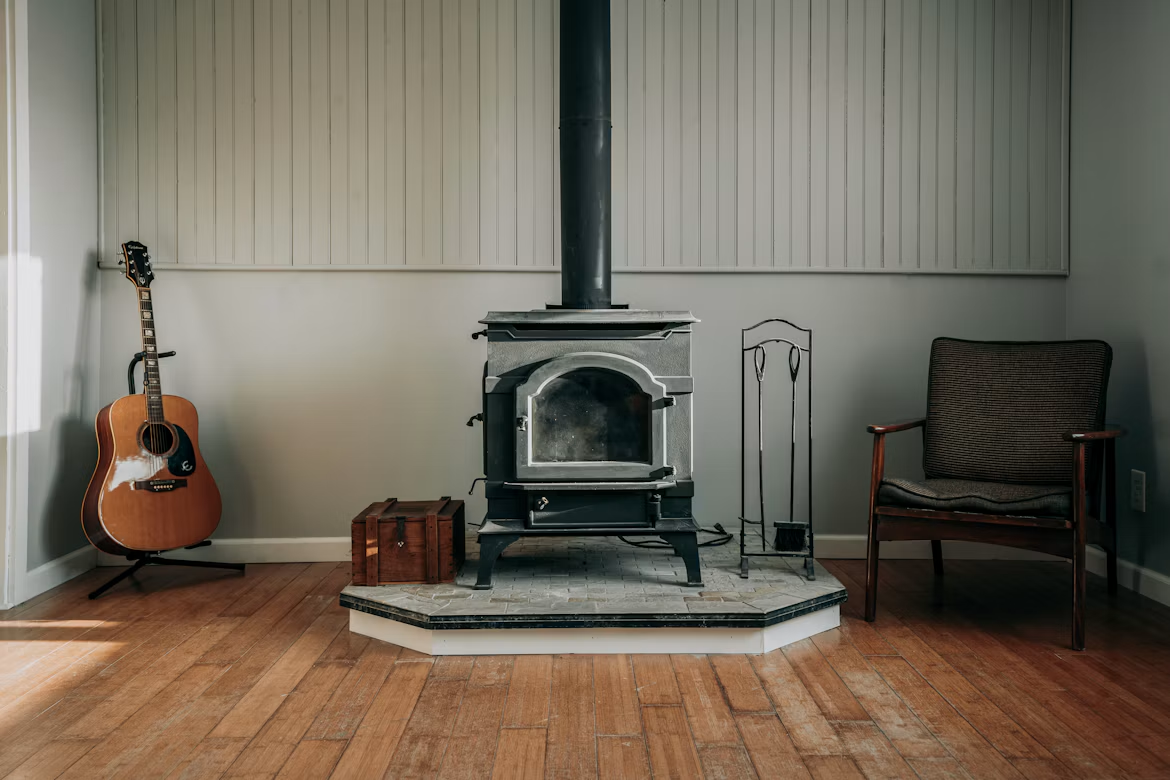
Is your furnace making weird noises again?
Every homeowner eventually reaches this stage. The warmth is inconsistent, the costs continue to rise, and the repairman is becoming like family.
And that leaves you with one big question…
Do you fix it, or is it time for a furnace replacement?
Here’s the problem:
Mess it up, and you’ll continue to pour money into a broken system or replace a furnace that could’ve lasted many more years. Either way isn’t enjoyable.
The best part? There are a few very distinct signals that point you in the right direction. Let’s dive right in!
Here’s what’s inside:
- How Long Does A Furnace Really Last?
- 5 Signs You Need A Furnace Replacement
- The 50% Rule: A Simple Way To Decide
- When A Repair Still Makes Sense
How Long Does A Furnace Really Last?
The average lifespan of a gas furnace is about 15-20 years with proper care.
Others quit much sooner. It honestly depends on how professionally the system was installed and maintained.
But here’s the thing…
Age isn’t necessarily a factor in whether you need to buy a new furnace. A well-maintained 17-year-old furnace can run efficiently for years. Its age, combined with the indicators listed below. You’ll know it’s time when both start showing signs.
It’s more of an expense than most realize. Furnaces account for more than half of home energy usage in the United States. So when it starts to fail, your bank account will quickly know.
Are you wondering where your system falls? A professional technician can inspect your heat exchanger, test the burners, and evaluate your system’s age and efficiency. Afterwards, they can advise whether a repair will suffice or whether a new furnace is the wiser choice. For residents of Northern Kentucky, getting a professional opinion on furnace replacement Erlanger and Florence, KY before cold weather arrives is the best way to prevent a breakdown in the middle of winter and avoid a rushed decision.
Now let’s look at the signs…
5 Signs You Need A Furnace Replacement
1. Your Energy Bills Keep Climbing
Has your heating bill gone up, even though you haven’t touched the thermostat?
That’s one of the old standby symptoms of a worn-out furnace. As furnaces age, they become inefficient, burning more fuel to produce the same amount of heat.
Some older furnaces operate at between 56% and 70% efficiency. Newer furnaces can operate at efficiencies as high as 98.5%.
Think about it:
A furnace operating at 60% efficiency costs you 40 cents of every dollar you spend on heat. Those dollars are going straight up the chimney. Crazy huh?
2. You’re Calling For Repairs Every Winter
One repair is expected. Two or three is cause for concern.
Furnaces fail more frequently in their last few years. One part goes bad, then another. Each repair gives you just a little more life. If you call your tech by their first name…consider upgrading instead of repairing.
3. Some Rooms Are Hot, Others Are Freezing
Uneven heating is often overlooked; however it typically indicates that your furnace is no longer moving warm air throughout your home like normal.
Sometimes, it’s as simple as a dirty filter or blocked vents. Easy fixes to check first. If it recurs, possibly a bad blower motor or system failure.
4. Strange Noises, Smells Or A Yellow Flame
This one is serious.
Banging, rattling or loud squealing can indicate loose or damaged parts. However, your biggest concern should be a cracked heat exchanger. If your heat exchanger is cracked, carbon monoxide could be leaking into your home. You can’t see it or smell it.
Watch out for:
- A yellow or flickering burner flame (it should be mostly blue)
- Soot around the furnace
- Headaches or feeling sick when the heat is on
If you experience any of these problems, shut off your furnace and call a technician immediately. Also, make sure you have working carbon monoxide detectors in your home.
Safety first. Always.
5. Your Furnace Is Over 15 Years Old
Remember that 15 to 20 year lifespan?
Once your furnace reaches this range, any major repair is a risk. You might pay hundreds of dollars for a part this year… then have another breakdown next winter. Also, older units use old technology, which means you lose out on quieter, smarter and more efficient heat.
The 50% Rule: A Simple Way To Decide
Undecided yet? If you follow this one rule, you can’t go wrong.
Replace it if the repair is more than half the cost of a new furnace.
It really is that simple. Investing half the price of a new system into an old one almost never makes financial sense.
There’s another handy trick called the $5,000 rule. Here’s how it works:
- Take the age of your furnace
- Multiply it by the cost of the repair
- If the answer is more than $5,000, replacement is usually the better choice
If you have to repair your furnace 16 times over its 40-year life expectancy, that’s too many.
Example: You need a $400 repair on a 16-year-old furnace.
That is 16 times x $400= $6,400. Time to buy a new one.
However, a 6-year-old furnace with that same $400 repair comes out to $2,400. Repair away.
These rules aren’t perfect, but they’re a great gut check.
When A Repair Still Makes Sense
But hold on… replacing your furnace isn’t always the answer.
Many furnace issues are minor and inexpensive to repair. A bad igniter, dirty flame sensor or malfunctioning thermostat can cause your heating system to stop working properly, but none of these problems requires you to replace the entire unit.
A repair is usually the right call when:
- Your furnace is less than 10 years old
- It’s still covered by a warranty
- The problem is a one-off and not a pattern
- Your energy bills are steady
And here’s the kicker…
Annual maintenance can prevent this from happening for much longer. Having yearly tune-ups and changing your filter every few months can extend the life of your furnace by years. It’s the easiest thing you can do.
The Final Word On Your Furnace
Deciding whether to repair or replace your furnace can be easy. After all, when you know the signs it will pretty much make the decision for you.
To quickly recap:
- Most furnaces last around 15 to 20 years
- Rising bills and frequent repairs point to a tired system
- Strange smells, noises or a yellow flame need attention right away
- Use the 50% rule or the $5,000 rule to help you decide
- Small repairs on younger furnaces are usually worth it
Don’t let your furnace go out on the coldest night. Recognize the symptoms early. Call a pro and take action that will keep your house warm and safe throughout the winter.
About the Author

Peter Makeshoff
Peter Makeshoff is the founder and main author of Designer Daily.