
The best design in the world fails if the client doesn’t buy it. You can craft a perfect solution, elegant in its simplicity and precise in its execution. But if you can’t communicate why it works, if you can’t translate your decisions into language the client understands, the work gets watered down, revised into mediocrity, or rejected entirely.
Selling design is not manipulation. It’s translation. Here’s how to do it well.
The Fundamental Shift: Stop Talking About Design
Non-designers don’t care about kerning. They don’t care about the historical significance of your typeface choice. They don’t care about the grid system you spent hours refining.
They care about their business. Their customers. Their goals.
The most effective design presentations reframe every decision in terms of outcomes. “I chose this typeface because it’s highly legible at small sizes, which matters because 60% of your users are on mobile.” Not “I chose this typeface because it’s a beautiful geometric sans-serif with excellent x-height.”
When you speak the client’s language, they trust your expertise. When you speak design jargon, they feel excluded and defensive.
The Presentation Structure That Works
Start with the problem you were asked to solve. Remind them of the brief. “You asked for a website that increases online bookings. Here’s what we heard.” This reorients the conversation around shared goals, not subjective taste.
Present one solution, not a menu. Showing multiple options invites clients to play designer, mixing elements they like from each into a compromised hybrid. Show one well-considered solution. If you must show alternatives, show directional concepts early, not polished work.
Explain the “why” before showing the “what.” Walk them through your thinking before revealing the work. “We focused on three priorities: faster checkout, clearer photography, and mobile-first navigation.” By the time they see the design, they already understand the framework for evaluating it.
Show the work in context. A logo floating on a white screen is abstract. A logo on a business card, a storefront, and an Instagram post is real. Context helps clients imagine the work in the world, reducing anxiety about how it will function.
End with the ask. Be explicit about what you need. “I’m looking for feedback on whether this approach solves the problem we discussed. If it does, I’ll proceed to the next phase.” This frames feedback around goals rather than personal preference.
Handling Feedback: From “I don’t like blue” to Productive Direction
Clients give bad feedback because they don’t know how to give good feedback. Your job is to translate.
When a client says “I don’t like it”: They’re expressing a feeling, not a solution. Ask questions. “Can you tell me what about it isn’t working for you?” or “What were you hoping to see that isn’t here?” This moves from rejection to diagnosis.
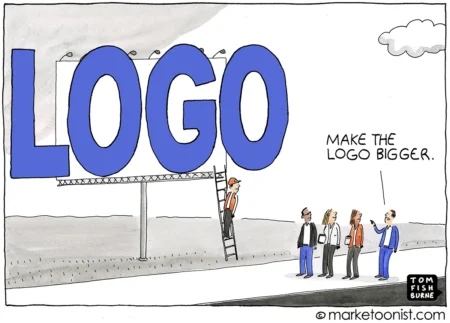
When a client says “Make the logo bigger”: They’re trying to solve a visibility problem they sense but can’t articulate. Probe. “What concerns you about the current size?” Often they’re worried the logo won’t stand out in certain contexts. Address the underlying concern, not the specific request.
When a client says “I want it to pop more”: This is a classic. They want something they can’t name. Ask what they want the viewer to feel. Ask about competitors that feel “poppy” to them. Use their references to decode their intention.
When a client requests changes that undermine the design: Explain the trade-offs. “We can make that change, but it will mean sacrificing the visual hierarchy we built. Here’s what that would look like. Is that trade-off worth it to you?” Make them active decision-makers in trade-offs, not passive recipients of alterations.
The Art of the Rationale
A good rationale is short, specific, and tied to the brief.
Bad: “I chose this color because it feels energetic.”
Good: “We chose this yellow because your competitor research showed most brands in your space use blue. Yellow helps you stand out while still feeling professional.”
Bad: “The layout creates better flow.”
Good: “We reorganized the navigation so your three core services are visible without scrolling. Early user testing showed visitors weren’t finding them on your current site.”
Bad: “This font just looks right.”
Good: “This typeface was designed specifically for screen reading. It maintains legibility at the small sizes we need for mobile, which matters because 70% of your traffic is from phones.”
The best rationales reference data, research, or client goals. They don’t appeal to taste. They appeal to evidence.
Handling Revisions: Setting Boundaries That Work
Revisions are part of the process. Unlimited revisions are a business killer.
Define scope clearly. In your proposal, specify what’s included: number of rounds, what constitutes a round, what counts as a revision versus new work. “Two rounds of revisions on approved concepts. Revisions are defined as adjustments within the approved direction. New concepts or significant directional changes require additional fees.”
Create a revision log. When clients request changes, list them. Share the list back. “Here’s what I’m hearing. Let me know if I missed anything.” This ensures alignment and creates a record if scope expands.
Charge for out-of-scope work. When a client asks for something beyond the agreement, say yes and send a change order. “Happy to do that. That’s outside our current scope. Here’s an estimate for the additional work. Let me know if you’d like me to proceed.” This isn’t punitive. It’s professional.
The Pre-Mortem: Avoiding Disasters Before They Happen
Before presenting work, imagine the presentation has failed. What went wrong? This “pre-mortem” exercise reveals assumptions you’re making about what the client values.
Common failure modes: the client wanted something bolder, the client wanted something safer, the client was expecting a different direction, the client didn’t understand why this approach solves their problem. Address these in your presentation before the client raises them.
When the Client Is Wrong
Sometimes the client is objectively wrong. Their requested change violates accessibility standards. Their color choice makes text illegible. Their preferred layout breaks on mobile.
Your job is not to say “you’re wrong.” Your job is to educate without condescension.
Show the consequences. “We can make that change. Here’s how the site would look on a phone with that color combination. The contrast ratio would be 2.1:1, which means many users wouldn’t be able to read it. Here’s an alternative that preserves your preference while meeting accessibility standards.”
Cite standards, not opinions. “I don’t think that works” is opinion. “WCAG accessibility guidelines require 4.5:1 contrast for body text” is standard. External benchmarks give you authority beyond your personal taste.
Document your concerns. If a client insists on something that will cause problems, note your concern in an email. “Just to confirm, we discussed the contrast issue and you’ve asked to proceed with the lower-contrast option. We’ll implement as requested.” This protects you when issues arise later.
The Confidence Factor
Clients sense uncertainty. If you present work as if you’re asking permission, they’ll treat it as negotiable. If you present work as a solution to their problem, they’ll treat it as expertise.
This doesn’t mean being arrogant. It means being prepared. Know your rationale. Know your data. Know the trade-offs. When a client pushes back, you’re not defensive because you’ve already thought through the alternatives.
The most persuasive presentation is one where the designer can say, “We considered that option. Here’s why we chose this instead.” That’s not opinion. That’s expertise.
The Bottom Line
Selling design is not about convincing clients to accept your taste. It’s about demonstrating that your solution solves their problem better than the alternatives. When you anchor every decision in their goals, when you translate design choices into business outcomes, when you handle feedback with curiosity rather than defensiveness, you stop being a vendor and become a trusted partner.
And trusted partners get to do better work.
About the Author

Peter Makeshoff
Peter Makeshoff is the founder and main author of Designer Daily.