
The most common mistake in decorating isn’t a bad color choice, it’s a bad investment choice. You can paint, accessorize, and style a room to perfection, but if the foundational pieces are cheap, uncomfortable, or poorly proportioned, the entire space will feel unsettled. This is where the Pareto Principle, the classic 80/20 rule, becomes your most powerful financial and aesthetic strategy.
The rule, applied to interiors, is simple: Invest 80% of your budget and attention on the timeless, high-quality “Anchor Pieces.” Use the remaining 20% for the trendy, personality-driven “Refresh Elements.”
This creates a resilient, adaptable home that feels both curated and current, without requiring a total overhaul every few years.
Part 1: The 80% – The Non-Negotiable Anchor Pieces
These are the high-ticket, high-impact items that define a room’s function, scale, and long-term style. They are the “bones” of your space. Buying cheap here is a false economy; you will replace them in 3-5 years, spending more in the long run and never achieving a sense of cohesion.
1. The Sofa (The Heart of the Living Room)
- Why It’s an Anchor: It’s the largest object in the room, used daily, and endures physical wear. Its scale sets the proportion for everything else.
- Investment Criteria: Focus on frame construction (hardwood vs. softwood/particleboard), joints (doweled, glued, and corner-blocked), suspension (8-way hand-tied springs or high-resiliency foam), and cushion fill (high-density foam wrapped in down for longevity). Choose a timeless silhouette in a high-performance, neutral fabric (linen, wool, performance velvet in charcoal, oatmeal, or olive).
- The Cost Rationale: A $3,000 sofa that lasts 15+ years costs $200 per year. A $800 sofa replaced twice in the same period costs over $500 per year and never looks or feels right.
2. The Bed & Mattress (The Foundation of Rest)
- Why It’s an Anchor: It directly impacts your health and well-being. A cheap bed frame squeaks and shifts; a bad mattress costs you sleep.
- Investment Criteria: For the bed frame, prioritize solid wood or metal with a sturdy center support rail. For the mattress, this is non-negotiable. Allocate the single largest item budget here. Test in-store if possible and research materials (latex, pocket coils, high-density foam). Choose a simple, well-proportioned headboard design.
- The Cost Rationale: You spend a third of your life here. Quality here pays dividends in daily energy and long-term health.
3. The Dining Table (The Hub of Gathering)
- Why It’s an Anchor: It’s a multi-functional surface (meals, work, projects) and the centerpiece of social connection.
- Investment Criteria: Solid wood (oak, walnut, maple) is worth the premium. Veneer on particleboard will chip, swell, and fail. Check the base stability; it should not wobble. A simple, classic shape (rectangle, oval, round) in a natural finish will outlive every trend.
- The Cost Rationale: A solid wood table can last generations, acquiring a beautiful patina. It’s a family heirloom in the making, not disposable furniture.
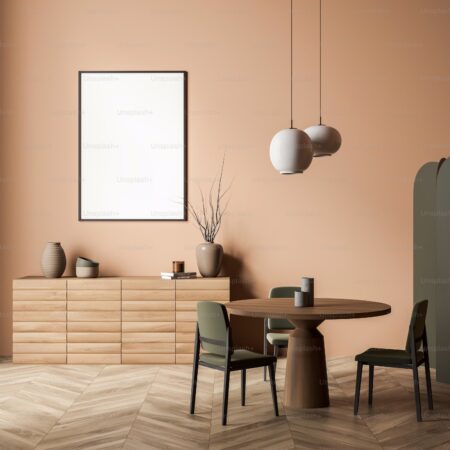
4. Case Goods: Storage that Grounds a Room
- Why It’s an Anchor: Bookcases, media consoles, and dressers provide essential storage and define walls. Their presence is permanent.
- Investment Criteria: Again, solid wood construction and proper joinery (dovetails, mortise-and-tenon) are key. Drawers should glide smoothly on side-mounted glides, not fall out on center-glides. Finish should be even and durable. Choose clean, classic lines over ornate, period-specific detailing.
The Anchor Mindset: When evaluating these pieces, ask: “Could I see this in a home 10 or 20 years from now?” If the answer is yes, you’ve found a worthy investment.
Part 2: The 20% – The Personality-Driven Refresh Elements
This is where you play, experiment, and inject current style. These items are relatively low-cost and easy to change, allowing you to update the mood of a room seasonally or as trends shift.
1. Lighting (The Instant Atmosphere Changer)
- Why It’s a Refresh Element: A new floor lamp, sculptural table lamp, or statement pendant can completely redefine a room’s vibe and focal point.
- How to Use It: Invest in good-quality, simple recessed lighting or track lighting as your functional base (part of the 80% for electricians/hardwired pieces). Then, spend your 20% budget on the decorative fixtures you see and touch. Swap a ceramic base for a brass one, a linen shade for a rattan one.
2. Textiles: Pillows, Throws, and Rugs (Layers of Color & Texture)
- Why They’re Refresh Elements: They are the easiest and most impactful way to introduce color, pattern, and tactile warmth.
- How to Use Them: Buy your large area rug in a natural, neutral fiber (jute, wool in a subtle pattern) as an anchor. Then, layer smaller, trendier vintage or kilim rugs on top. Have a collection of pillow inserts (the 80% investment) and rotate seasonal covers (the 20% play).
3. Wall Decor: Art & Paint (The Transformative Skin)
- Why It’s a Refresh Element: A gallon of paint is the most cost-effective transformation. Art is personal and can be collected over time.
- How to Use It: Paint your walls a timeless, neutral shade (white, cream, soft gray). Use paint on the ceiling, in a niche, or on built-ins to make a bold, temporary statement. Invest in a few pieces of original art you love, but feel free to fill other spaces with affordable prints, posters, or objects hung creatively.
4. Decorative Accessories & Small Furniture
- Why They’re Refresh Elements: Vases, objects, side tables, and stools are the jewelry of a room.
- How to Use Them: Follow trends freely here. That terracotta vase, travertine coaster set, or checkerboard accent stool? Perfect for the 20% budget. When you’re tired of them, they can be easily stored, sold, or donated without major financial loss.
The Strategic Blueprint: How to Apply the Rule
- Make the List: Write down everything you need for a room. Categorize each item as Anchor (big, permanent, functional) or Refresh (decorative, easy to move/change).
- Set the Budget: Total your room budget. Allocate 80% to the Anchor list, 20% to the Refresh list.
- Shop in Order: Buy your Anchor pieces first. This may mean living with a bare space for a while. It’s better to have a great sofa on a bare floor than a cheap sofa surrounded by trendy decor. The anchors will tell you what the space needs.
- Accessorize Last: Once your anchors are placed, use your Refresh budget to add personality. You’ll be surprised how little you need to spend here when the foundation is strong.
This approach builds a home with gravitas and flexibility. It grants you permission to indulge in fleeting trends without guilt, because you know they’re not compromising the integrity of your space. Your expensive, beautiful sofa will outlast a dozen throw pillow trends, and each new accessory will feel intentional against a backdrop of quiet, enduring quality. You design not for a photo today, but for a life well-lived for years to come.
About the Author

Peter Makeshoff
Peter Makeshoff is the founder and main author of Designer Daily.