
Everyone shopping for proxies stares at the same number first: price per gigabyte. It’s the easiest thing to compare, so it wins the decision. But that headline rate is only the visible part of what a proxy actually costs you. The real bill includes every failed request, every retry, every CAPTCHA you have to solve, and every hour someone spends debugging why a “cheap” pool keeps getting blocked. Once you add those up, the provider with the lowest sticker price frequently turns out to be the priciest one you could have picked. This is the breakdown of where proxy money really goes—and why premium residential proxies often cost less per successful request than the bargain option.
The Hidden Cost Stack: What You Actually Pay For
A proxy request has two possible outcomes: it works, or it doesn’t. The advertised price only covers the “it works” case. Everything about the “it doesn’t” case is where budgets quietly bleed out.
Failed Requests Are Not Free
When a request gets blocked, you usually still paid for the traffic it consumed. Worse, most workflows retry a failure two or three times before giving up, so a single blocked target can cost you three times the bandwidth of a clean success. A pool with a 90% success rate isn’t 9% worse than one at 99%—because those failures multiply through retries, the real gap in wasted traffic is far wider than the raw percentages suggest.
Time Is the Cost Nobody Budgets
Engineering hours are more expensive than bandwidth, and dirty IPs burn them relentlessly. Someone has to notice the success rate dropped, dig through logs, swap proxy pools, rewrite retry logic, and re-run the job. A proxy that “saves” you a dollar per gigabyte but costs an engineer half a day of troubleshooting has already erased its savings many times over.
CAPTCHAs and Blocks Have a Downstream Price
Every CAPTCHA triggered by a suspicious IP either stops your workflow or forces you into a paid solving service. Both cost money. And on account-based tasks—social, e-commerce, ad verification—a flagged IP can get an account limited or banned, which is a cost measured in far more than gigabytes.
Why IP Quality Is the Real Price Lever
The single biggest driver of that hidden cost stack is IP quality, and quality comes down to sourcing. This is exactly where the market splits.
Clean Sourcing Versus Recycled IPs
Cheap pools often cut corners on sourcing—recycled datacenter ranges dressed up as residential, or IPs whose origins the vendor won’t explain. Those IPs may have already been flagged by the sites you’re targeting, which is why they fail so often. Genuinely clean premium residential proxies come from real household connections that have never been abused at scale, so they slip through defenses that instantly catch the cheap stuff. You pay a bit more per gigabyte and get dramatically more successful requests out of it.
The Numbers Behind the Gap
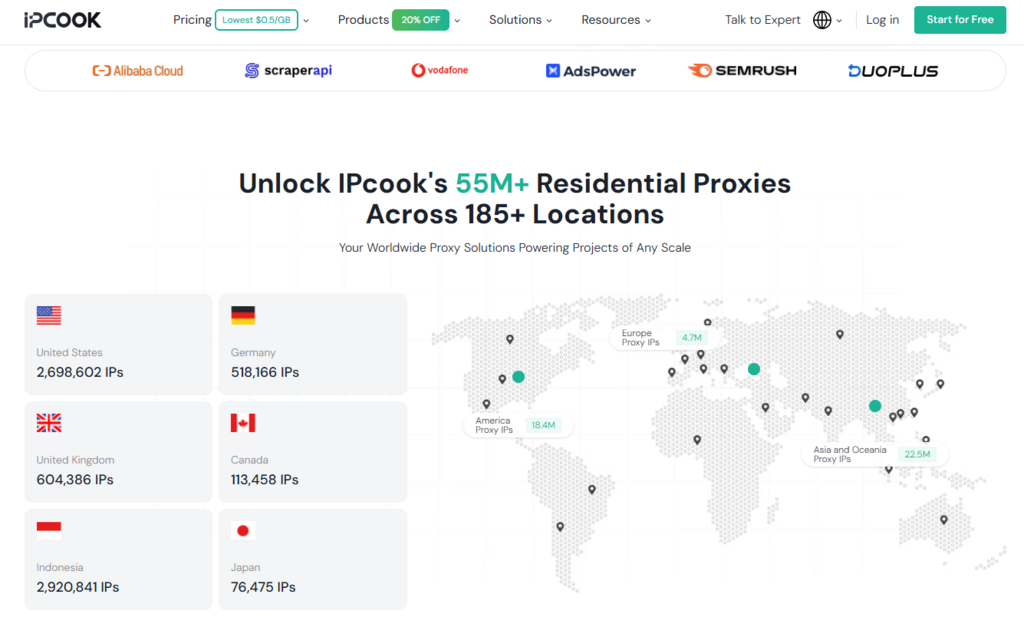
Success rate is the metric that actually maps to cost, and it’s worth reading closely when comparing providers. Networks like IPcook publish a 99.99% uptime figure with a global response time under 0.5 seconds, and its residential traffic starts at $3.2/GB. Compare that to the market: several well-known providers sit at $3.5, $3.53, or even $6–$7.35 per GB for residential traffic, and not all of them post a success rate at all. When a pricier pool also blocks more often, you’re paying more per gigabyte and wasting more of each gigabyte. That’s the double penalty of chasing the wrong number.
A Real Cost Comparison: Sticker Price Versus True Price
Here’s how the math actually shakes out when you account for failures and retries, rather than just the rate card.
| Cost Factor | “Cheap” Low-Quality Pool | Clean Premium Pool |
| Advertised price per GB | Lower on paper | Slightly higher |
| Success rate | Often unstated or low | Published and high (up to 99.99%) |
| Wasted traffic from retries | High—failures multiply | Low—most requests land first try |
| Engineering time on debugging | Frequent and costly | Minimal |
| Account/ban risk on sensitive tasks | Elevated | Reduced with clean IPs |
| True cost per successful request | Higher | Lower |
The lesson in that last row is the whole point: cost per gigabyte is a vanity metric. Cost per successful request is the number that hits your budget, and clean IPs win it almost every time.
How to Buy for True Cost, Not Sticker Price
Shifting how you evaluate proxies is straightforward once you stop anchoring on the per-GB rate.
Ask for Success Rate and Sourcing First
Before you look at price, ask two questions: what’s the documented success rate, and where do the IPs come from? A provider that answers both clearly is telling you it has nothing to hide. A vague answer on either is a sign you’ll pay the difference later in failures.
Test Against Your Real Targets
Sticker price means nothing until you’ve run the pool against the exact sites you care about. This is where a genuine free tier matters—IPcook’s 100MB free trial with no time limit lets you measure your own success rate before committing budget, which is the only honest way to compare true cost across providers. Because that traffic doesn’t expire, there’s no pressure to rush the evaluation.
Match Spend to the Task
Not every job needs premium IPs—low-defense targets run fine on cheap datacenter proxies. The waste happens when you point cheap IPs at hard targets and pay for it in failures. Reserve premium residential traffic for the sites that actually fight back, and you get the best true cost across your whole operation. Features like 10 free sub-accounts make this easy, letting you ring-fence a traffic budget per task so a demanding job never quietly drains the rest.
The Bottom Line: Count the Bill You Can’t See
The proxy market trains you to compare the one number that matters least. Per-gigabyte price is real, but it’s dwarfed by the invisible costs of failed requests, retries, wasted engineering time, and account risk—all of which trace back to IP quality and honest sourcing. A slightly higher rate on a clean, high-success network almost always beats a rock-bottom rate on a pool that fails a third of the time. So before you pick the cheapest option on the page, add up the bill you can’t see. More often than not, the smarter buy was the one that looked a little more expensive at first glance.
About the Author

Peter Makeshoff
Peter Makeshoff is the founder and main author of Designer Daily.