
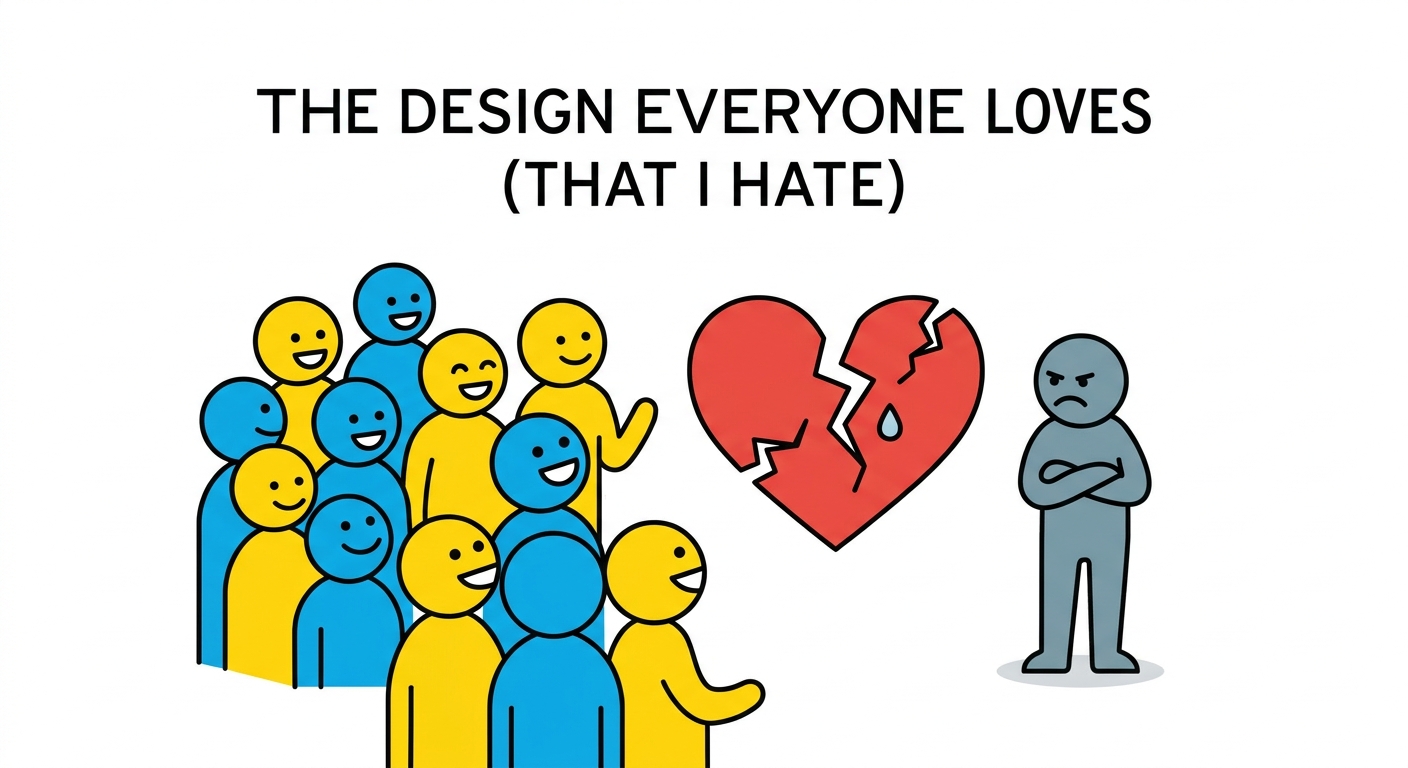
It is a strange experience to be the one person who does not like a design that everyone else adores. You look at the praise, the awards, and the enthusiastic comments, and you feel like you are missing something. Maybe you are too critical. Maybe you are too traditional. Maybe you just do not get it.
I have had this experience several times. The design is celebrated, analyzed, and imitated. It is held up as a model of innovation, elegance, or simplicity. And I cannot help but see the flaws. I cannot help but feel that the design is not as good as everyone says it is.
This is not a comfortable position. It can feel isolating, even arrogant. But it is also a valuable one. The design everyone loves is not always the best design. Sometimes it is just the design that everyone has agreed to love.
The Design That Made Me Question My Taste
There is a particular design that comes to mind. It is a consumer product, a piece of technology that has been universally praised for its minimalist aesthetic and intuitive interface. The reviews are glowing. The sales are record-breaking. The design is celebrated as a masterpiece.
I do not like it. I find the interface confusing, the controls awkward, and the overall experience frustrating. I can see why others might like it, but I cannot share their enthusiasm. The design is not bad. It is just not for me.
This is a difficult thing to admit. It feels like a failure of taste, a sign that I do not understand what makes a good design. But over time, I have come to see it differently. The design everyone loves is not a design that everyone loves. It is a design that a loud and influential group loves. The silence of the dissatisfied is not the same as approval.
The Danger of Groupthink
The design everyone loves is often the product of groupthink. The industry agrees that a design is good, and the agreement becomes self-reinforcing. Critics praise it, awards validate it, and other designers imitate it. The design becomes a standard, and questioning it becomes difficult.
This is dangerous. Groupthink can lead to stagnation. It can prevent designers from exploring alternatives. It can make it harder to see the flaws in a design that has been universally praised. The design everyone loves is not always the best design. Sometimes it is just the design that everyone has agreed to love.
The Value of Disagreement
My dislike of the design everyone loves is not a weakness. It is a perspective. It reminds me that design is subjective, that there is no single standard of quality, that what works for one person may not work for another. It also reminds me that the crowd is not always right.
The design everyone loves is not a design that cannot be criticized. It is a design that has not been criticized enough. The designer who questions the consensus is the designer who pushes the field forward. The designer who accepts the consensus is the designer who will be left behind.
The Bottom Line
The design everyone loves is not a design that everyone loves. It is a design that a loud and influential group loves. The silence of the dissatisfied is not the same as approval. My dislike of the design is not a failure of taste. It is a reminder that design is subjective, that there is no single standard of quality, that what works for one person may not work for another.
The next time you find yourself disagreeing with the crowd, do not dismiss your reaction. It may be the most valuable insight you have. The design everyone loves is not always the best design. Sometimes it is just the design that everyone has agreed to love. And sometimes, the one person who disagrees is the one who sees the truth.
About the Author

Peter Makeshoff
Peter Makeshoff is the founder and main author of Designer Daily.