
Before we see an object’s brand or hear its cost, we feel it. This initial, wordless haptic judgment, picking up a mug, hefting a remote, gripping a tool, forms an immediate and lasting impression of its quality, purpose, and inherent value. This impression isn’t mystical; it’s engineered. It’s the result of three invisible physical properties working in concert: density, balance, and thermal conductivity. Together, they compose the silent language of “feel,” a language that speaks directly to our subconscious sense of what is trustworthy, pleasurable, and real.
1. Density: The Psychology of Mass
Density is mass per unit volume, how much “stuff” is packed into a space. It’s the difference between a hollow plastic click and a solid thud.
- High Density (Ceramic, Metal, Glass): Communicates substantiality, permanence, and quality. A dense object has inertia. It resists movement, feels anchored in the world, and suggests it was made from a material of inherent value that required energy to shape. A heavyweight pen doesn’t just write; it inscribes. A heavy door handle doesn’t just open; it announces entry.
- Low Density (Plastic, Foam, Lightweight Wood): Communicates accessibility, lightness, and disposability. It feels temporary, easy to manipulate, and democratic. This is ideal for objects meant to be carried effortlessly, given away, or used once.
The Designer’s Lever: Perceived density is often more important than actual mass. A well-designed object can feel denser than it is through strategic weighting. The classic example is a high-end gaming mouse or controller, where internal weights are added not for function, but to lower the center of gravity and create a sense of premium, stable solidity in the hand.
2. Balance: The Center of Intent
Balance is the distribution of mass around an object’s pivot point (its center of gravity). It dictates how an object rests in the hand and moves through space.
- Neutral/Static Balance: Mass is evenly distributed. The object feels stable, predictable, and calm. A well-balanced chef’s knife becomes an extension of the arm, with its pivot point at the pinch grip. It feels trustworthy and precise.
- Dynamic Balance: Mass is deliberately distributed to create a preferred orientation or motion. A hammer is heavily weighted toward its head. This isn’t a flaw; it’s a declaration of purpose. The imbalance creates a pendulum effect, translating the user’s swing into powerful, efficient impact. The object wants to be used in a specific way.
- Poor Balance: Accidental, uneven weight distribution feels awkward, cheap, and untrustworthy. A remote control that’s heavier on the battery end constantly tries to twist out of your relaxed grip, creating a subtle, irritating cognitive load.
The Designer’s Lever: Balance is choreography for the hand. The goal is to align the center of gravity with the center of action. For a tool, this is the grip. For a vase, this is its base. When these align, the object feels “right,” and the user feels capable.
3. Thermal Conductivity: The Language of Life
Thermal conductivity is a material’s rate of heat transfer. It answers the question: Does this object feel warm or cool to the touch at room temperature?
- High Conductivity (Metals: Aluminum, Steel, Brass): These materials feel cool. They rapidly draw heat away from your skin. This sensation communicates precision, efficiency, and robustness. It feels “instrument-grade.” The cool touch of a metal camera body or a premium flashlight signals technical performance and durability. It’s the feel of a surgical tool or a luxury watch case.
- Low Conductivity (Wood, Ceramic, Leather, Plastic): These materials feel warm. They insulate, quickly adopting the temperature of your skin. This communicates approachability, natural origin, and comfort. The warmth of a wooden spoon, a ceramic mug, or a leather-bound book feels humane, organic, and welcoming. It invites prolonged contact.
The Designer’s Lever: First touch is everything. The initial thermal shock, or lack thereof, sets the emotional tone. A luxury smartphone with a cold aluminum or glass frame feels premium and advanced the instant it’s picked up. A child’s toy made of warm, rounded plastic feels safe and friendly. Combining materials can tell a story: a knife with a warm wooden handle (comfort, tradition) and a cool steel blade (performance, sharpness).
The Synthesis: Crafting “Haptic Personality”
When these three properties are designed in harmony, they create a coherent, emotional “haptic personality.”
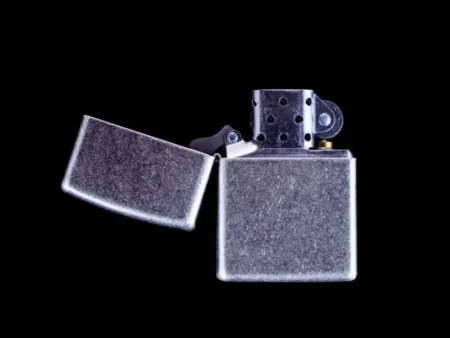
Case Study 1: The Zippo Lighter
- Density: High. A solid clunk of brass and steel.
- Balance: Excellent. Weight rests low in the palm, with the lid providing a satisfying, top-heavy flip.
- Thermal: High conductivity. The metal case feels cool, promising durability, before warming in your hand.
- Result: It feels like a trustworthy, mechanical companion. Its weight and coolness suggest it can survive a pocket, its balance makes it fidgetably pleasurable, and its materials tell a story of military heritage. It doesn’t feel disposable; it feels like an heirloom.
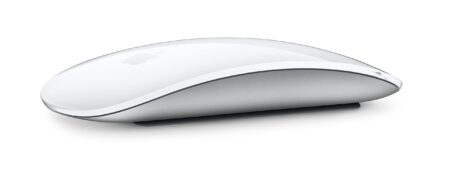
Case Study 2: The Apple Magic Mouse
- Density: Low-to-moderate. It’s light enough to slide effortlessly but has enough heft to not feel cheap.
- Balance: Perfectly neutral. It sits flat and stable, with no tendency to tip.
- Thermal: Moderate. The anodized aluminum top feels slightly cool and precise, while the polycarbonate base is warmer.
- Result: It feels like a minimalist, frictionless interface. Its personality is about disappearing, about being a seamless portal to the digital. It doesn’t demand to be felt; it asks to be ignored, which is its own form of sophisticated haptic design.
The Subjective Truth: “Feel” is the First Review
In a world of online shopping, where touch is the last sense to be engaged, these properties become the final and most honest arbiter of quality. A product can look stunning in photos, but if it feels hollow, poorly balanced, or “cheaply cold” in the hand, that first physical contact overrides all other marketing. It is the moment of truth.
Great industrial design understands that an object is not just a visual form to be seen, but a physical promise to be held. It engineers not just for the eye, but for the muscles, the nerves, and the deep-seated human intuition that understands weight, balance, and temperature as the fundamental languages of the real, physical world. To master this language is to design objects that don’t just work, but that feel true.
About the Author

Peter Makeshoff
Peter Makeshoff is the founder and main author of Designer Daily.