
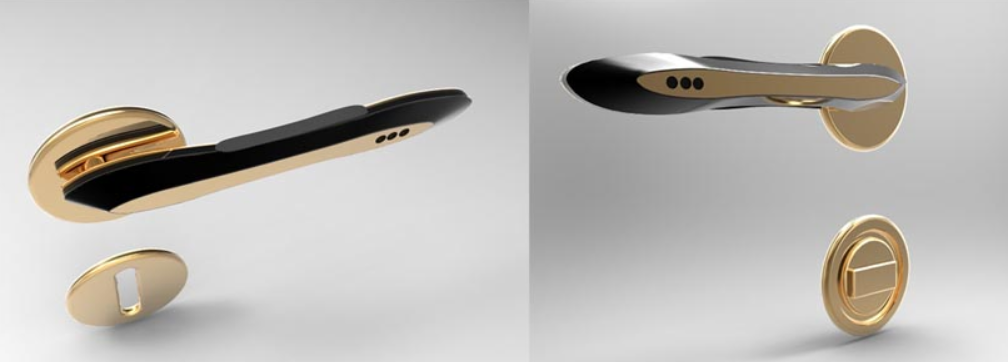
For years, I carried a folding knife that I considered perfect. The blade was sharp, the action was smooth, and the handle looked like it belonged in a design museum. It was made from polished titanium with a sculpted grip that featured sweeping contours and a generous thumb ramp. I admired the knife, but I noticed something odd: I never seemed to be able to open it with one hand. I would fumble, adjust my grip, and eventually use two hands to get the blade out.
One evening, at a friend’s workshop, he handed me his knife. It was nothing special to look at. It had a solid black handle, a few simple grip lines, and a thumb stud. I flicked it open instantly. It was not about the brand or the materials. It was about the geometry. His handle fit my hand. Mine did not. This is the difference between a tool and an ornament.
The Fallacy of Ergonomic Contours
The problem with my handle was that it was designed to be ergonomic, but only for a specific hand. The sculpted grip was a product of the designer’s own hand and perhaps a small test group of people with similar proportions. The thumb ramp was designed to guide the thumb to a specific stud. But my thumb is slightly shorter, my palm slightly narrower, and my grip style slightly different.
This is the illusion of “one-size-fits-all” design. Designers often try to solve the problem of fit by adding contours, but contours are static. If they match your hand, they feel perfect. If they do not, they feel wrong. The handle forces the hand into a specific position. It does not adapt. It commands.
A handle that “fits every hand” is a myth. Hand sizes vary dramatically. The distance from palm to fingertips, the width of the hand, and the length of the fingers all affect grip. The thumb is particularly variable. Its reach and angle determine how a tool is held and actuated. A handle that is comfortable for a 5th percentile female may be cramped for a 95th percentile male, and a handle designed for a large male may be impossible for a smaller user to hold securely.
The Geometry of Universal Fit
The solution to this problem is not to add more contours, but to reduce them. A handle that is cylindrical or slightly tapered provides a neutral grip. It does not force the hand into a specific position. It allows the hand to find its own grip.
This is why handles with simple cylindrical or tapered profiles are often more comfortable than sculpted ones. They allow the hand to adjust, to find its own position. They are not designed for a specific hand. They are designed for a range of hands.
The same principle applies to tools. A handle that is too small is difficult to grip. A handle that is too large is difficult to wrap around. A handle that has unnecessary contours is difficult to hold. The best handles are simple.
The Lesson for Designers
The handle taught me that comfort is not about adding features. It is about removing constraints. A chair that does not force the sitter into a fixed position is more comfortable than a chair that does. A handle that does not force the hand into a specific grip is more comfortable than a handle that does. The best design is the design that respects the variability of the user.
The same is true for interfaces. A software interface that forces the user into a specific workflow is less comfortable than an interface that allows the user to find their own path. A tool that is simple and consistent is more comfortable than a tool that tries to anticipate the user’s every need.
The Bottom Line
The handle that fits every hand is the handle that does not try to fit any hand. It is the handle that is simple, neutral, and adaptable. The handle that fits none is the handle that is designed for a specific hand, a specific grip, a specific user.
The lesson is simple: design for the range, not the average. Allow for adaptation. Do not assume that your hand is the hand. The user will find the grip that works for them. Do not get in the way.
About the Author

Peter Makeshoff
Peter Makeshoff is the founder and main author of Designer Daily.