
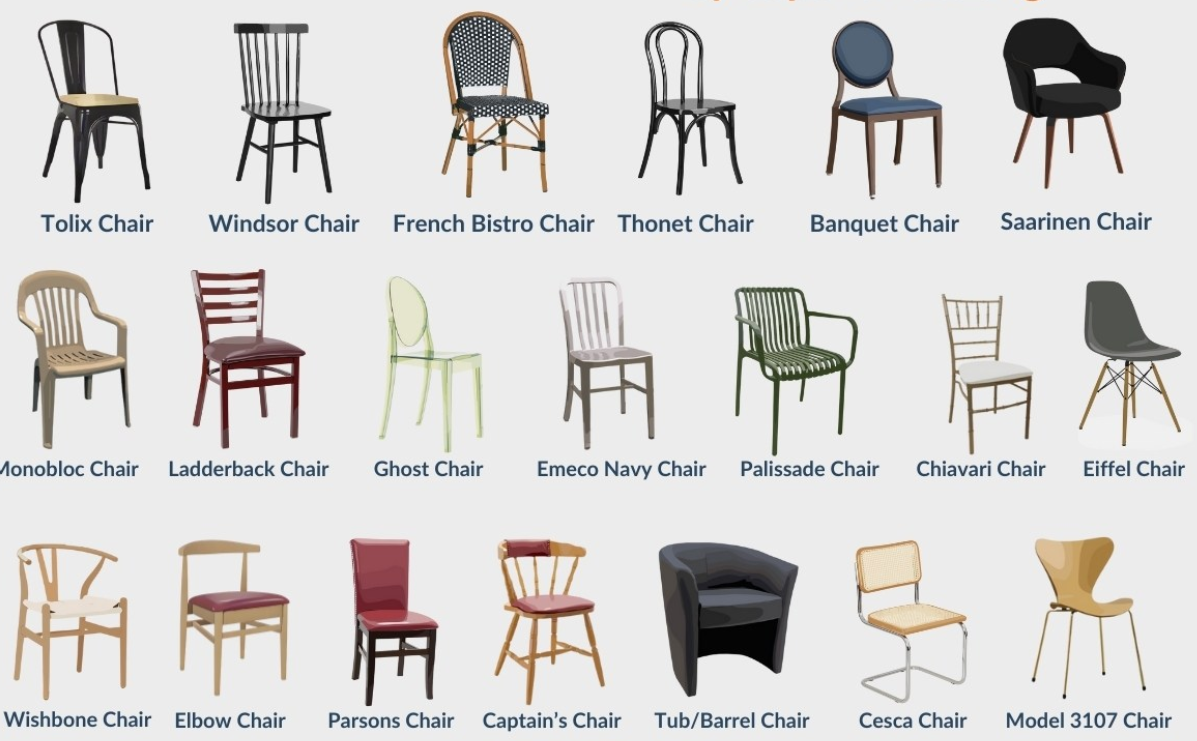
A chair is just something to sit on. Four legs, a seat, a back. Thousands of variations exist, from the most ornate throne to the most basic stool. And yet, designing a truly good chair is one of the most difficult challenges in industrial design. The simplicity is a trap. The familiarity is a deception.
Here is what actually goes into a chair that looks like it took no thought at all.
The Problem of the Average Body
The human body is not a standard shape. Height varies by more than a foot from the smallest adult to the largest. Weight varies by hundreds of pounds. Proportions vary. Leg length relative to torso. Hip width relative to height. The chair that fits one person perfectly may be uncomfortable for another.
The chair designer cannot design for the individual. They must design for the range. The seat height that works for a 5th percentile female (approximately 5’1″) is too low for a 95th percentile male (approximately 6’2″). The seat depth that supports a tall person’s thighs creates pressure behind the knees of a short person.
The solution is not one chair. It is adjustable chairs, which add complexity and cost. Or it is a specific target audience, acknowledging that the chair will not work for everyone. However, designing for a particular individual is much more evident when it comes to designing furniture for children. Chairs made for kids need to account for their smaller proportions and not based on the dimensions of a grown adult; while also taking into account how children use furniture as a means to read, draw, play, and learn. The designer who pretends otherwise is lying to themselves.
The Sitter’s Anatomy
A seated body is not static. The sitter shifts weight, changes position, leans forward, slumps back. A chair must accommodate these movements without punishing them.
The lumbar curve. The lower spine curves inward when seated upright. A flat backrest provides no support for this curve. The sitter’s muscles must hold the spine in position, leading to fatigue. A properly curved backrest allows the sitter to relax.
The ischial tuberosities. These are the two bony points at the bottom of the pelvis. They are designed to bear weight. A seat that is too soft spreads pressure to surrounding tissues, causing discomfort. A seat that is too hard concentrates pressure on the bones, causing pain. The ideal seat is firm but forgiving.
The thigh support. When the seat is too high, the sitter’s feet dangle. The front edge of the seat presses into the underside of the thigh, restricting blood flow. The leg falls asleep. When the seat is too low, the knees rise above the hips. The pelvis rotates backward, flattening the lumbar curve. The back aches.
The dimensions are not arbitrary. They are anatomical.
The Material Constraints
Chairs are made of materials that behave differently under load. Wood compresses and springs back. Metal bends and holds its shape. Foam softens over time. Leather stretches. Mesh breathes but offers less support.
Wood is warm, attractive, and renewable. It is also prone to splitting along the grain, sensitive to humidity, and difficult to curve without steam or lamination. A wooden chair that looks simple may require complex joinery to be strong enough to hold a shifting adult.
Metal is strong, predictable, and can be formed into thin, elegant shapes. It is also cold to the touch, heavy, and requires welding or casting. The iconic wire chair looks like it has no material at all. It has a significant amount of material, carefully arranged.
Plastic is lightweight, inexpensive, and can be molded into complex curves. It is also prone to cracking under repeated stress, sensitive to UV light, and difficult to repair. The single-piece molded plastic chair requires careful engineering to distribute stress across the shell.
Upholstery adds comfort and hides structural elements. It also adds cost, collects dust, and wears out. The chair that looks soft may have a hard shell beneath. The chair that looks thin may have high-density foam providing support invisible to the eye.
Every material choice is a compromise. The designer’s job is to choose the right compromises for the intended use.
The Structural Problem
A chair must hold a person who is not cooperating. The sitter leans back. The sitter shifts to one side. The sitter puts their feet up on the seat. The sitter rocks. The chair must resist these forces without breaking or tipping.
Leg placement determines stability. Legs that splay outward are more stable against tipping. Legs that are vertical are more elegant but less stable. Legs that are too close together will tip when the sitter leans back. The chair that looks like it would tip does not. The engineering is hidden.
Joinery determines strength. A chair leg attached to the seat with a simple butt joint will fail. The joint must be reinforced with dowels, screws, mortise and tenon, or welding. The chair that looks like it has no joints has joints that are invisible.
Bracing prevents racking. A chair that is not braced will wobble as the legs move out of parallel. The crossbar under the seat, the stretcher between the legs, the apron connecting the legs to the seat—these are not decorative. They are structural.
The simplest chair is a tripod. Three legs cannot wobble. Tripod chairs exist but are rare because the triangular seat is less comfortable and the single front leg interferes with the sitter’s legs. The designer who chooses four legs chooses complexity.
The Use Case
A chair for a dining table is different from a chair for a desk. A chair for a lounge is different from a chair for a waiting room. The designer must know how the chair will be used.
The dining chair. The sitter leans forward to eat. The backrest provides little support. The seat height must align with the table. The chair must be pushed under the table when not in use. Armrests would prevent this. Dining chairs rarely have armrests.
The desk chair. The sitter leans forward to work. The backrest must support the lower back. The seat must adjust in height to align with the desk. The chair must roll to reach different parts of the desk. Casters add complexity and cost.
The lounge chair. The sitter leans back to rest. The backrest must support the entire spine. The seat must be deeper to accommodate the reclined position. The chair is heavier because it is not moved frequently. Lounge chairs often have armrests because the sitter’s arms are not occupied with eating or typing.
The waiting room chair. The sitter sits briefly, then leaves. Comfort is secondary to durability and ease of cleaning. The chair is heavy to prevent theft. The chair is wide to accommodate different body sizes. The chair is ugly because the buyer values function over form.
The designer who does not know how the chair will be used is designing a sculpture, not furniture.
The Iconic Examples
The Eames Lounge Chair (1956) is a masterpiece of ergonomic and material compromise. The shell is molded plywood, curved in two directions to follow the body’s shape. The backrest and seat are separate, allowing each to pivot independently. The shock mounts between the shell and the frame absorb movement. The chair looks simple. It is not.
The Wegner Wishbone Chair (1949) is a study in structural elegance. The curved backrest is steam-bent. The Y-shaped back brace eliminates the need for a central vertical support. The woven paper cord seat is comfortable, durable, and replaceable. The chair looks like it was carved from a single piece of wood. It was assembled from multiple pieces, each shaped precisely.
The Panton Chair (1960) was the first single-piece molded plastic chair. It took years of engineering to create a shell that was strong enough, flexible enough, and stackable. The cantilevered form appears to defy gravity. It does not. The plastic is thicker at the base, thinner at the tip, and reinforced with ribs invisible to the eye.
These chairs look simple because the complexity was resolved, not because it was absent.
The Bottom Line
A simple chair is not simple. It is the product of thousands of decisions about anatomy, materials, structure, and use. The designer who makes a chair that looks effortless has done an enormous amount of work.
The next time you sit down, look at the chair. Notice the curve of the backrest. The angle of the legs. The thickness of the seat. The placement of the crossbar. Someone decided each of those details. Someone tested them. Someone refined them.
A simple chair is a lie. A beautiful lie. Designed to hide everything that made it. That is the hidden complexity. And it is the whole point.
About the Author
Peter Makeshoff
Peter Makeshoff is the founder and main author of Designer Daily.