
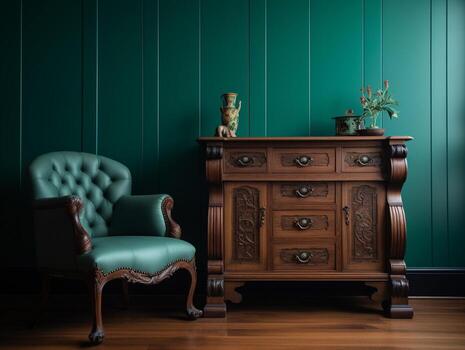
The “brown furniture” crisis has fundamentally reshaped the secondhand market in recent years. The massive, dark wood pieces, oversized armoires, mahogany sideboards, and sprawling china cabinets, that once anchored dining rooms and commanded high prices have become nearly impossible to sell. A quality Victorian wardrobe that might have fetched thousands of dollars thirty years ago now often requires paying someone to haul it away.
The “Brown Furniture” Collapse
In the antiques trade, “brown furniture” is the term for these heavy, dark wood pieces that dominated formal interiors for decades. The market has been flooded as downsizing Boomers unload their collections, but younger generations simply don’t want them. Modern living habits have changed, formal dining rooms are disappearing, replaced by open-concept kitchens. There’s no wall space in a modern home for a 400-pound hutch.
The shift is stark. As one antiques dealer notes, the Victorian chiffonier that was once worth £400 is now £100. A Georgian bureau that would have set you back £600 in 1980 is now readily available at £150. The secondary market has seen supply skyrocket while demand has plummeted.
The Quality Gap
The core problem isn’t just aesthetics, it’s that new furniture is often built to fail. As the vintage enthusiast perspective notes, even “fancy” places like West Elm, Pottery Barn, and Crate and Barrel now make furniture from plywood and MDF (medium-density fiberboard). When veneered furniture gets scratched or watermarked, there is no way to repair it. The damage is permanent.
This quality gap is why vintage and antique pieces are actually the smarter investment. As vintage experts explain, pre-1970s furniture was made from solid wood with dovetail joints. If you get a scratch, you can sand it down and reseal it. These vintage pieces are essentially indestructible and can easily last another 50 to 100 years.
Beyond Brown Furniture
The designers’ consensus extends beyond wood furniture to several other categories where vintage is superior:
- Rugs. Vintage rugs are tightly handwoven and vegetable-dyed, making them some of the most durable rugs on the market. Since no machines or chemicals were used, they generally last longer than new equivalents.
- Leather armchairs. Good leather gets better with age, becoming softer and developing a patina that’s impossible to replicate with new “distressed” finishes.
- Cabinets, hutches, and armoires. The craftsmanship and patina of old pieces simply can’t be faked. Even a slightly wobbly piece can be repaired by a carpenter.
- Light fixtures. Vintage fixtures bring patinated charm, and old wiring can be replaced by an electrician. The unique structures and finishes are not readily available from mass-produced vendors.
The Exception to the Rule
Safety-critical items like cribs, bassinets, and baby gear should be bought new unless you know the specific history. As vintage experts explain, it’s hard to keep a pulse on product recalls or modern safety regulations for older items.
The Bottom Line
When it comes to heavy furniture that’s meant to last, tables, bed frames, dressers, cabinets, buying new is increasingly a losing proposition. You’ll pay more for inferior materials and construction. The vintage alternative is often cheaper, better quality, and brings character that cannot be replicated.
The pieces you should never buy new are the ones that need to survive, your dining table, your bed frame, your storage pieces. The ones you should buy new are the items where safety or sanitation is a concern. Everything else, as vintage enthusiasts will tell you, is just paying more for less.
About the Author

Peter Makeshoff
Peter Makeshoff is the founder and main author of Designer Daily.