
It is a scene that plays out in design studios everywhere. A designer loads a page, it feels quick, they declare it done. But ask three different people when a page is “loaded,” and you will get four different answers. The browser, on the other hand, is painfully precise. It tracks everything: navigation start, response received, DOM parsing, layout, paint, and load events. These are not opinions; they are timestamps .
The 2-Second Illusion
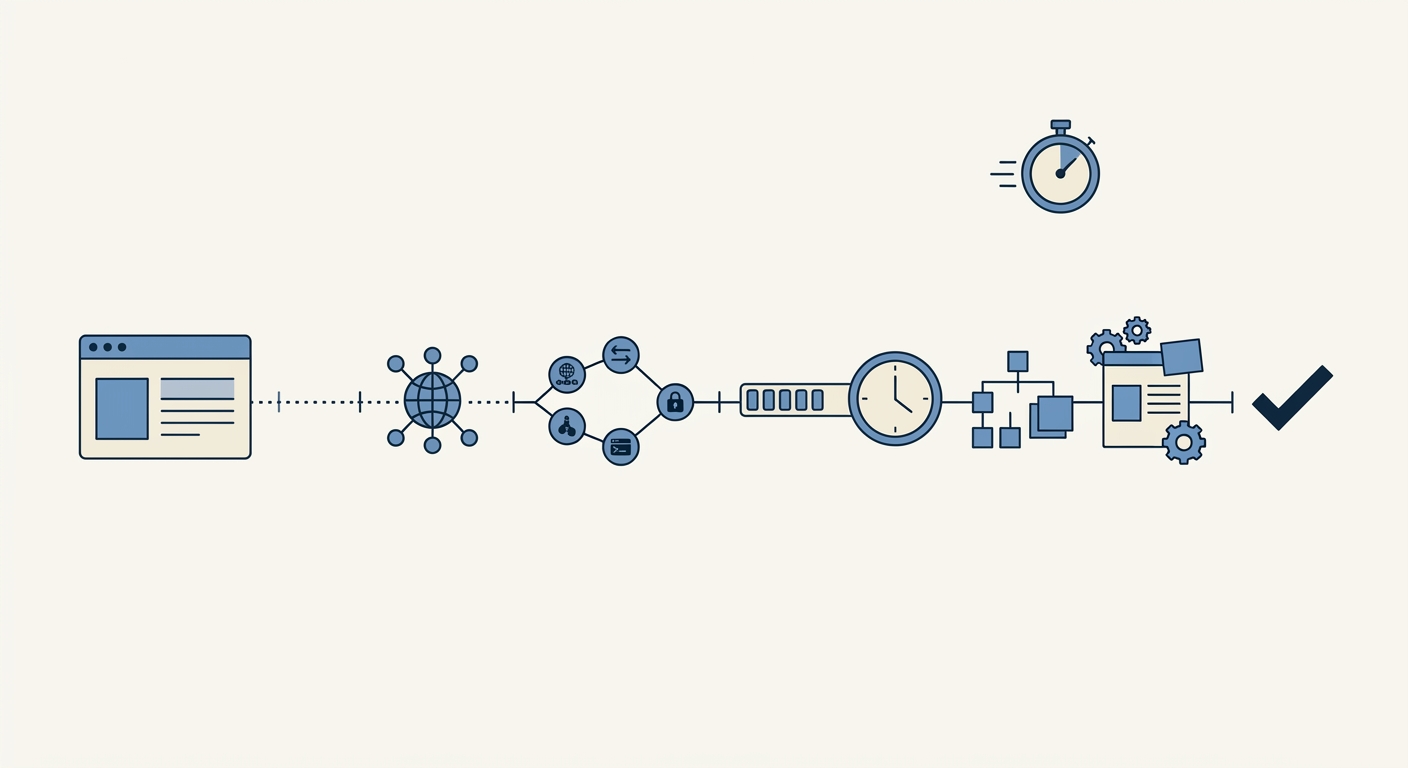
When you hit Enter, an astonishing series of events unfolds. The browser translates the domain name via DNS (20-120ms), establishes a TCP connection with a three-way handshake (10-50ms), negotiates encryption with TLS (another round trip), sends the HTTP request, and finally renders the page. The entire journey, DNS, TCP, TLS, HTTP, render, happens in about 1-2 seconds .
Yet a page that feels fast might still be blocking the main thread for seconds, delaying rendering, or doing nothing visually while JavaScript works overtime. The feeling of speed is not the same as actual performance .
What the Browser Sees
Chrome’s rendering engine (Blink) can parse HTML into a DOM tree, merge it with CSS to form a render tree, calculate layout, and paint pixels in under 100ms for a typical page. That part is fast. The delays happen elsewhere: server-side processing, render-blocking resources, or poorly placed script tags that freeze the page .
Slow Time to First Byte? Look at the server. Fast TTFB but slow page load? Check for render-blocking resources .
What Users Actually Feel
For the user, load time is not a metric. It is an emotion. They do not care about navigation timings. They care about when the page stops jumping, when the button they want becomes clickable, and when the spinner disappears. These moments are subjective, but they define the experience .
A Better Question
Instead of asking, “Did the page load fast?” ask: “When did rendering start? Where did time disappear? What happened before the page became usable?” Those questions lead to understanding, not guesswork .
The next time someone says, “It loads in about two seconds,” you can ask: “According to whom?” The answer will tell you everything you need to know about the gap between perception and reality.
About the Author

Peter Makeshoff
Peter Makeshoff is the founder and main author of Designer Daily.