
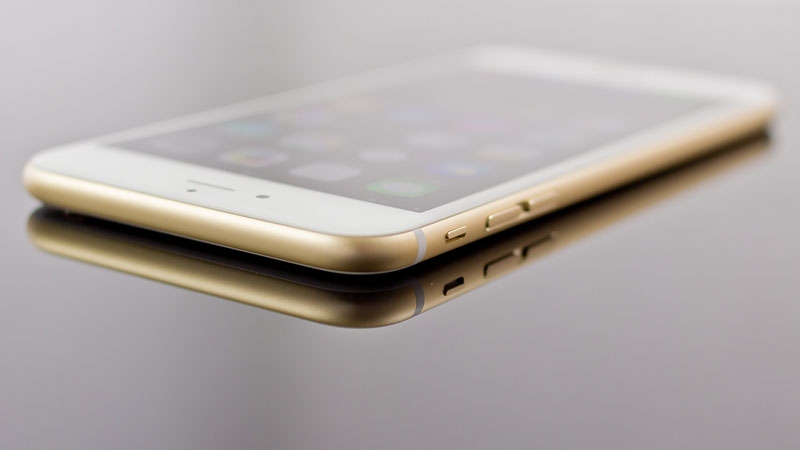
Industrial design is a discipline of millimeters. A change of a single millimeter, invisible to the eye, can determine whether a product feels perfect or broken. The story of the iPhone 6 Plus is a reminder that design is not about grand gestures. It is about the accumulation of small details that the user feels but cannot articulate.
The Product
In September 2014, Apple launched the iPhone 6 Plus. It was the company’s first foray into the “phablet” category, a device with a 5.5-inch screen designed to compete with the growing market for larger phones . The design was elegant, the engineering was solid, and the initial sales were record-breaking: 10 million units shipped in the first three days .
But the device had a flaw. It was too thin.
The iPhone 6 Plus measured just 7.1 millimeters thick. The aluminum chassis was designed to be lightweight and sleek, a hallmark of Apple’s design language. But the combination of a larger footprint and a thinner profile created a structural vulnerability that users would discover within days of launch.
The Consequence
Within a week of the phone’s release, reports began surfacing on social media and tech forums. Users complained that their iPhone 6 Plus had bent after being carried in their pockets . One user, known as “hanzoh” on MacRumors, reported that his phone was “slightly bent” after he drove with the device in his pocket for about 18 hours. When he laid it flat on a coffee table, he could see the distortion in the reflection of the window .
The problem was structural. The iPhone 6 Plus had areas of the aluminum shell that were less than a quarter of an inch thick in some spots. The weakest points were near the volume buttons and the SIM card slot, where segments of the shell were cut out to make room for components. These cutouts created stress points where the aluminum could deform under pressure .
A video by YouTube user Lewis Hilsenteger demonstrated the vulnerability dramatically. In the video, which has been viewed more than 13.8 million times, he bent the phone using only his hands . The video sparked a global conversation. “Bendgate” became an internet meme, discussed on BBC Radio 4’s Today programme .
Apple’s response was measured. The company stated that only nine customers had complained about bending, and that the phones were tested for pocket scenarios . Phil Schiller, Apple’s head of marketing, said it was “extremely rare” for bending to happen in real-world use. But the narrative had already taken hold.
The Lesson
The iPhone 6 Plus did not fail commercially. It sold millions of units and remains one of Apple’s most successful products. But it failed in a different way: it revealed a design flaw that users could feel, even if they could not see it.
The flaw was not visible in renders or specifications. It was not obvious in the Apple Store. It emerged only in the context of daily use: the phone in a pocket, the pressure of sitting, the accumulation of stress over time. The millimeter of thickness that made the phone sleek also made it vulnerable.
Apple learned from the experience. Subsequent iPhone models, including the iPhone 6s, used a stronger aluminum alloy (7000 series) to address the structural concerns. The company also adjusted its testing protocols to include more real-world stress scenarios.
The Bottom Line
The iPhone 6 Plus is a cautionary tale about the limits of thinness. The pursuit of sleekness is a design value, but it is not the only value. Durability, structural integrity, and the realities of how people actually use their devices matter just as much.
The designer who obsesses over the millimeter must also obsess over the context. The user does not care about the specification sheet. They care about the feel in their hand, the weight in their pocket, the confidence that the device will survive the day. When the millimeter undermines that confidence, the design has failed, no matter how beautiful it looks on a screen.
About the Author

Peter Makeshoff
Peter Makeshoff is the founder and main author of Designer Daily.