
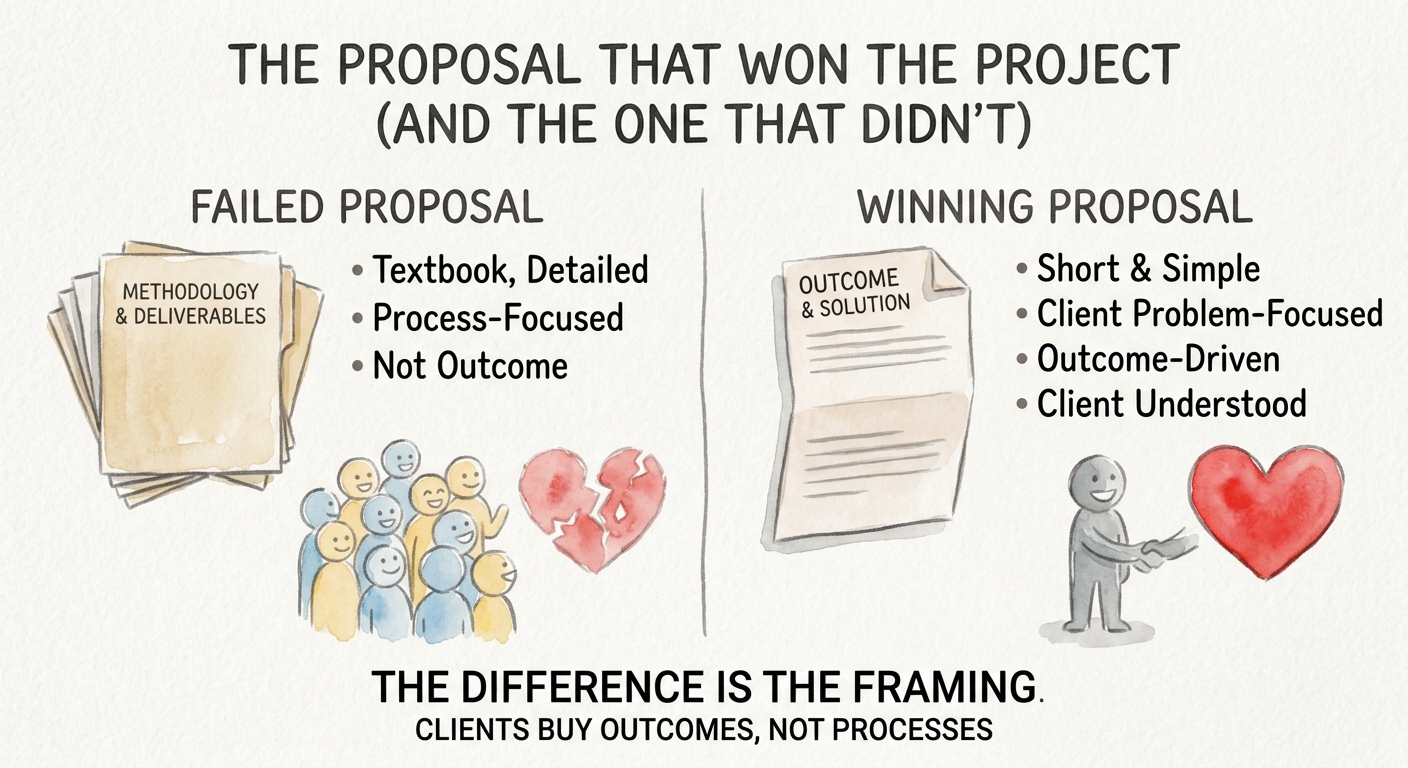
Two proposals. Two meetings. Two very different outcomes. The first proposal was a thing of beauty. It was detailed, thorough, and visually stunning. It outlined every phase of the project, listed every deliverable, and included a detailed timeline. The client nodded along as we presented it, asked a few questions, and then politely declined.
The second proposal was shorter, simpler, and less polished. It focused on the client’s problem, not our process. It described the outcome, not the steps. The client said yes before we finished presenting. The difference was not the quality of the work. It was the quality of the framing.
The Proposal That Failed
The first proposal was a textbook example of how to present a project. We started with a detailed description of our methodology, followed by a breakdown of the phases, and concluded with a timeline and budget. Every question the client might have had was answered. Every concern was addressed. It was comprehensive, professional, and complete.
The client listened carefully, asked a few clarifying questions, and then said they would get back to us. They never did. We followed up. They said they had gone with another firm. We asked why. They said the other firm’s proposal was more compelling.
We had focused on our process. The client was focused on their outcome. We had shown them how we would work. They wanted to know what we would achieve. The proposal was about us. It should have been about them.
The Proposal That Succeeded
The second proposal was structured differently. We started with a clear statement of the client’s problem, using their own language. We described the outcome they wanted, not the process we would follow. We included a simple timeline and a single, clear price. The proposal was a commitment, not an explanation.
The client said yes before we finished presenting. They did not ask about our methodology. They did not question our timeline. They trusted us because we had demonstrated that we understood their problem. The proposal was not about us. It was about them.
The Difference
The difference between the two proposals was not the quality of the work. It was the quality of the framing. The first proposal was about us. The second was about them. The first proposal explained what we would do. The second described what they would get.
Clients do not buy processes. They buy outcomes. They do not care about your methodology. They care about your results. A proposal that focuses on the process is a proposal that is easy to reject. A proposal that focuses on the outcome is a proposal that is easy to accept.
The Lesson
The lesson is simple: put the client first. The proposal is not about you. It is about them. Lead with their problem, not your process. Describe their outcome, not your steps. The client will trust you if you show that you understand what they need.
The proposal that won the project was not the one with the most detail. It was the one with the most clarity. It was the one that showed the client that we understood their problem and could solve it. The proposal that lost the project was the one that showed the client that we understood our own process. The difference was not the work. It was the framing. Start with the client. The rest will follow.
About the Author

Peter Makeshoff
Peter Makeshoff is the founder and main author of Designer Daily.