
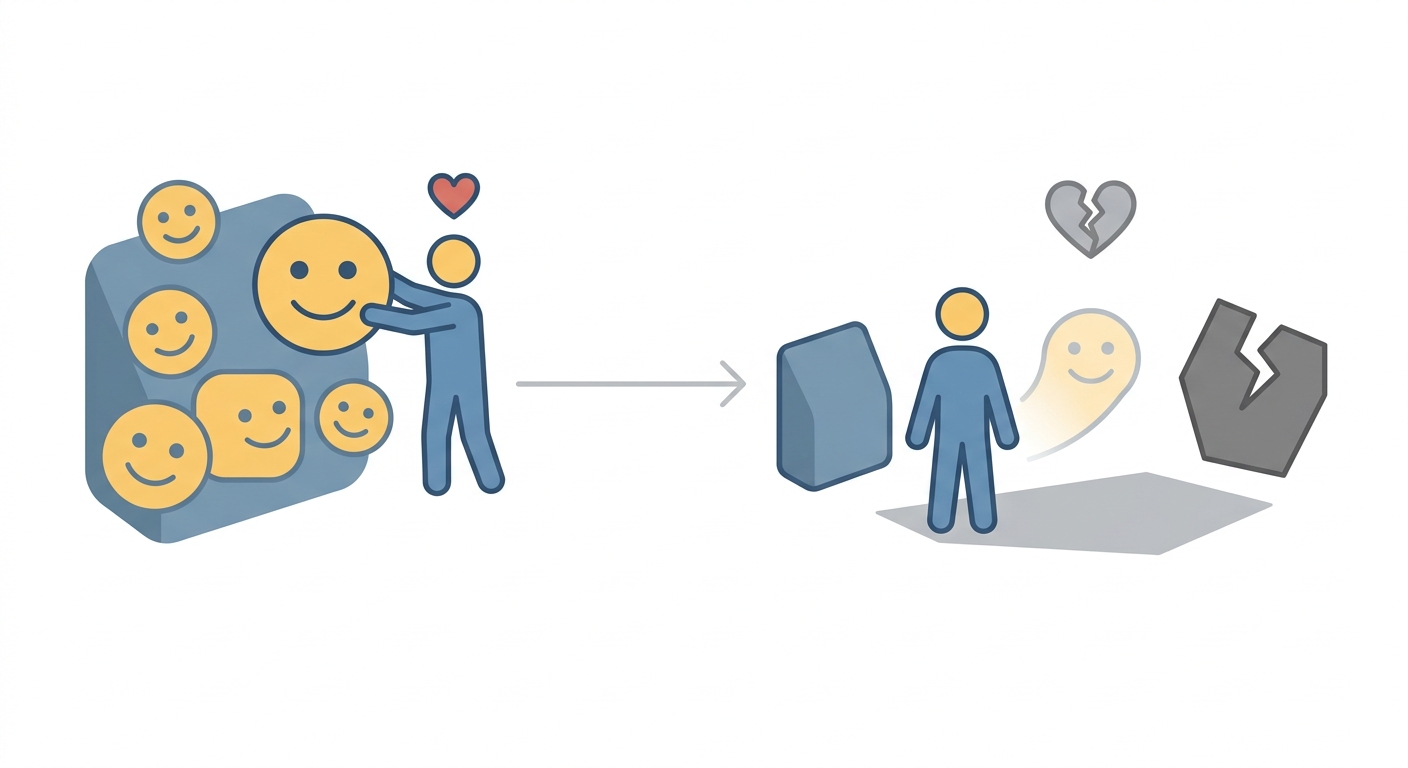
There is a moment in every product manager’s life that is both humbling and mysterious: the moment you lose a user who should have stayed. They engaged with the product, praised its features, and seemed to be on the path to long-term loyalty. Then one day, they were gone. Not with a bang, but with a quiet, unceremonious silence. Your analytics show they were an “active” user, your NPS scores are high, and you have a folder full of positive feedback. You start to wonder if they were replaced by a bot.
The Suitcase Problem
One of the most revealing stories in product design comes from a study of how people pack for a trip. In a classic experiment, researchers found that first-time campers and experienced campers packed different numbers of items. The reason was simple: the first-time campers had never been camping before.
I have a theory about this. I call it the “suitcase problem.” When you go on a trip, your suitcase is a container for your clothes. But your suitcase does not care if you pack a suitcase, because you are not a suitcase. Your user’s suitcase is their product.
When a user loves your product and still leaves, it is often because the product solved the problem they had when they started, but not the problem they have now. Users are not static. They grow. Their needs change. The product that was perfect for them six months ago may be inadequate today.
The Data You Are Not Tracking
The data you are tracking tells you what users did, not why they did it. You know when they signed up, when they last logged in, and how many features they used. But you do not know why they stopped using the product. You do not know if they found a better solution, if their needs changed, or if they simply forgot about you.
This is why analytics alone is not enough. The user who loved your product and still left is a user who had a reason to leave. That reason is often invisible in the data. You have to look for it.
The Invisible Friction
The user who leaves is often the user who experienced friction that was not obvious to the designer. A button that was hard to find. A workflow that was slightly awkward. A feature that was missing. These are not catastrophic failures. They are small, cumulative frustrations.
The user does not leave because of a single bad experience. They leave because the product no longer fits. They leave because the friction outweighs the value. They leave because they found a better alternative.
The Bottom Line
The user who loved your product and still left is not a failure. They are a signal. They are telling you that your product is not as sticky as you think. They are telling you that you are not tracking the right data. They are telling you that you are not listening to the silence.
You can keep chasing new users, or you can figure out why the old ones are leaving. The user who loved your product and still left is the user you should be studying. They are the key to the next version. They are the key to retention.
The Next Step
The user who loved your product and still left is a user who had a reason to leave. That reason is not a failure. It is a gift. It tells you what you are missing. It tells you what you need to fix. It tells you what the next version of your product should be. The data is not the answer. The user is. Start listening to the silence. It is the loudest sound in the room.
About the Author
Peter Makeshoff
Peter Makeshoff is the founder and main author of Designer Daily.