
Custom hoodies remain one of the most requested apparel items for brands, schools, event organizers, and online sellers in 2026. Picking the right vendor affects your cost per unit, turnaround time, and how your finished product actually looks and feels.
This list ranks the top seven companies for custom printed hoodies based on order flexibility, print quality, catalog variety, and how well each platform supports sellers who want to launch a hoodie line without holding inventory. Each entry below explains who the company serves best and where it fits into your buying decision.
The rankings favor platforms that combine low financial risk with genuine product variety, since most buyers in 2026 want either a single personalized hoodie or a scalable storefront rather than a one-time bulk purchase. Pricing, minimums, and turnaround time can shift throughout the year, so treat the details below as a starting point rather than a final quote.
Comparison Table
| Rank | Company | Best For | Order Minimum | Primary Model |
| 1 | Printify | Print on demand sellers | None | Dropship / POD |
| 2 | Printful | Branded POD storefronts | None | Dropship / POD |
| 3 | Custom Ink | Beginner-friendly design | None | Outsourced production |
| 4 | Bonfire | Fundraising and cause hoodies | None (POD) / small batch minimum | Campaign-based POD |
| 5 | Underground Printing | Large bulk group orders | None, priced for volume | Bulk screen print |
| 6 | Gooten | API-driven POD integrations | None | Dropship / POD |
| 7 | Spreadshirt | Pre-made design marketplace | None | Dropship / POD |
1. Printify
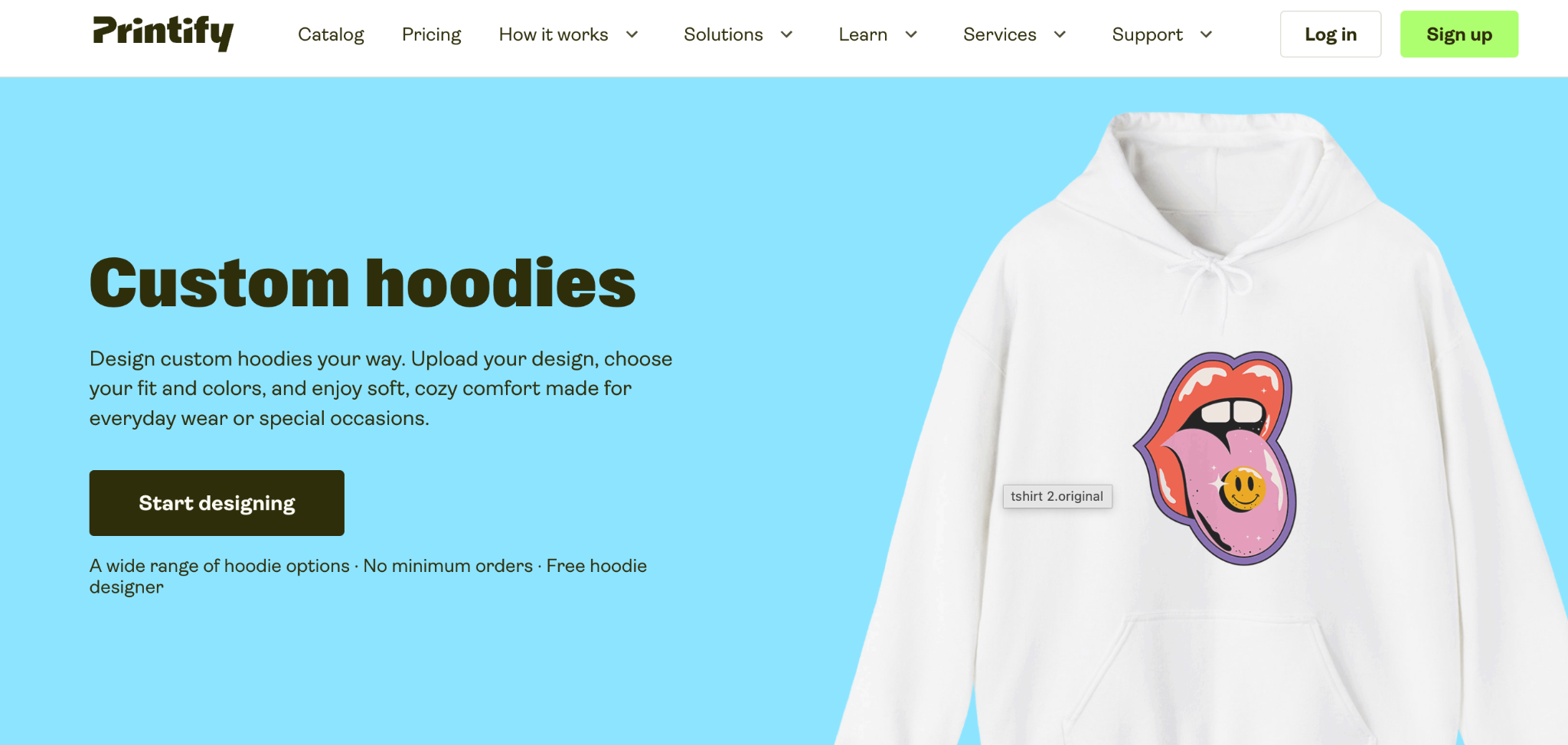
Printify tops this list for 2026 because it removes the two biggest barriers to selling custom hoodies: inventory and upfront cost. Sellers connect a store to platforms like Etsy, Shopify, or TikTok Shop and only pay for a hoodie once a customer actually orders it.
The platform runs on a network of independent print providers spread across multiple continents, which lets sellers choose a facility based on price, location, or delivery speed. This structure means the same hoodie design can ship from a facility near the buyer instead of crossing an ocean first.
For anyone comparing hoodie printing options this year, Printify for custom hoodie printing stands out for its catalog depth, covering pullover, zip-up, cropped, and all-over-print styles from brands like Gildan, Independent Trading Company, and adidas. The free Product Creator tool also lets sellers upload artwork, add text, or generate AI-based designs without needing separate design software.
Printify does not manufacture the hoodies itself, which means quality can vary slightly between print providers on the same product page. Reading provider reviews before choosing a specific listing helps sellers avoid that inconsistency.
Pricing on Printify also benefits from a paid Premium membership tier that lowers per-unit costs across the catalog. For sellers planning to publish hoodies regularly, that discount can add up to meaningful monthly savings compared to paying standard rates on every order.
2. Printful
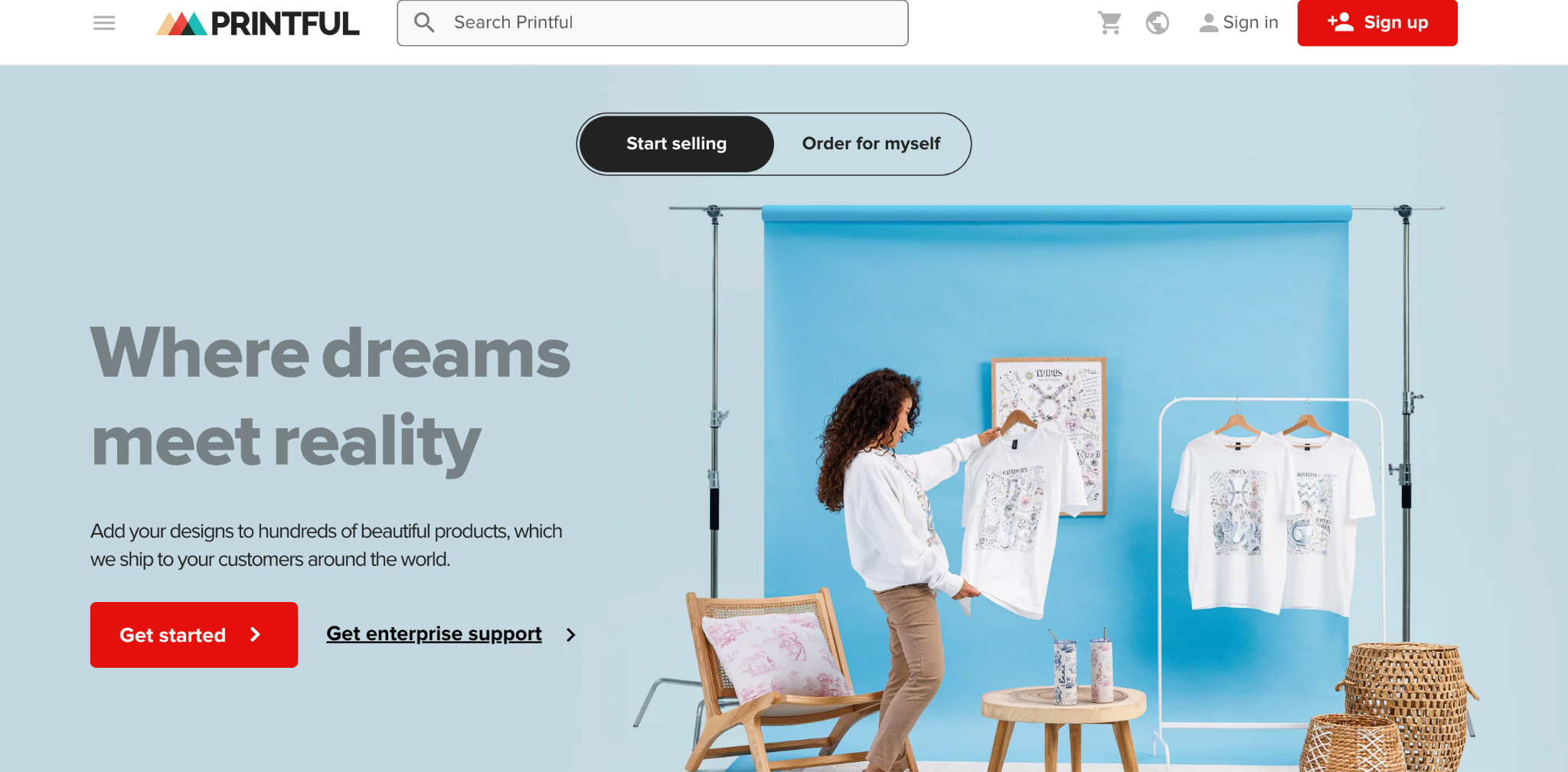
Printful is Printify’s closest competitor and one of the most established names in print on demand apparel. The two companies merged as equal partners in November 2024 and now operate under a shared parent brand called FYUL, though Printful and Printify continue to run as separate storefronts with their own catalogs and pricing.
Printful is known for owning more of its production process in house compared to some competitors, which can mean tighter quality control on certain garments. Its hoodie lineup includes eco-conscious fabric options and premium embroidery add-ons for brands that want a higher-end feel.
Pricing tends to run slightly above Printify on comparable blanks, which matters for sellers working with thin margins. Printful still makes sense for brands prioritizing consistent in-house quality over the widest possible provider choice.
Printful’s catalog also includes branded packaging inserts and custom labels, features aimed squarely at sellers building a recognizable brand rather than a single hoodie drop. That focus makes it a natural comparison point whenever Printify comes up in a sourcing decision.
3. Custom Ink
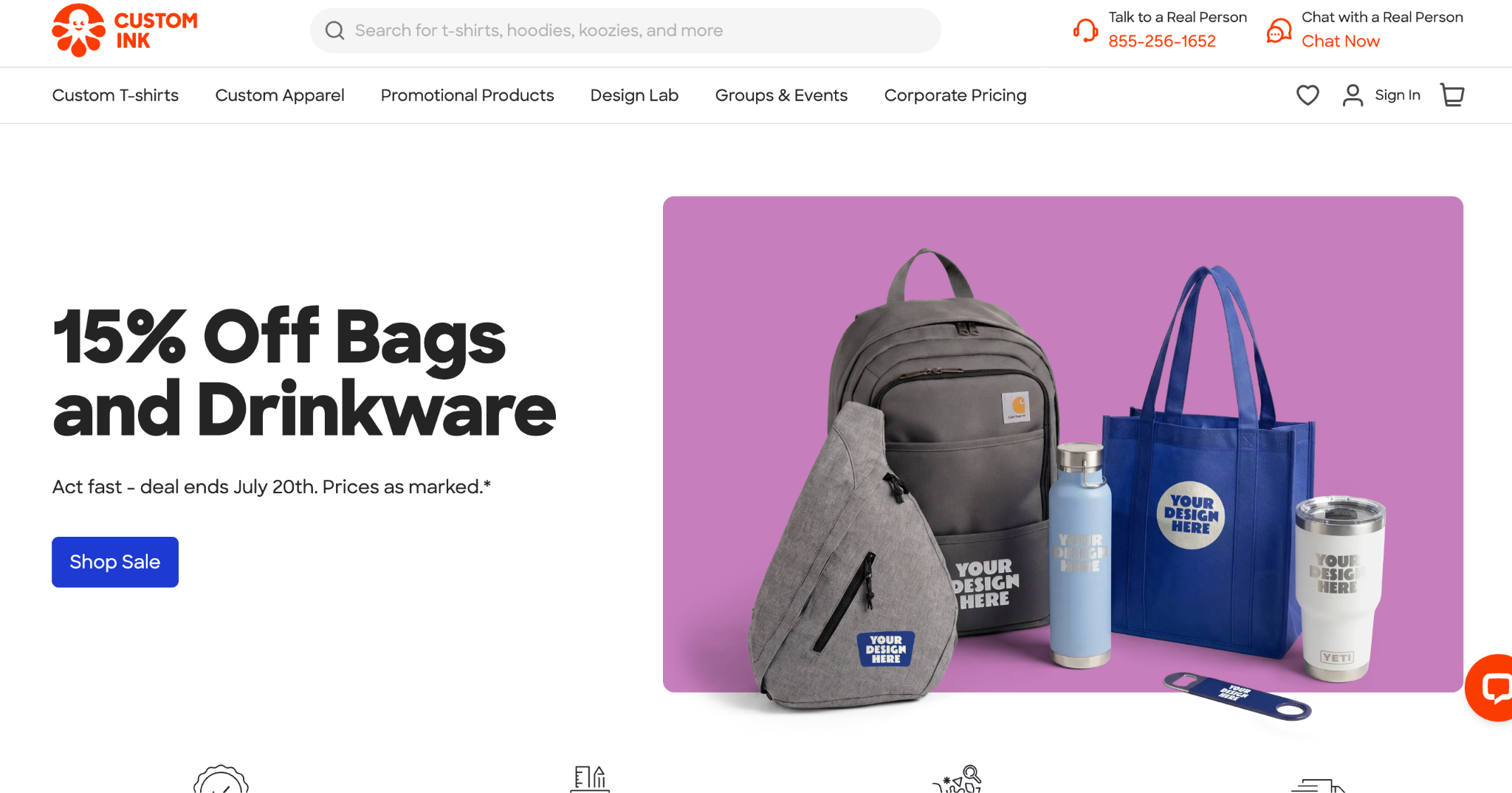
Custom Ink built its reputation on an easy, guided design tool aimed at first-time buyers rather than experienced sellers. Groups like school clubs, sports teams, and small businesses use it to design a hoodie without needing any prior print experience.
The company outsources actual production to partner facilities, which can introduce some variability in turnaround time depending on order complexity. All-inclusive pricing that bundles design help, printing, and shipping into one quote is one of the platform’s most requested features among first-time customers.
Custom Ink works best for one-off group orders rather than an ongoing hoodie business. Sellers looking to scale a storefront over time may find the per-unit costs less competitive than dedicated print-on-demand platforms.
Customer service is one of the platform’s strongest selling points, with dedicated reps available to help first-time buyers finalize artwork. That guided experience carries a premium, so budget-focused organizers may still want to compare quotes elsewhere before committing.
4. Bonfire
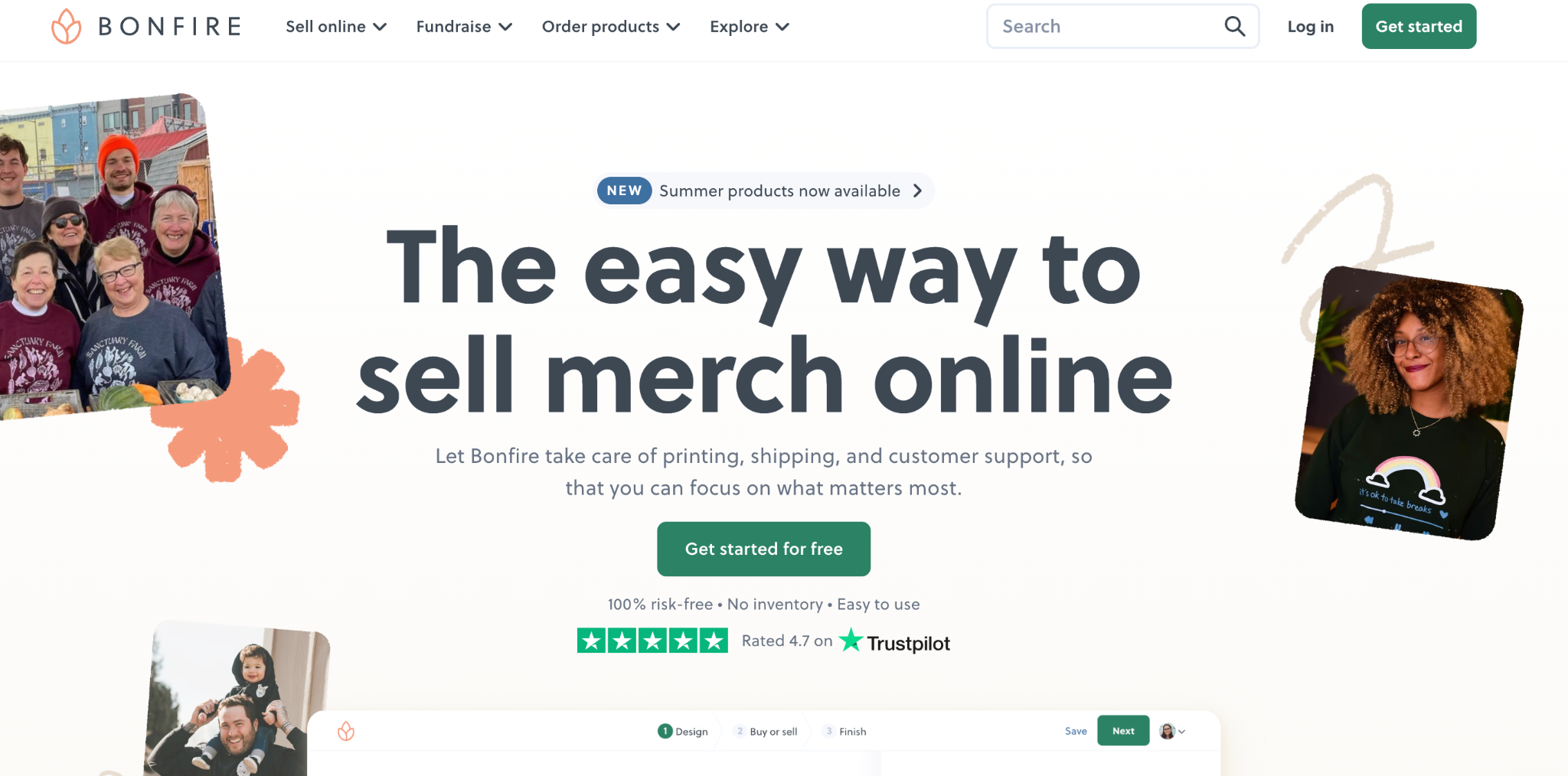
Bonfire built its entire model around cause-driven and fundraising apparel, making it a strong pick for nonprofits, campaigns, and community groups. Organizers set a goal price, share a campaign link, and Bonfire prints and ships each hoodie only after a supporter places an order.
This campaign structure removes most financial risk for the organizer since nothing gets printed speculatively. Standard batch campaigns do carry a small print threshold, usually just a handful of units, though Bonfire’s print on demand batch option removes that requirement entirely.
The tradeoff is less flexibility for ongoing retail sellers who want a permanent, always-open storefront. Bonfire fits short campaigns better than a long-term hoodie brand.
Design options lean toward simple text and logo placements rather than elaborate all-over prints. Groups needing more advanced customization for a permanent shop may prefer a broader print-on-demand catalog once the campaign wraps up.
5. Underground Printing
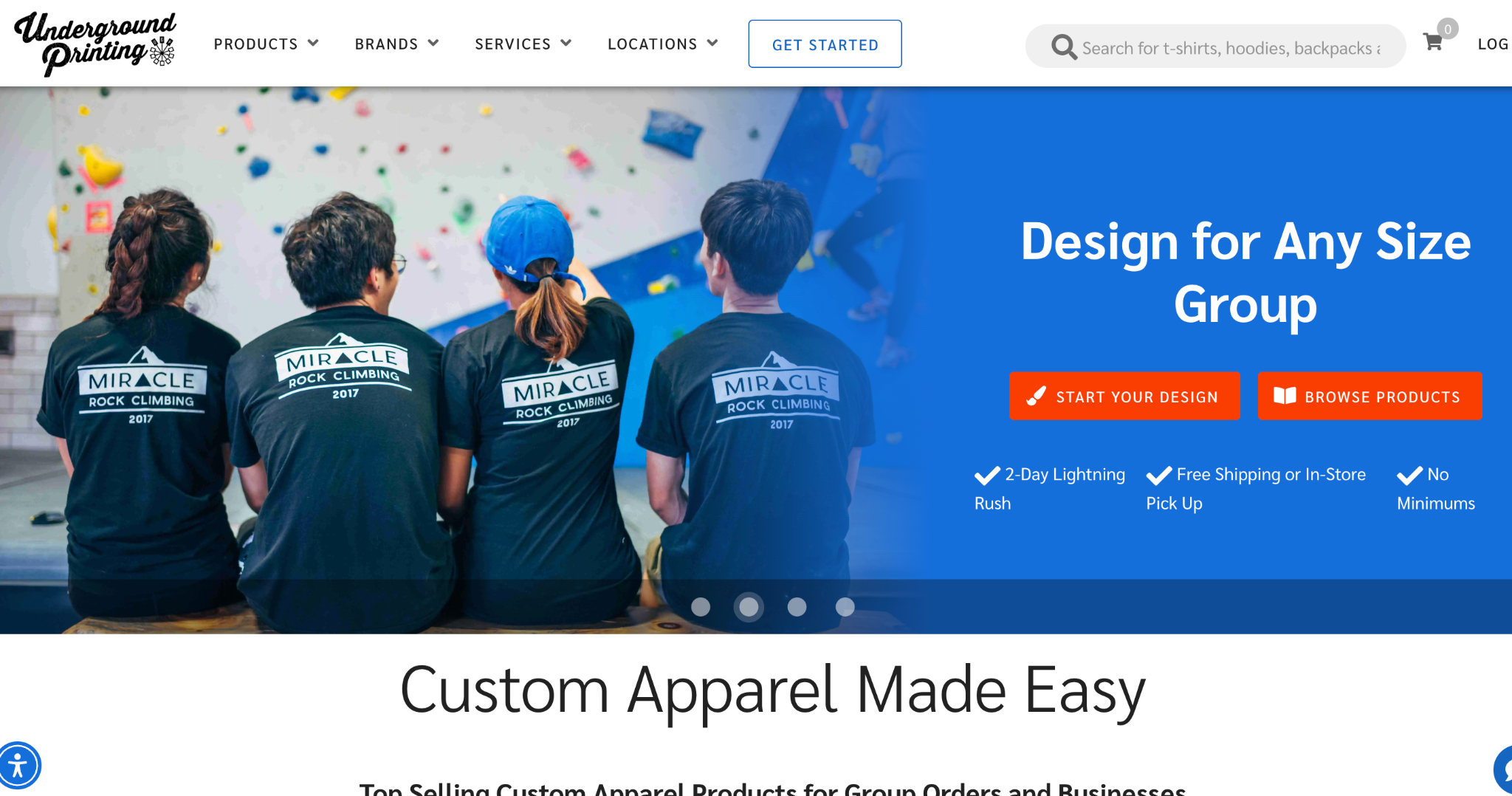
Underground Printing focuses on bulk group orders, particularly for university organizations, Greek life, and large corporate events. The company operates through a mix of retail locations and online ordering, giving buyers the option to work with a local representative.
Its pricing structure rewards volume, so per-hoodie costs drop meaningfully once an order crosses into the hundreds of units. Smaller orders under two dozen pieces tend to carry a higher per-unit price compared to dedicated print-on-demand platforms.
Underground Printing suits event coordinators who already know their exact headcount and design in advance. It is less suited to sellers who want to test a design before committing to a large print run.
Retail locations give buyers the option to see fabric samples in person before finalizing an order. That in-person touch is a genuine advantage for local groups, though it also limits the company’s reach compared to fully online competitors.
6. Gooten
Gooten operates primarily as an API-first print-on-demand platform built for developers and larger e-commerce operations. Rather than a simple storefront connector, Gooten focuses on giving businesses direct technical control over order routing, fulfillment logic, and provider selection.
This makes it a strong fit for brands running custom e-commerce builds or managing high order volumes across multiple sales channels. The tradeoff is a steeper setup curve for sellers who are not comfortable working with integrations or technical documentation.
Gooten’s hoodie catalog covers standard pullover and zip styles from familiar blank brands. Casual sellers just starting out may find Printify or Printful faster to launch with.
Gooten’s real strength shows up at scale, where automated order routing across multiple facilities can reduce shipping delays for high-volume merchants. That infrastructure focus explains why the platform attracts more technical teams than individual hobbyists.
7. Spreadshirt
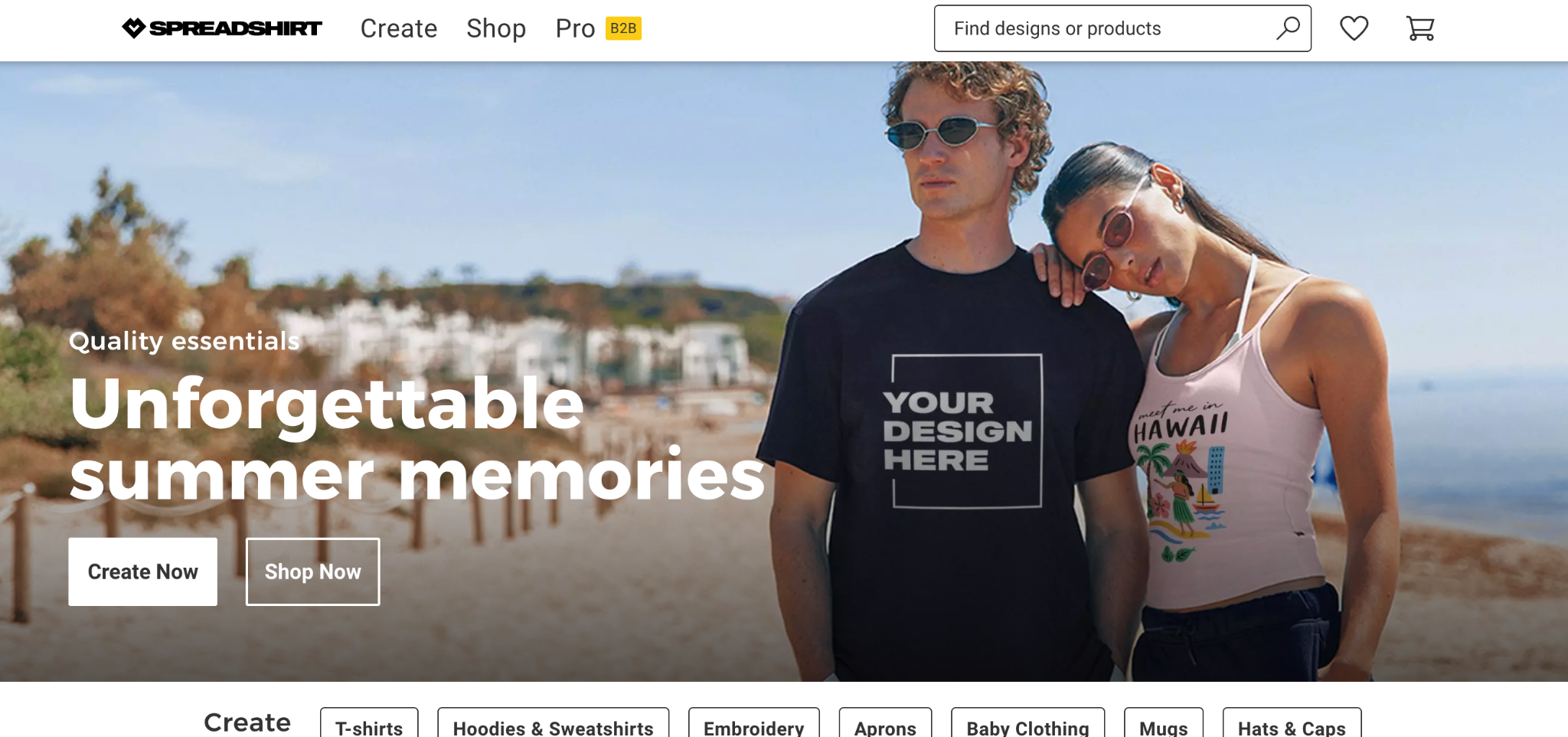
Spreadshirt runs one of the largest marketplaces of pre-made, ready-to-use designs that buyers can apply directly to a hoodie. This makes it a fast option for shoppers who want a finished look without uploading original artwork.
Sellers can also list their own designs on Spreadshirt’s marketplace and earn a commission when a shopper purchases the printed hoodie. Production quality on core garments is generally solid, though shipping costs and per-unit pricing can climb for lower quantities.
Spreadshirt fits buyers and casual sellers who value convenience over deep customization. Brands wanting full control over fabric, fit, and print placement may prefer a platform with a broader print-on-demand catalog instead.
The marketplace format also means shoppers can discover a hoodie without knowing the original designer’s storefront. That built-in browsing traffic is one advantage smaller, standalone print-on-demand shops do not automatically get.
Frequently Asked Questions
What is the best company for custom printed hoodies in 2026?
Printify ranks first this year due to its no minimum order policy, wide print provider network, and free design tools for sellers. Printful follows closely for brands wanting tighter in-house quality control.
Do I need to buy hoodies in bulk to get a good price?
No, print-on-demand platforms like Printify and Printful let buyers order a single hoodie without a bulk discount requirement. Bulk-focused vendors like Underground Printing do offer lower per-unit pricing once order volume increases significantly.
What’s the difference between print on demand and traditional bulk printing?
Print on demand platforms produce each hoodie only after a customer places an order, so the seller never holds inventory. Traditional bulk vendors print a full batch upfront, which usually lowers the per-unit cost but requires paying for the entire run in advance.
Can I sell custom hoodies without owning inventory?
Yes, platforms like Printify, Printful, Gooten, and Spreadshirt connect directly to storefronts on Etsy, Shopify, and similar platforms. Orders are produced and shipped automatically once a customer buys, so the seller never touches physical stock.
Which printing method works best for detailed hoodie designs?
Direct-to-garment printing handles detailed artwork and color gradients well on cotton-blend hoodies. All-over-print sublimation works better for bold designs that need to cover the entire garment, including seams and sleeves.
Final Thoughts
Choosing the right custom hoodie company in 2026 comes down to matching the platform to your order size and business model. Sellers testing a new design or launching a storefront with no upfront cost will likely find Printify or Printful the strongest starting point.
Groups with a firm headcount and a one-time need are better served by bulk-focused vendors like Underground Printing or a guided platform like Custom Ink. Whichever company you choose, comparing print methods, minimums, and turnaround time up front will save both money and frustration once the order ships.
Print on demand has made it far easier to test a hoodie design before committing real money to a full production run. Starting with a no minimum platform and scaling into bulk pricing once a design proves itself remains one of the lowest-risk paths into the custom apparel business.
About the Author

Peter Makeshoff
Peter Makeshoff is the founder and main author of Designer Daily.