
Modernizing old systems is no longer a purely technical job. If the user experience is bad, the project fails. The smart move is to lead with design. We’re looking at three firms that master both engineering and user experience. That’s how you turn a legacy burden into a functional tool.
Firms Redefining Legacy Modernization Through Design
Modernization is more than updating old code. It requires redesigning the user experience to increase engagement, productivity, and value.
The following firms integrate design strategy directly into their technical modernization work to turn outdated systems into business assets.
CHI Software
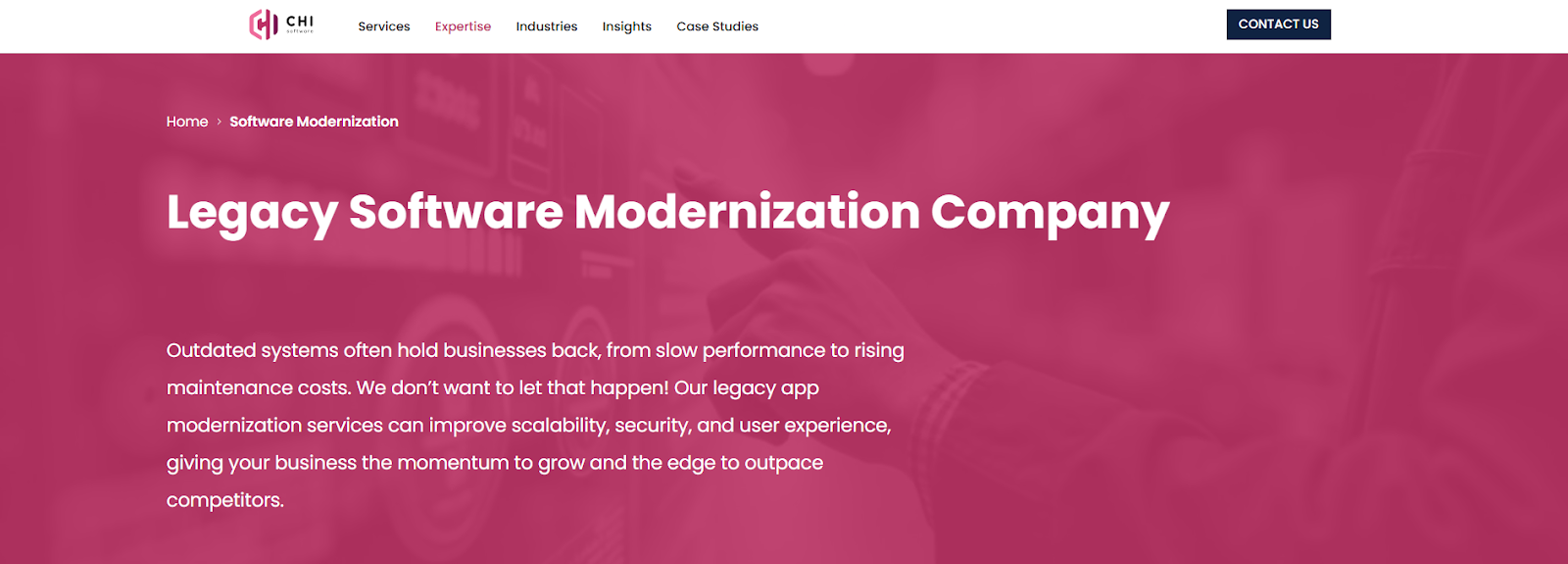
CHI Software is a legacy software modernization company, converting old systems into scalable, secure, and user-focused platforms. It builds web and mobile applications for sectors including retail, fintech, travel, and logistics, combining design thinking with technical upgrades.
The company holds ISO 27001 and ISO 9001 certifications, confirming its adherence to recognized security and quality standards.
Expertise spans comprehensive modernization services:
- API & Technology Modernization: Upgrading legacy frameworks and rebuilding APIs using REST, GraphQL, or gRPC for improved integration and performance.
- DevOps Transformation: Implementing CI/CD pipelines and infrastructure-as-code to automate delivery and enhance operational efficiency.
- Cloud Migration: Carefully moving systems to AWS, Azure, or GCP with Kubernetes and Terraform for secure, optimized architectures.
- UI/UX Redesign: Refreshing interfaces with responsive, data-driven designs to improve usability and engagement.
- Cybersecurity Enhancement: Embedding security testing and compliance automation into DevSecOps pipelines to protect data.
Each project starts with a comprehensive analysis and applies recognized frameworks. The scope may involve straightforward refactoring or advance to a complete cloud-native overhaul. This strategy combines current technology stacks, microservices, containers, and DevSecOps practices. The result is better system performance, reduced long-term costs, and a stronger security posture.
CHI Software modernizes legacy systems so organizations can scale their operations, adapt to market changes, and provide a smooth user experience. This turns outdated technology into a real competitive advantage.
Entrans
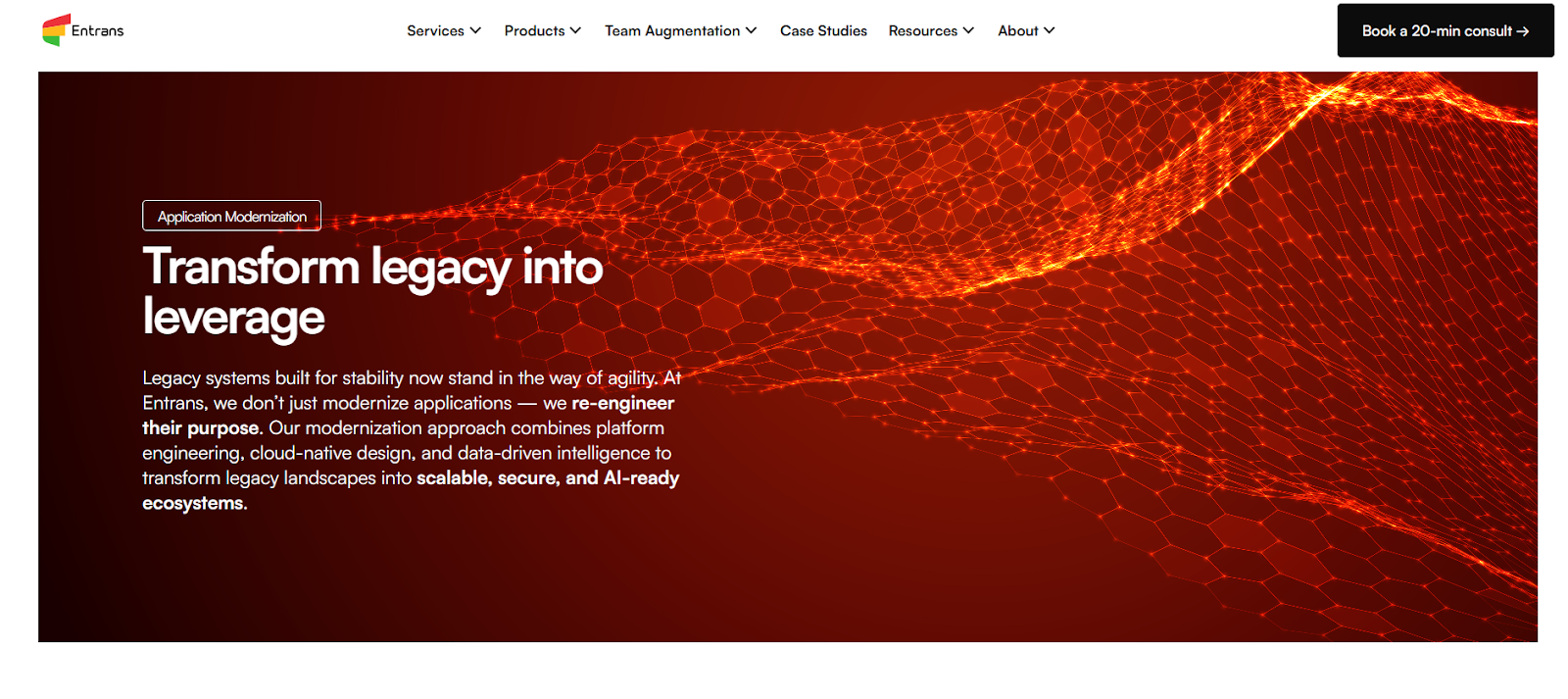
Entrans operates as an AI-first digital engineering and legacy software modernization company. Its focus is on enterprise digital transformation. The firm specializes in the modernization of legacy systems and the implementation of intelligent automation. The objective of this work is to improve operational efficiency and scalability for its clients.
The goal at Entrans is business-driven modernization. Their approach starts with a thorough assessment of the legacy application, its accumulated technical debt, and cloud readiness. They provide several key services to execute this:
- Assessment: Audits legacy apps to build data-driven roadmaps.
- Architecture Design: Creates blueprints for microservices and cloud-native systems.
- Replatforming: Migrates to cloud platforms and refactors monoliths.
- Automation: Implements DevOps/DevSecOps with CI/CD and cost controls.
- UI/UX: Redesigns interfaces to modern standards.
- Support: Provides ongoing monitoring and iterative updates.
This full-process method allows businesses to methodically replace old technology with systems that are scalable, secure, and smart.
Imaginary Cloud
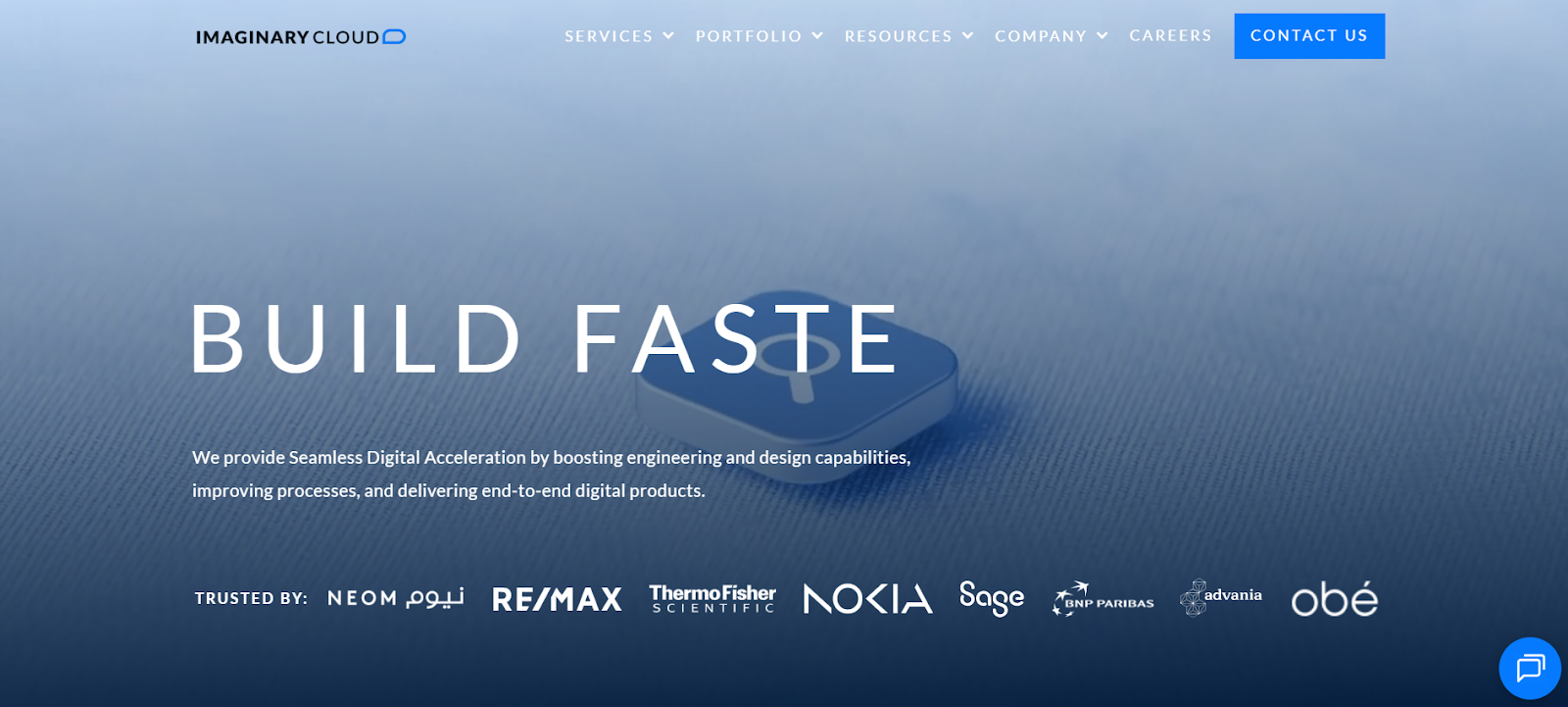
Imaginary Cloud is a digital product and legacy modernization consultancy founded in 2010, operating from Portugal with offices in the UK and the USA. The company has delivered over 300 projects across more than 20 industries, known for a practical, human-focused design approach and reliable agile delivery.
Its methodology connects strategic planning with clean engineering to accelerate digital projects. The firm’s modernization services ensure technology supports business growth through clear, actionable steps:
- Strategic Definition: Outlining the product and scope to lower initial risk.
- Human-Centric Design: Developing UX/UI aimed at intuitive, engaging user experiences.
- AI-First Engineering: Delivering custom web and mobile applications with built-in AI/ML and data features.
- Technical Optimization: Performing code and UX audits and running fast-track programs to modernize legacy systems.
With dedicated nearshore teams and deep knowledge of React, Node.js, Python, and major clouds, Imaginary Cloud guides the entire journey from system modernization to intelligent product launch.
UX-Driven Modernization Trends
Current trends show UX is a key part of technical modernization.
- AI is used to personalize and automate workflows.
- Progressive modernization allows gradual UI updates through design systems.
- Accessibility standards are built directly into the new foundation.
- Design decisions are guided by user data and performance metrics.
- Conversational interfaces, like chatbots, are replacing traditional forms.
Design Audit Checklist for Modernization
The critical first phase for modernizing with design in mind is a full UX/UI audit. This checklist covers an assessment of the user interaction and the supporting technical infrastructure.
1. User & Business Impact
Start with user & business Impact. Find the biggest friction points for users. See how the old UI damages business results—things like completion time and sales. Make sure you actually understand your user personas and their current needs.
2. Interface & Interaction Design
Next, evaluate the interface and how users interact with it. Use these points:
- Visual Consistency: Check if typography, colors, and UI components are uniform and current.
- Usability Heuristics: Verify the interface follows core principles like clear system status and intuitive controls.
- Information Architecture: Assess if navigation is logical and can scale for the main user tasks.
- Responsiveness: Test how the experience holds up on mobile and tablet devices.
3. Technical Design Foundations
Now, check the technical foundation of the design.
First, review frontend code health. Is the CSS/HTML bloated, messy, or dependent on old backend logic?
Next, assess performance. Do slow load times stem from frontend architecture issues?
Then, verify accessibility compliance. Does the code meet WCAG 2.1 standards with proper semantic HTML and ARIA?
Finally, evaluate component reusability. Can current UI elements be adapted into a modern design system?
4. Integration & Future-Readiness
Now assess integration and future-readiness with these questions:
- Will the new UI work with the modernized APIs or microservices?
- Can the design accommodate planned AI/ML features or new data views?
- Does the proposed design fit the target cloud setup and deployment pipelines?
Conclusion
Tech upgrades alone often fail. The winning move is pairing them with strategic design. CHI Software builds this way, folding essential UX work into API and cloud modernization.
Follow the trends and checklist. You’ll build systems that solve problems, get adopted, and show clear ROI.
Bottom line: work with a firm that codes and designs. That’s how legacy tech becomes a true asset.
About the Author

Peter Makeshoff
Peter Makeshoff is the founder and main author of Designer Daily.