
A robotic pool cleaner may look like a simple appliance, but from a product design perspective, it is a complex underwater machine. It has to move through water, collect debris, protect internal electronics, filter dirt, climb surfaces, handle different pool shapes, and still be simple enough for a homeowner to use without frustration.
Good design is not just about adding more features. It is about removing friction. A well designed cleaner should reduce effort before, during, and after the cleaning cycle. It should be easy to place in the pool, reliable while working, simple to retrieve, and manageable to clean afterward.
That is why robotic pool cleaner design sits at the intersection of industrial design, robotics, filtration, ergonomics, durability, and user experience.
A Good Robotic Pool Cleaner Is More Than a Moving Vacuum
The basic promise is simple: make pool cleaning easier. The design challenge is much harder.
A pool is wet, slippery, chemically treated, and constantly changing. One day the cleaner may face leaves and bugs. Another day it may deal with pollen, sand, hair, sunscreen residue, or fine dust. A good product has to work in that messy reality, not only in a showroom demo.
For designers, the key question is not “How much technology can fit inside the device?” The better question is “Does the technology make pool ownership easier for the person who has to live with it?”
Real Cleaning Performance Comes First
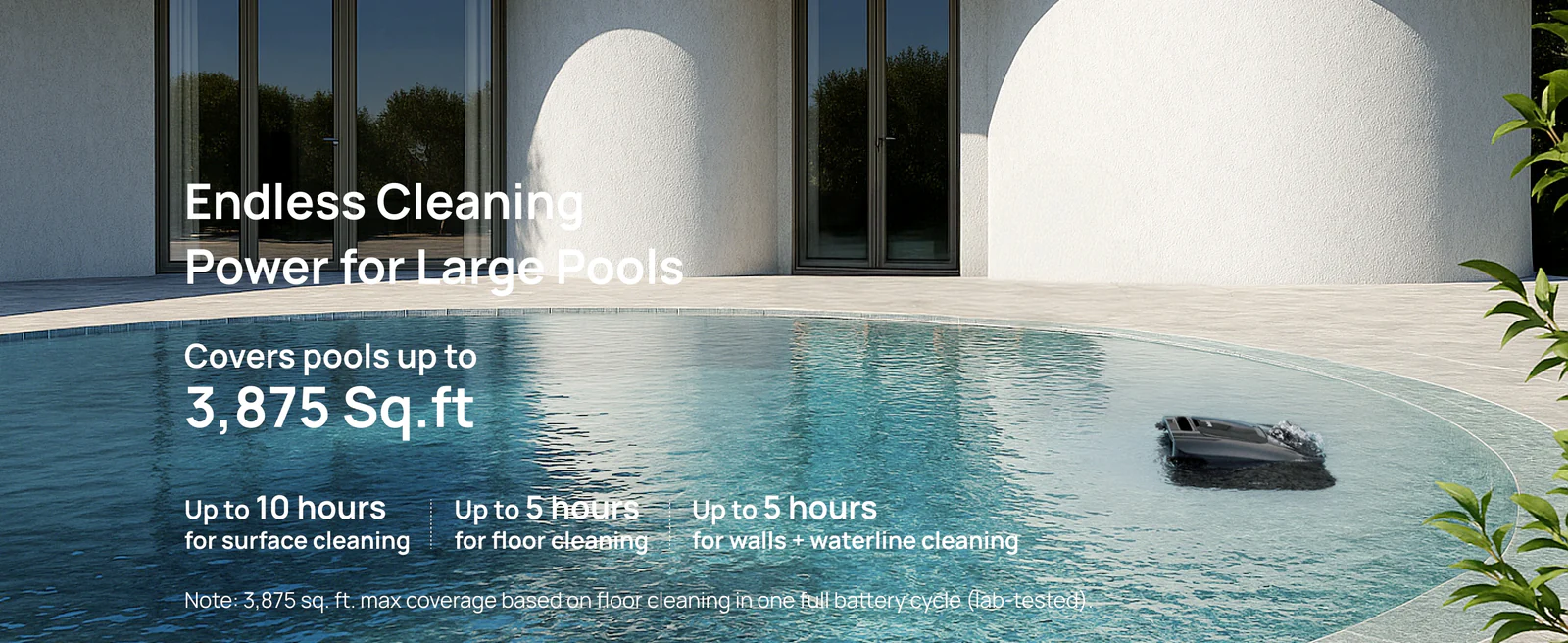
A beautiful cleaner that does not clean well is not good design. Performance is the foundation.
It Must Handle Real Debris
Real pool debris is varied. Leaves are different from sand. Pollen is different from hair. Bugs are different from sunscreen film. A useful cleaner should be able to collect common debris without forcing the owner to finish most of the job manually.
It Should Clean the Right Zones
Some pools only need floor cleaning. Others need help with walls, the waterline, steps, corners, or surface debris. Good design starts with a clear understanding of the target user. A compact family pool, a large luxury pool, and a tree covered backyard do not create the same cleaning problem.
It Should Reduce Filter Burden
One benefit of robotic cleaning is that debris can be collected inside the robot instead of being pushed entirely toward the skimmer, pump basket, and main filter. For homeowners comparing pool cleaners, that design detail matters because it can reduce routine physical cleaning while supporting the pool system, not overloading it.
Navigation and Movement Shape the Experience
Movement is where robotics design becomes visible. A cleaner that wanders randomly, misses obvious areas, or gets stuck too often creates more work for the user.
Good navigation should reduce repeated paths and missed spots. Wall climbing requires traction, balance, buoyancy control, and surface compatibility. Steps, drains, slopes, curves, and corners test both mechanical design and software logic.
Corded models need smart cable management. Cordless models need strong battery planning, easy charging, and retrieval support. Neither approach is automatically better. The design succeeds only if it makes the owner’s routine easier.
A pool robot should feel dependable. If a user has to keep watching it, rescuing it, or restarting it, the product has failed part of the user experience test.
Filtration and Debris Disposal Can Make or Break Design
Many users do not judge a cleaner only while it is moving in the water. They judge it when the job is done and the robot has to be opened, emptied, rinsed, and stored.
The Filter Should Be Easy to Access
The best filter design is intuitive. The user should understand where to open it, how to remove the basket or cartridge, where debris goes, and how to put everything back without guessing.
Capacity Should Match the Environment
A cleaner used in a leafy backyard needs different debris handling from one used in a screened pool with mostly fine dust. Good design means the filter system is matched to real debris conditions, not just a clean product diagram.
Maintenance Should Feel Designed
The dirty part of the process matters. If emptying the basket is messy, awkward, or time consuming, the user may run the cleaner less often. Good design treats maintenance as part of the product journey, not as an afterthought.
Ergonomics Matter After the Cleaner Gets Wet
A robotic cleaner is not a small desktop gadget. After a cleaning cycle, it is wet, heavier, and carrying debris. That changes the design problem.
Handles should support safe lifting. Water drainage should make retrieval less awkward. Weight distribution should feel manageable. Charging and storage should be simple, especially for homeowners who may not have a large equipment area.
Small cues can make a big difference. Status lights, app alerts, clear buttons, easy basket access, and retrieval support can reduce uncertainty. A cleaner that performs well but is unpleasant to lift, empty, or store will not feel well designed in daily use.
Where Beatbot AquaSense 2 Ultra Shows Premium Design Thinking
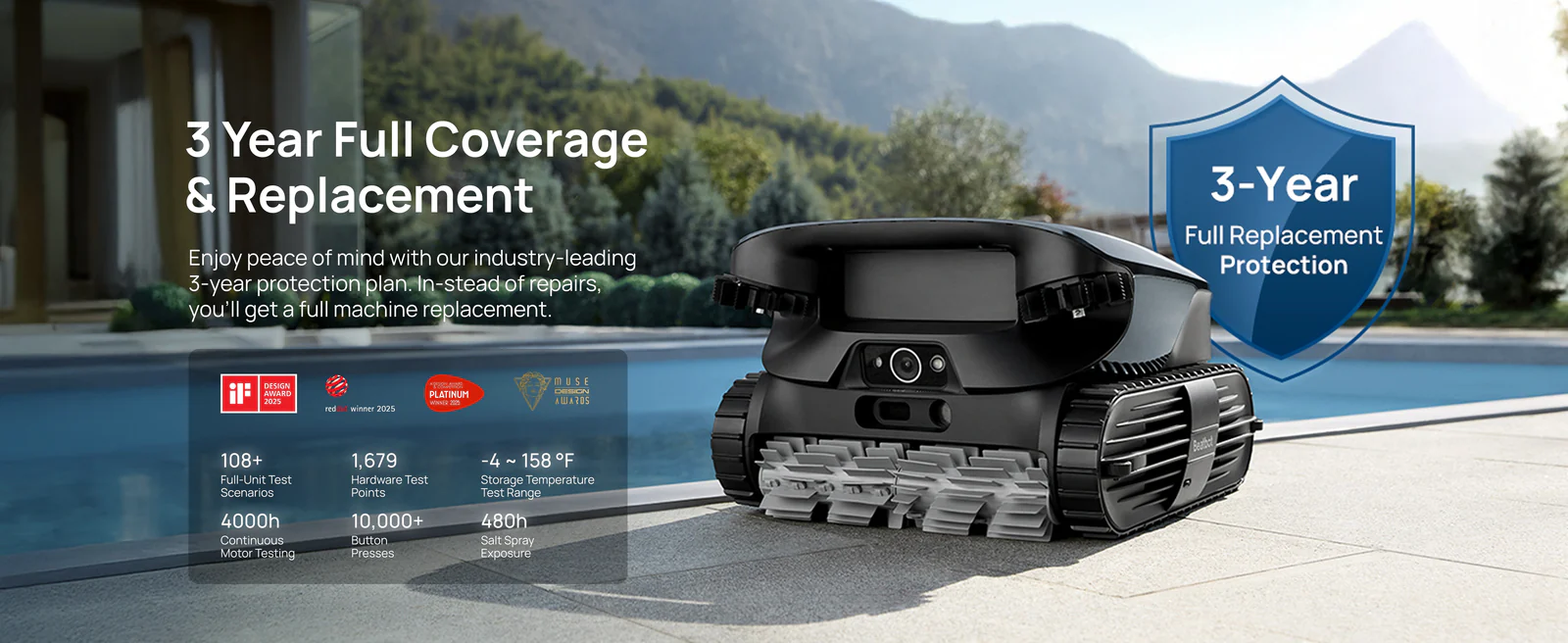
Beatbot AquaSense 2 Ultra is a useful example of premium robotic pool cleaner design because it addresses more than one design layer. From a performance standpoint, it is positioned for multi area pool cleaning rather than simple floor vacuuming. From a robotics standpoint, AI assisted mapping, sensor based navigation, and obstacle handling help the product adapt to larger or more complex pool environments.
From a user experience standpoint, cordless operation, app based controls, cleaning modes, and retrieval support reduce friction around setup and daily use. This matters for owners with curves, slopes, steps, long waterlines, or changing debris patterns. The product is not only trying to clean more areas; it is trying to make the process feel more predictable.
For design focused readers comparing a pool vacuum robot, the lesson is that technology should serve the routine. More sensors, smarter movement, and app interaction only matter when they reduce manual work and make the product easier to trust. AquaSense 2 Ultra still cannot replace chlorine, pH, or alkalinity testing. It cannot replace the main filtration system, skimmer or pump basket maintenance, adult supervision, safety rules, professional repair, or manual removal of large branches, toys, stones, towels, or sharp objects.
Durability, Repairability, and Trust Matter Too
Good design continues after the first cleaning cycle. Materials must resist water, sunlight, chemical exposure, and repeated handling. Brushes should suit the intended pool surfaces. Tracks, wheels, seals, filters, and motors should be durable enough for regular use.
Trust is also part of product design. Owners care about warranty, replacement parts, support, app reliability, and clear maintenance instructions. A product that looks sleek but is hard to repair or maintain may not be a good long term design.
Aesthetics matter, especially for a device that lives around the backyard. But visual design should not come at the cost of strength, serviceability, or clarity.
The Best Design Disappears Into the Routine
The strongest robotic pool cleaner design is not the one with the loudest feature list. It is the one users keep using because it makes pool care easier.
Good design removes friction across the whole journey: setup, cleaning, navigation, filtration, retrieval, storage, and maintenance. Smart features should support real use, not distract from it.
A well designed cleaner is built not only for the pool, but also for the person who has to lift it, empty it, rinse it, charge it, store it, and trust it week after week. When that whole experience feels simple, the product design is doing its job.
About the Author

Peter Makeshoff
Peter Makeshoff is the founder and main author of Designer Daily.