
Minimalism has a branding problem. It has been reduced to a visual style: white walls, empty surfaces, sans-serif type, and a lot of nothing. Open any design blog and you will find minimalism defined by what it removes. Less color. Less decoration. Less stuff. The implication is that minimalism is an aesthetic of absence, a discipline of taking things away until only the essential remains.
That is not minimalism. That is a particular style that sometimes borrows the name. True minimalism is not about what you remove. It is about what you prioritize. It is a philosophy of attention, not a palette of white.
The Misconception
The most common misunderstanding is that minimalism equals emptiness. A room with a single chair and a blank wall is called minimalist. A website with three lines of text and a lot of scrolling is called minimalist. But these examples confuse the result with the process. The empty room is not minimalist because it is empty. It is minimalist because nothing in it is competing for attention. The website is not minimalist because it has little content. It is minimalist because every element serves a clear purpose.
The difference matters. A room can be empty and still fail to be minimalist if the emptiness is accidental or uncomfortable. A website can have a lot of content and still be minimalist if the content is organized with clarity and intention. Minimalism is not a number. It is a relationship between the user and the design.
The Origin
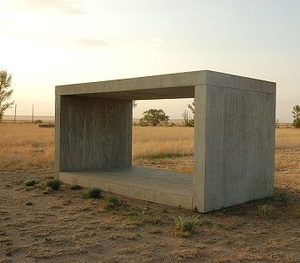
Minimalism as a movement began in the visual arts in the 1960s. Artists like Donald Judd, Agnes Martin, and Frank Stella rejected the expressive, gestural qualities of abstract expressionism. They favored simple geometric forms, industrial materials, and impersonal execution. The work was not about the artist’s emotion. It was about the viewer’s experience.
The minimalists were not trying to make things empty. They were trying to make things honest. They removed the illusion, the decoration, and the narrative. What remained was the object itself, in its most direct form. The goal was not absence. It was presence.
This is the origin that the contemporary understanding of minimalism has lost. The minimalists were not obsessed with white space. They were obsessed with clarity. They wanted the viewer to see the object without distraction. The absence of decoration was a means to that end, not the end itself.
The Essential
The essential is what remains when everything unnecessary is removed. But the essential is not the same for every design. For a luxury watch, the essential might be the movement and the materials. For a news website, the essential might be the headlines and the navigation. For a chair, the essential might be the seat, the back, and the legs. The essential is defined by the purpose, not by a universal rule.
The minimalist designer asks: what is this for? What does the user need to do? What is the core of the experience? The answers to these questions determine what is essential. Everything else is a candidate for removal.
But removal is not the only tool. The minimalist designer can also use emphasis, hierarchy, and contrast to make the essential clear. A design with a lot of content can be minimalist if the hierarchy is strong enough to guide the user effortlessly. A design with few elements can fail if the hierarchy is weak.
The Discipline
Minimalism is a discipline. It requires the designer to resist the temptation to add. It requires the confidence to leave space empty. It requires the judgment to know what matters and what does not.
But minimalism is not the only discipline. A maximalist design can be equally disciplined. The difference is the direction of the discipline. The minimalist removes. The maximalist organizes. Both are valid. Both can produce work that is clear, honest, and effective.
The mistake is to confuse minimalism with good design. Minimalism is a style. Good design is a standard. A minimalist design can be bad. A maximalist design can be good. The style is not the standard. The standard is whether the design serves its purpose.
The Bottom Line
Minimalism is not white space. It is not emptiness. It is not the absence of decoration. It is the discipline of attention. It is the practice of making the essential clear. It is a philosophy of presence, not absence.
The designer who understands this can use minimalism as a tool. The designer who confuses it with a style will produce work that looks minimalist and fails to be. The difference is intention. The difference is clarity. The difference is the understanding that minimalism is not about what you remove. It is about what you reveal.
About the Author
Peter Makeshoff
Peter Makeshoff is the founder and main author of Designer Daily.