
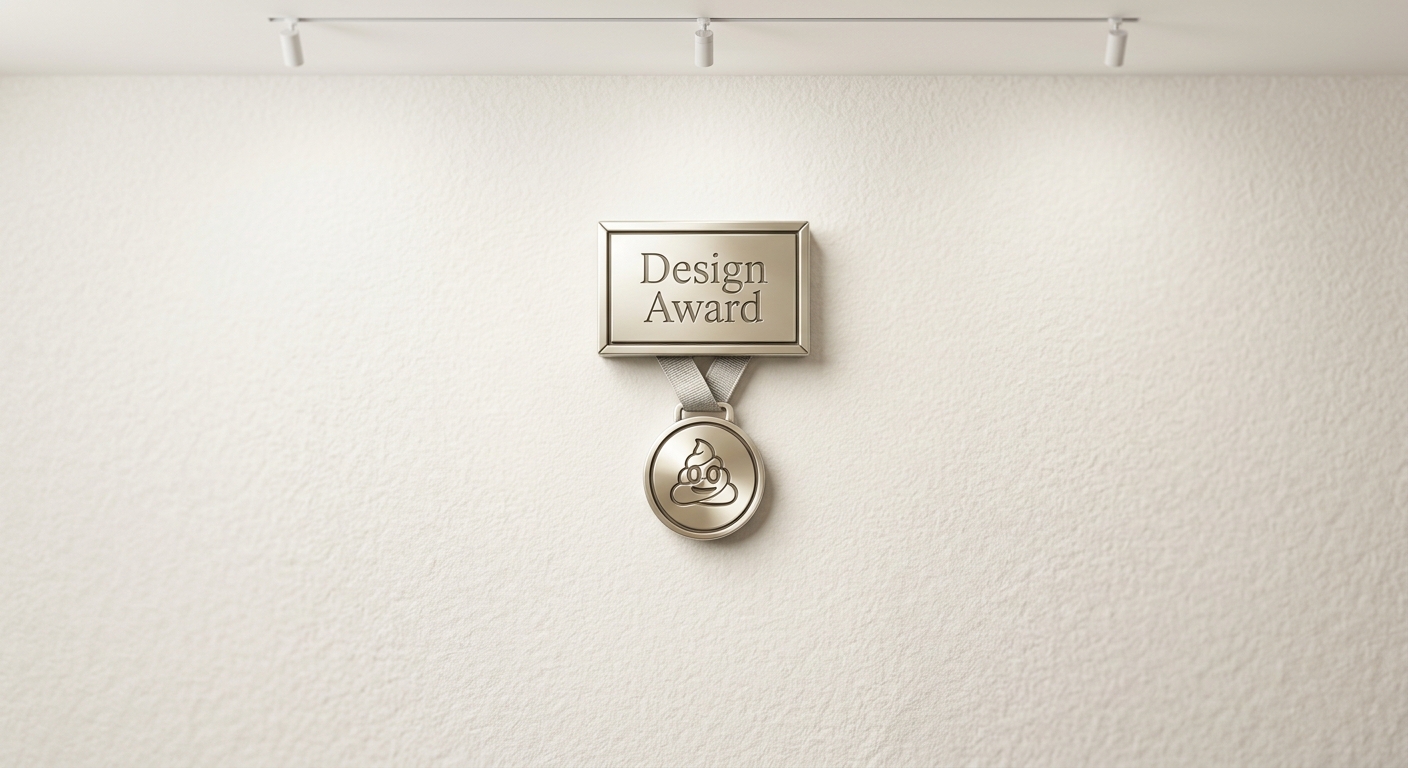
The design awards industry has a credibility problem. Every year, thousands of awards are handed out by hundreds of organizations, and the same studios and agencies seem to win over and over. The awards are celebrated on social media, added to portfolios, and used to justify higher rates. But do they actually mean anything?
The uncomfortable answer is that most design awards are not a measure of quality. They are a measure of something else entirely: the ability to pay submission fees, the willingness to navigate the awards circuit, and the political skill to position work in front of the right judges.
The Pay-to-Play Problem
Most design awards charge submission fees. These fees range from modest to substantial, and they are often tiered by category. A studio that submits ten projects to five different awards can easily spend thousands of dollars before a single piece of work is evaluated. The implication is clear: the awards are not free to enter, and the organizations that run them profit from the volume of submissions.
This creates a fundamental conflict of interest. The awards organizations are incentivized to maximize submissions. The more entries they receive, the more revenue they generate. There is no incentive to be selective about who can enter, only to ensure that the winners are celebrated loudly enough to attract more entries next year.
For established studios, this is simply a cost of doing business. For independent designers and small studios, it is a barrier. The best work does not always win. The work from those who can afford to enter often does.
The Jury Problem
Awards are judged by juries. Juries are composed of established designers, creative directors, and industry figures. They are often busy people who volunteer their time or receive modest compensation. They review hundreds of entries in a short period. They make quick judgments.
This process is inherently subjective. A jury of designers from large agencies may favor work that reflects the aesthetic and values of large agencies. A jury of academics may favor work that reflects academic priorities. A jury of brand consultants may favor work that is commercially successful. There is no such thing as an objective jury. There is only a jury that reflects a particular set of biases.
The result is that awards tend to reinforce existing tastes rather than challenge them. Work that is unconventional, experimental, or outside the mainstream is less likely to win. Work that is safe, polished, and aligned with current trends is more likely to win.
The Volume Problem
There are too many awards. Every industry publication, every professional organization, every design conference seems to have its own awards program. The proliferation of awards has diluted their value. When everyone wins something, winning means nothing.
Designers know this. They still submit, because clients often expect it. An agency that has won awards is perceived as more credible than one that has not. The perception is not always accurate, but it is powerful. The awards industry has become a self-perpetuating machine. Designers submit work to win awards, win awards to attract clients, and use the revenue from clients to submit more work.
What Awards Actually Measure
If awards do not measure quality, what do they measure?
They measure the ability to submit. The willingness to pay fees. The skill at writing submission descriptions. The political capital to get in front of the right judges. The luck of being reviewed by a jury that happens to like your work.
None of this is a measure of design skill. It is a measure of the ability to play the game.
This is not to say that award-winning work is bad. Much of it is excellent. But the correlation between awards and quality is weaker than the industry likes to admit. There are countless brilliant projects that have never won anything, simply because their creators did not enter.
The Alternative
If awards are meaningless, what should designers do instead?
Focus on outcomes. Did the design solve the problem? Did it achieve the client’s goals? Did it improve the user’s experience? These questions are more important than any award.
Build relationships. Referrals and repeat business are worth more than any trophy. A client who trusts you will return. A client who was impressed by your award may not.
Document your process. The work that goes into a project is often more interesting than the final artifact. Sharing your process builds credibility and attracts clients who value your thinking, not just your portfolio.
The Bottom Line
Most design awards are not a measure of quality. They are a measure of the ability to participate in the awards industry. They are not worthless, but they are not the validation they claim to be. The designers who understand this are the ones who focus on the work, not the trophies. The clients who understand this are the ones who hire for skill, not for shelf decoration.
The design awards industry will continue to exist. It is too profitable to disappear. But it does not have to define your practice. Judge your work by its impact, not by its ribbons. That is the only measure that matters.
About the Author

Peter Makeshoff
Peter Makeshoff is the founder and main author of Designer Daily.