
Walk into a newly designed hotel room today and you might find a tablet that controls the lights, the curtains, and the temperature. Step into a modern office and the meeting room knows you’re there before you sit down. At home, your voice assistant, thermostat, and doorbell are all talking to each other.
These spaces are smart. They’re also vulnerable.
Here’s the reality designers are now facing: every connected device is a potential entry point. And clients are starting to ask questions their interior designers never used to hear.
When Security Becomes a Design Problem
The smart space market is growing fast. By 2026, the global smart home market alone is expected to exceed $200 billion. Hospitality is racing to implement seamless guest experiences. Offices are packed with sensors that monitor occupancy, air quality, and energy use.
But here’s the uncomfortable truth that rarely makes it into the mood boards: most of these systems were never designed with security as a priority.
A lightbulb that connects to WiFi shouldn’t be a concern until you realize it can be a backdoor into a corporate network. A smart thermostat in a holiday home shouldn’t matter until someone figures out it reveals whether the house is empty.
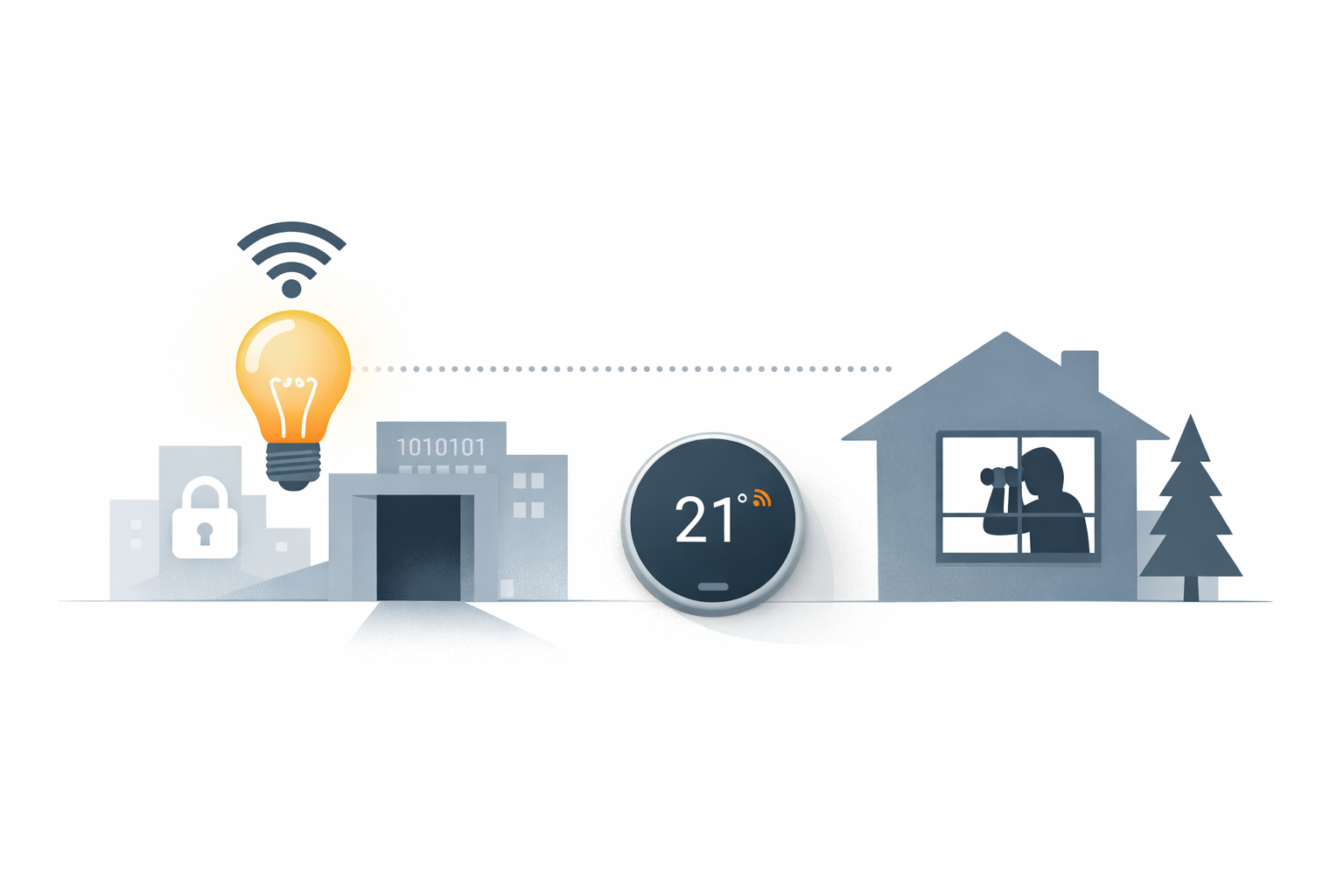
These aren’t theoretical problems. They’re happening. And clients are starting to expect that the people designing their spaces thought about them.
What Designers Actually Need to Know
You don’t need to become a cybersecurity expert. That’s not the point. But you do need to know enough to ask the right questions and bring the right people into the conversation.
- The network question. How do devices connect? A single WiFi network for everything is the easiest path for an attacker. Segmented networks are better. Asking about this early matters.
- The data question. What information is being collected? Cameras in common areas, sensors that track movement, voice assistants that listen for commands. Clients rarely think about where that data goes or who has access. You can be the one who asks.
- The update question. Every smart device needs software updates. Without them, security holes stay open forever. Who’s responsible for updates five years after installation? The answer should not be “nobody thought about that.”
- The guest question. In hospitality especially, guests don’t expect to need security knowledge. They just expect the room to work and their data to stay private. That expectation is part of the experience you’re designing.
Where This Actually Comes Up
Hospitality. A luxury hotel chain spends millions on a room experience controlled by a tablet. Gorgeous interface, seamless integration. Then someone realizes that tablet could theoretically access the hotel’s booking system. The design firm that anticipated this and specified separate networks looks very different from the one that didn’t.
Workplace. A tech company wants an office where employees badge in, the system learns their preferences, and meeting rooms auto-configure. Great. But that system now knows who’s in the building, when they arrive, and where they go. That’s sensitive information. Designing the experience includes designing how that information is protected.
Residential. A high net worth individual wants full home automation. Lights, security, climate, entertainment all integrated. They’re also aware that wealthy individuals are targets. The designer who can have a credible conversation about how the system is architected is the designer who gets the project.
The Advisory Role
This is where the designer’s role shifts. You’re no longer just selecting finishes and specifying products. You’re helping clients navigate complexity they don’t fully understand.
That doesn’t mean becoming a technician. It means:
- Knowing what you don’t know. The best thing you can say sometimes is “we need to bring in a specialist for this part.” Clients respect that.
- Asking questions early. Before specifying smart products, ask about security. The manufacturers who can’t answer probably shouldn’t be specified.
- Designing for resilience. Physical security used to mean locks and alarms. Now it means networks and encryption and access controls. Those things have to be designed into spaces, not added after.
- Communicating tradeoffs. More convenience often means more vulnerability. More integration means more complexity. Clients need to understand these tradeoffs to make informed decisions. You’re the one who can explain them.
What Clients Are Starting to Expect
The conversation is shifting. A few years ago, nobody asked about cybersecurity in interior design. Now it comes up more often than you’d think.
Commercial clients are increasingly aware that their physical spaces are part of their IT infrastructure. Hotels know that a breach affecting guest data is catastrophic. Offices know that workplace sensors create privacy concerns. High end residential clients know they’re targets.
When you can speak to these concerns even a little, you stand out. When you can’t, you risk seeming behind.
The Practical Path Forward
You don’t need a degree in network security. But you do need a basic literacy.
Start with manufacturer questions. When you specify a smart product, ask about security certifications, update policies, and network requirements. If the answers are vague, that’s useful information.
Build relationships with specialists. Find an IT security consultant or a smart home integrator who thinks about security. Bring them in early. Learn from them.
Treat security as part of user experience. Because it is. An insecure space isn’t safe. An unsafe space isn’t well designed, no matter how beautiful.
The Bottom Line
The lines between physical and digital have blurred completely. Designers who understand that will thrive. Those who don’t will find themselves increasingly irrelevant.
You’re not expected to be an expert in everything. But you are expected to know when expertise is needed and how to bring it in. In a world of smart spaces, that includes cybersecurity.
It’s not the most glamorous part of the job. But it might be one of the most important.
About the Author

Peter Makeshoff
Peter Makeshoff is the founder and main author of Designer Daily.