

Social media feeds have developed a credibility problem. Perfectly polished faces deliver interchangeable advice over stock footage. Synthetic voices narrate stories that never happened. AI-generated people endorse products they have never used. The technical quality may be impressive, but viewers increasingly recognize when nothing real sits behind the content.
Canadian audiences are not rejecting technology. They are becoming more selective about what deserves their attention. CIRA’s 2025 Canadian Internet Trends Report found that one in three Canadians had used generative AI during the previous year, more than double the rate reported in 2024. At the same time, 74% were concerned about AI-generated fake content, and 34% said they had encountered a deepfake. Adoption is rising, but so is scepticism.
That shift is changing how businesses should approach Social Media Video Production. Video can no longer be treated as a production exercise in which publishing more automatically means achieving more. The businesses earning attention are increasingly the ones willing to put a recognizable person, informed perspective and genuine point of view in front of the camera.
The Feed Is Full, but Much of It Feels Empty
AI has lowered the cost of producing content. A business can generate scripts, voiceovers, images, captions and entire videos without filming a person. That makes production faster, but it also creates an ocean of material built from the same prompts, familiar sentence structures and recycled visual patterns.
The result is sometimes described as “AI slop”: high-volume content created primarily to occupy space in a feed. It may be grammatically correct and visually clean, yet it gives the audience little reason to care who published it.
Viewers have become skilled at noticing the signs. They recognize an unnatural pause, an overly smooth voice, a face that does not move correctly or a story with no meaningful detail. The comments beneath AI-generated videos often become discussions about whether the video is fake instead of conversations about the subject.
For businesses, that is a warning. Attention without trust has limited commercial value.
Statistics Canada reported that 72% of Canadians watched user-generated videos during a three-month period in 2022. Among people younger than 35, the figure reached 88%. This is not a small or experimental audience. Video-sharing platforms are part of how Canadians learn, compare options and form opinions.
The same study found that 63% of people who watched user-generated videos felt their online activities helped them make more informed decisions. Businesses therefore have an opportunity to be useful at the exact moment someone is learning. The challenge is producing something that feels worth believing.
Why Founder-Led Content Feels Different
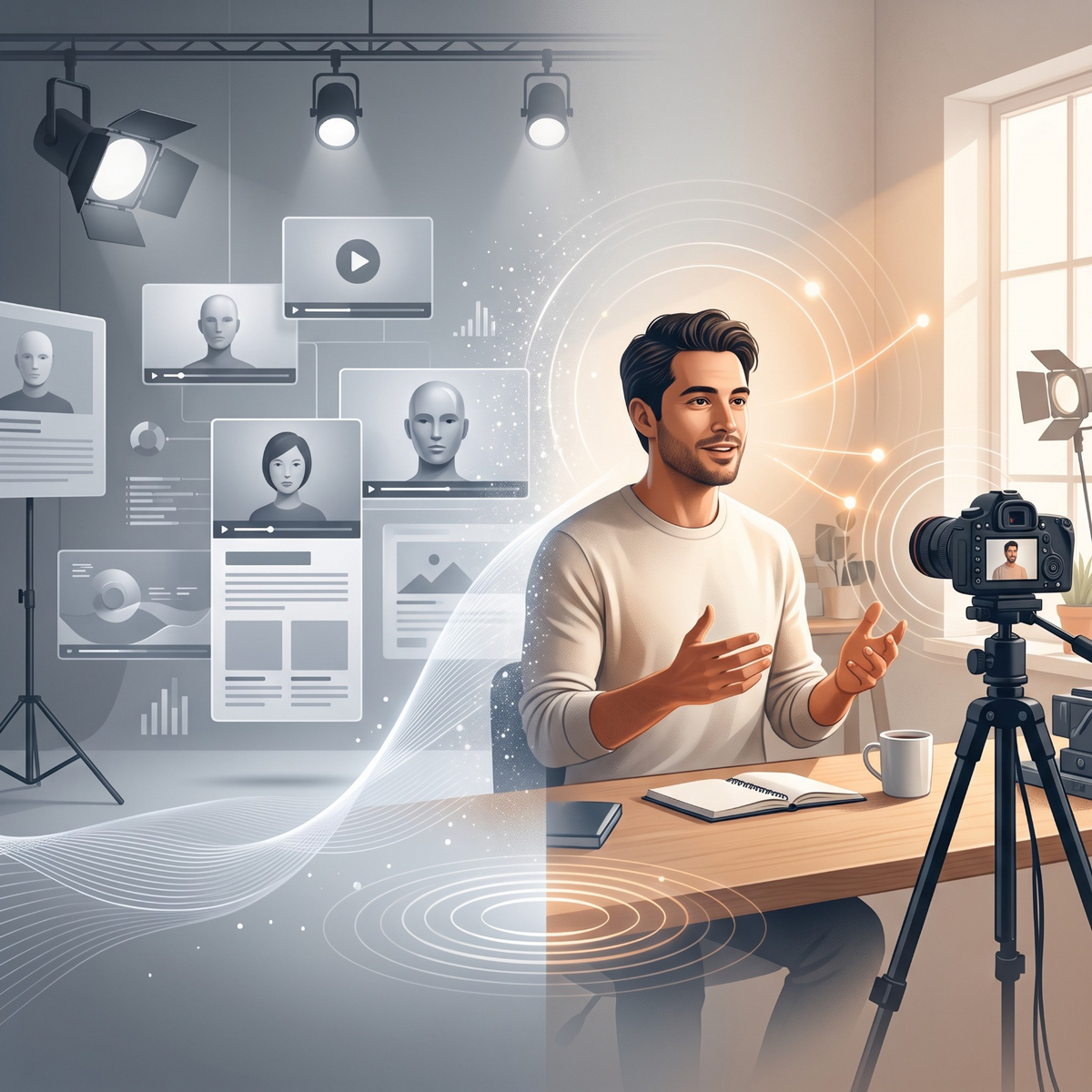
Founder-led content places a real decision-maker, specialist or business owner at the centre of the story. It does not require the person to be charismatic in the traditional advertising sense. In fact, excessive polish can weaken the effect.
What matters is that the person has something specific to say.
A plumber can explain why a certain repair repeatedly fails. A physiotherapist can demonstrate the difference between temporary relief and a proper assessment. A designer can show why a layout looks attractive but creates friction. A restaurant owner can explain how an ingredient changes the final dish.
These are not performances invented for an algorithm. They come from work the person has actually done.
Founder-led video content builds familiarity through repeated, credible exposure. The viewer begins to recognize a face, voice and way of thinking. That recognition can reduce uncertainty long before the person is ready to contact the business.
Strong founder-led videos normally contain:
- A recognizable person with direct experience of the subject
- A specific question, misconception or customer problem
- An opinion that sounds like something a real person would say
- Examples drawn from actual work or recurring customer conversations
- Useful advice that does not require an immediate purchase
- A natural next step instead of an exaggerated sales pitch
These qualities support authentic social media content, audience engagement and long-term brand trust without turning every post into an advertisement.
Social Video Does Not Need to Produce an Immediate Lead to Be Valuable
One of the most common mistakes in social media measurement is expecting every video to create an instantly attributable lead.
Search advertising often reaches people near the bottom of the funnel. Someone searching “emergency plumber near me,” “corporate tax accountant Toronto” or “physiotherapist Markham” is already expressing a need. A clear advertisement and relevant landing page can turn that demand into a call or form submission.
Social media frequently plays a different role. It introduces an idea before the viewer is actively shopping.
A homeowner may watch a video about the early signs of a sewer backup and continue scrolling. Three months later, when a drain begins gurgling, that person searches Google and recognizes the company that explained the problem clearly. Analytics may credit the conversion to organic search or PPC even though social video planted the first seed.
The customer journey may look like this:
- A person discovers a founder-led video while scrolling.
- The video explains a problem the viewer has experienced but not acted upon.
- Repeated exposure makes the company or expert familiar.
- A future event creates an active need.
- The viewer searches Google, reads reviews and visits the website.
- The final conversion is attributed to search even though social media created the initial awareness.
This is why social media lead generation should be measured through more than form submissions from a single platform. Social content can influence branded searches, direct website visits, profile views, repeat exposure, assisted conversions and sales conversations in which customers say, “I have been watching your videos.”
Not every seed becomes a lead, and not every social lead will be qualified. However, dismissing social video because it does not behave like search advertising ignores how people develop preferences.

Authentic Does Not Mean Careless
The rise of founder-led content has encouraged a useful idea: a business does not need a television studio to create an effective video. A modern phone, a knowledgeable person and a relevant subject can be enough.
Unfortunately, “authentic” is sometimes used as an excuse for poor production.
Viewers may tolerate a natural speaking style, an imperfect sentence or a real workplace in the background. They are less forgiving of audio they cannot hear, a grainy image, distracting background noise, long pauses, skipped frames or a speaker who takes 40 seconds to reach the point.
Phone video can work well when the fundamentals are controlled:
- Record in a quiet location and use an external microphone where possible.
- Face a window or use a soft light instead of relying on overhead lighting.
- Clean the camera lens before filming.
- Stabilize the phone with a tripod rather than holding it at arm’s length.
- Frame the speaker for vertical viewing on mobile devices.
- Remove unnecessary pauses while preserving a natural rhythm.
- Add accurate captions for viewers watching without sound.
- Export at a quality that remains sharp after platform compression.
Professional social video production should make the person easier to trust, not make the person look manufactured. The camera, lighting and editing should disappear into the experience so the expertise remains central.
The First Few Seconds Earn Attention, but the Next Minute Earns Trust
Social platforms place every video beside countless alternatives. A viewer can leave with one movement of a thumb. The opening therefore matters, but a loud hook is not enough.
Statements such as “You will not believe this” or “Nobody is talking about this” may interrupt scrolling, but repeated use makes the creator sound like everyone else.
A stronger opening creates immediate relevance:
- “If your contractor recommends this without checking the foundation, ask why.”
- “This is the reason your Google Ads campaign can spend its budget and still produce fewer calls.”
- “Most people replace this part when the real problem is two feet away.”
- “Here is what I would check before paying for a complete website redesign.”
Each example identifies a problem, establishes perspective and creates a reason to keep watching.
The rest of the video must then fulfil the promise. A useful structure is:
- The tension: State the question or problem immediately.
- The context: Explain why it matters in one or two sentences.
- The insight: Share the detail most people overlook.
- The evidence: Use an example, demonstration or real experience.
- The practical advice: Tell viewers what they can do next.
- The invitation: Encourage a question, save, follow or further investigation.
This format supports short-form video marketing without forcing every subject into the same artificial script.
Measure Signals of Growing Demand, Not Views Alone
Views can indicate distribution, but they do not explain whether the right people watched or remembered.
A useful social video measurement framework includes:
- Average watch time and completion rate
- Saves, shares and substantive comments
- Profile visits after viewing
- Growth in branded search queries
- Direct and returning website visitors
- Assisted conversions involving social touchpoints
- Retargeting audience growth
- Enquiries that reference a video or specific topic
- Lead quality by source
- Sales-cycle length among viewers already familiar with the business
Businesses should also compare topics. A video with 2,000 views and five qualified conversations may be more valuable than one with 100,000 views from people outside the service area.
Lead generation remains important, especially for offers that fit social targeting. But social media and search should not be forced into identical roles. Search captures existing intent. Social video can create familiarity and shape the eventual decision.
Common Mistakes That Make Founder-Led Video Feel Artificial
Putting a founder on camera does not automatically create authenticity.
Reading a generic script word for word can make an experienced person sound uncertain. Copying trending formats without considering the audience can make the business appear desperate for attention. Overediting every breath removes the natural rhythm that helps viewers connect with a person.
Other common mistakes include:
- Trying to cover several unrelated ideas in one video
- Using jargon instead of language customers use
- Opening with a company introduction rather than the viewer’s problem
- Making claims without examples or context
- Treating comments only as engagement metrics instead of conversations
- Publishing the same video everywhere without adapting its opening or caption
- Ending every post with an aggressive sales request
- Using AI-generated visuals that undermine an otherwise credible explanation
The goal is not to make videos look casual. The goal is to make expertise feel accessible.
A Practical 30-Day Starting Plan
A business does not need 100 videos to test founder-led content. It needs a focused first month.
Start by collecting ten questions customers regularly ask. Select four that relate to meaningful buying decisions. Record one clear answer to each question, then create shorter clips from the strongest points.
During the month, publish a balanced mix:
- One misconception or myth
- One practical demonstration
- One customer question
- One informed opinion about an industry issue
- One behind-the-scenes explanation of how a decision is made
- One locally relevant story or example
Review watch time, saves, comments, profile activity and branded search movement. Pay attention to the language viewers use in their responses. Those comments often reveal the next set of useful topics.
Most importantly, continue long enough for familiarity to develop. The founder-led video is not a single campaign stunt. Its advantage comes from repeatedly demonstrating that a real, knowledgeable person stands behind the business.
AI will continue improving, and businesses should use it where it adds genuine efficiency. But as synthetic content becomes easier to produce, lived experience becomes more distinctive.
The brands that stand out will not necessarily be the ones publishing the most. They will be the ones giving audiences something increasingly difficult to manufacture: a credible person, a useful perspective and a reason to remember them when scrolling eventually becomes searching.
Frequently Asked Questions
Does founder-led video require the company founder to appear in every post?
No. “Founder-led” describes content grounded in genuine organizational experience and perspective. A knowledgeable technician, designer, advisor, clinician or team leader can also represent the business. The speaker should have direct experience with the subject and the authority to discuss it accurately.
Can professionally produced video still feel authentic?
Yes. Professional production should improve sound, lighting, pacing and clarity without removing the speaker’s natural personality. Authenticity comes from the truth and specificity of the message, not from deliberately poor production quality.
How does social video contribute to lead generation if viewers do not convert immediately?
Social video can introduce the company, clarify a problem and build familiarity before active buying intent exists. When a need develops, viewers may search Google, visit the website directly or respond to a future advertisement. Tracking branded searches, assisted conversions, returning visitors and customer comments provides a broader view of that influence.
Should businesses stop using AI to create social media content?
No. AI can support research, transcription, editing and content organization. Problems arise when it replaces original experience and produces generic or misleading material. The strongest approach uses AI to improve an expert-led process while keeping real knowledge, examples and human judgment at the centre.
About the Author

Peter Makeshoff
Peter Makeshoff is the founder and main author of Designer Daily.