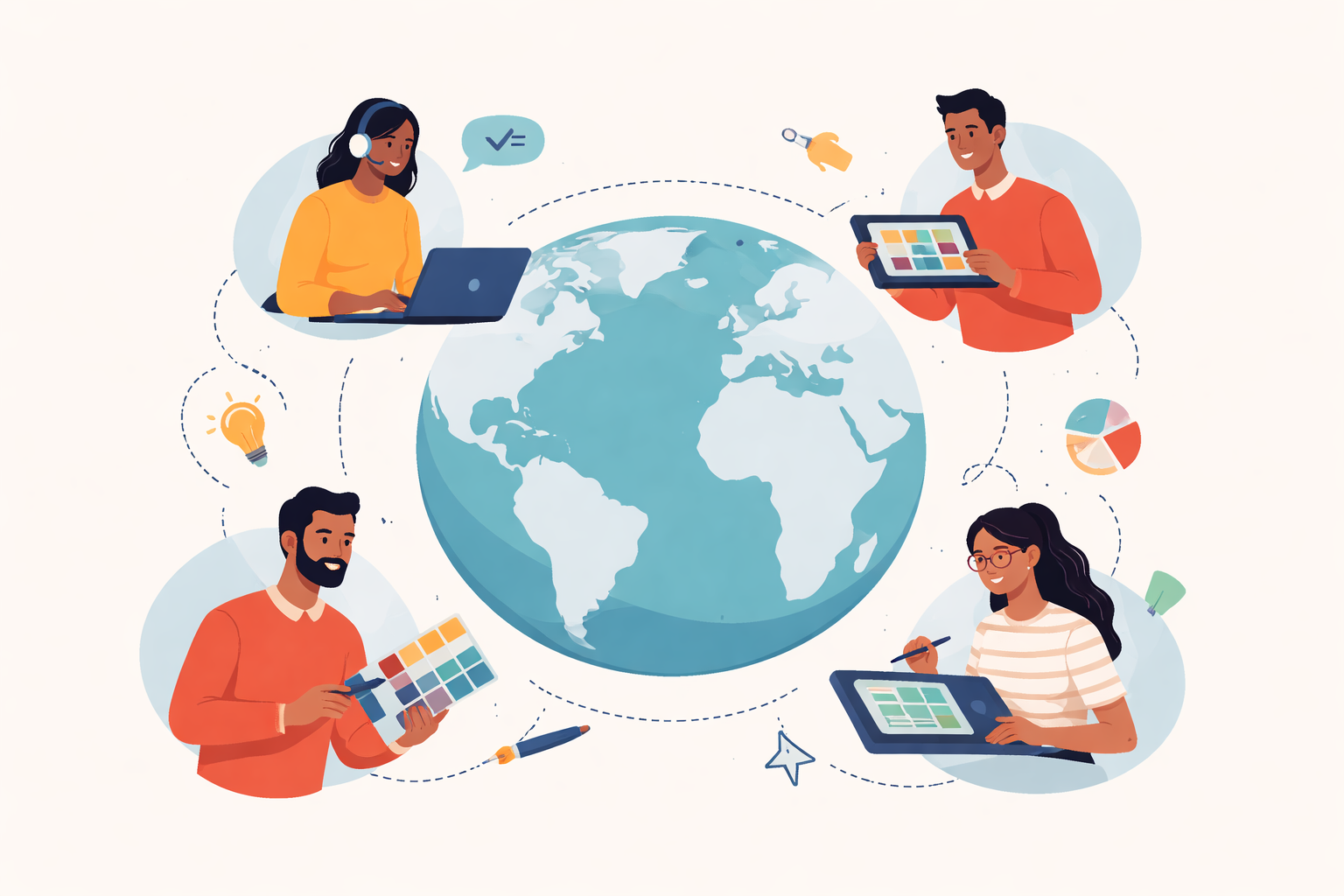
The most ambitious design studio in the world no longer has a physical address. Its talent is scattered across continents, drawing from a global pool of perspective and operating in a perpetual 24-hour workflow. This is the distributed studio: a model of immense potential and profound challenge. How do you maintain a singular creative spark when your team is never in the same room? How do you mentor a junior designer in São Paulo from Stockholm? How do you build a culture that feels inclusive, not isolating?
The answer lies in moving beyond remote work to distributed culture. It requires intentional systems that replace the magic of proximity with the discipline of clarity and the warmth of deliberate connection.
Pillar 1: Architecting for Asynchronous Excellence
The synchronous meeting is the crutch of the co-located team. The distributed team thrives on async-first communication.
The Core Protocol:
- Default to Documented Thought: Kill the quick “got a sec?” DM. Replace it with structured posts in a tool like Threads (Meta’s new platform), Slack threads, or dedicated channels in Notion/Basecamp. Every significant idea, feedback round, or project update must start as a written artifact. This creates a searchable history, includes everyone regardless of time zone, and forces clarity of thinking.
- The “Maker’s Schedule” Shield: Establish core collaboration hours (a 3-4 hour daily overlap) for real-time discussion, but fiercely protect deep work blocks. Use shared calendars with clear “Focus Time” blocks. Respect is shown not by immediate replies, but by uninterrupted, high-quality output.
- Tool Stack as the Virtual Studio:
- Figma is the digital wall. Every project has a dedicated FigJam file for early brainstorming and a main Figma file as the single source of truth.
- Loom or Clay is the desk crit. Record quick video feedback directly on the canvas. It’s richer than text, more personal, and async.
- Notion or Coda is the project wall and studio library. House brand guidelines, project briefs, retrospective notes, and team rituals here.
Pillar 2: Rituals That Build Rhythm, Not Just Output
Culture is built in the repetitive, shared moments. You must engineer these digitally.
Essential Distributed Rituals:
- The Weekly Studio Critique (Recorded & Rotating): Host a live critique during overlap hours, but mandatory recording and timestamping is key. The recording, with comments linked to specific frames, becomes the artifact. Rotate facilitators and “featured designers” from different regions weekly to share context and spotlight diverse work.
- The “Show & Tell” Slack Channel: A dedicated channel where anyone can post inspiration—not just Dribbble shots, but a street sign from Bangkok, a unique UX pattern from a Korean banking app, or their kid’s painting. This builds a shared visual vocabulary and celebrates cultural perspective as a professional asset.
- The Virtual “Coffee Lottery”: Use a tool like Donut (for Slack) to randomly pair team members across disciplines and regions for a 30-minute video chat every two weeks. No agenda. This replicates the hallway talk and builds the social glue that prevents teams from becoming transactional mercenaries.
Pillar 3: Mentorship in the Void: Growing Talent Remotely
Apprenticeship cannot be left to chance. It must be systematized.
The Distributed Mentorship Framework:
- The “Master File” System: Every major component or pattern in the design system has an associated Figma file that is a living tutorial. It contains not just the final component, but hidden frames showing the decision log, iterations, accessibility considerations, and links to relevant code. This is the apprentice’s first stop.
- Scheduled, Agenda-Driven 1:1s: Weekly 30-minute sessions are non-negotiable. Use a shared doc for agendas: 10 minutes for personal check-in, 15 minutes for specific feedback on work, 5 minutes for career growth. The mentor comes prepared.
- The “Shadow & Annotate” Model: For complex tasks (e.g., leading a stakeholder review), the junior designer “shadows” a senior via a recorded session. Afterward, they receive an annotated Loom video from the senior explaining why certain questions were asked or decisions were framed a specific way.
Pillar 4: Designing for Inclusive Communication
In a global team, English is often the common tongue, but it’s rarely everyone’s first language. Power dynamics shift silently on video calls.
Leveling the Communication Field:
- Written Briefs First, Always: Present all new projects and feedback in writing before any meeting. This gives non-native speakers time to process and formulate thoughts, preventing dominance by the most verbally fluent.
- The “Silent Start” Meeting: For brainstorming or decision meetings, the first 5-10 minutes are spent in silence, with everyone adding ideas/comments to a shared FigJam or document. This captures input from those less likely to jump into a vocal fray.
- Cultural Context as a Agenda Item: In project kickoffs, dedicate time to discuss cultural assumptions. “How might this color/iconography/flow be perceived in your region?” Make local insight a valued, formalized part of the process.
Pillar 5: Quality Control Through Systematized Consistency
You cannot walk over to see if a designer is following the system. The system must be self-evident and self-enforcing.
- The “Design System as the Ultimate Manager”: Invest in a robust, well-documented, and deeply integrated design system. If the system makes it easier to use the approved button than to create a new one, you win. Tools like Supernova or zeroheight that sync Figma to code are essential.
- Automated QA Checks: Use plugins like Figbot or A11y to run automated checks for contrast, alignment to grid, and use of approved styles directly within Figma before any handoff.
- The Quarterly “Design Audit”: A rotating committee of designers from different time zones conducts a blind audit of shipped work against brand and accessibility guidelines. The report is a learning tool, not a punitive one, focusing on system gaps, not individual blame.
The Guiding Principle: Over-Communicate Context, Under-Communicate Instruction
The killer of distributed creativity is ambiguity. The killer of distributed morale is micromanagement.
The distributed studio leader’s primary role is to be a broadcaster of context. Why is this project important? What does business success look like? What are the unspoken stakeholder pressures? When context is crystal clear, smart designers in any time zone can make brilliant, autonomous decisions.
You are not building a team that works remotely. You are building a creative organism that thinks as one, while living everywhere. The reward is not just efficiency, but a resilience and richness of ideas that no single-city studio can ever match. The distance isn’t a barrier to culture; it’s the very material from which a stronger, more intentional culture is forged.
About the Author
Peter Makeshoff
Peter Makeshoff is the founder and main author of Designer Daily.