
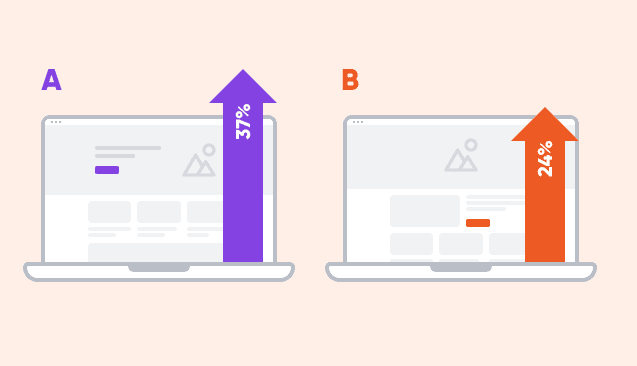
In the world of digital products, every visible pixel is a hypothesis that was tested, a decision that was made. While competitors guard their roadmaps, their most valuable learnings are often hiding in plain sight—embedded in the public artifacts of their experimentation. The modern designer must become a forensic analyst, learning not just from a competitor’s current state, but from the evolutionary path that got them there.
This is a guide to ethical, legal competitive intelligence through digital archaeology.
The Philosophy: Learning from Their “What,” Not Just Their “Why”
You can’t know why a competitor made a change (their internal metrics), but you can observe what they tested, for how long, and what they ultimately kept. This pattern of commitment reveals their confidence in what works. Did they test a radical new checkout for a week and revert? That’s a powerful negative signal. Has a subtle UX tweak persisted for 18 months? That’s a strong positive signal.
The Toolkit & Methodology
1. The Time Machine: Wayback Machine & Version History
Tool: archive.org/web/ (Wayback Machine)
What it Reveals: Major, public-facing UI overhauls, copy tests, and navigation changes over months or years.
Sleuthing Process:
- Target Key Pages: Input the competitor’s homepage, pricing page, signup flow, and core feature pages.
- Establish a Timeline: Use the calendar view to capture “snapshots” at regular intervals (e.g., monthly).
- Look for “Flickers”: A snapshot that exists for only a few days or weeks between two longer periods of stability is a strong indicator of a public A/B test that was rolled back.
- Compare & Contrast: Use a diff checker tool or simply place two screenshots side-by-side. Document the changes: button color, headline copy, layout, social proof placement.
Case Example: By analyzing a SaaS homepage from Jan-Mar 2023, you might find a 2-week period where the primary CTA changed from “Start Free Trial” to “See Pricing Plans.” Its reversion suggests the “Pricing” CTA underperformed on top-of-funnel conversion.
2. The Ad Observatory: Social Media Ad Libraries
Tool: Meta Ad Library, TikTok Ad Library, Google Ads Transparency Center.
What it Reveals: The marketing messages, value propositions, and landing page designs being actively tested on specific audience segments.
Sleuthing Process:
- Search by Competitor: Enter their exact brand name. These libraries are legally mandated to show all active ads.
- Analyze Creative Variation: Look for the same core ad (e.g., a product demo video) paired with different ad copy, headlines, or calls-to-action. This is a live, multi-variant test in the wild.
- Note the “Started Running” Date: An ad that has been running for months is a winner. A suite of similar ads all launched in the last week is a new test batch.
- Follow the Link: Click “See Ad Details” to often view the exact landing page URL. Note if it’s a unique, campaign-specific URL (e.g.,
brand.com/special-offer-a), which is a hallmark of a dedicated test.
Case Example: In the Meta Ad Library, you find a competitor running three ads for the same ebook. Ad 1 leads with price, Ad 2 leads with a testimonial, Ad 3 leads with a problem statement. Observing which ad remains after 30 days tells you which messaging hook resonated.
3. The Session Replay Loophole: Public User Testing (Legal & Ethical)
Tool: UserTesting.com, YouTube, product review channels.
What it Reveals: User interactions, pain points, and flows within a competitor’s live product.
Sleuthing Process:
- Search for Unboxings/Onboarding Walkthroughs: Tech reviewers on YouTube often record their first-time experience with a product. You get to watch a real user (the reviewer) navigate their interface.
- Scour Public User Testing Sites: Search the competitor’s product name on sites like UserTesting.com (where some tests are publicly shared). You’ll see video recordings of users thinking aloud while completing tasks.
- What to Look For: Where do they hesitate? What do they misunderstand? What do they praise? This is qualitative gold, revealing the unspoken UX friction in their current design.
4. The Code & Cookie Detective: Front-End Clues (Advanced)
Tool: Browser Developer Tools (Inspector, Network Tab), Cookie management extensions.
What it Reveals: Evidence of testing frameworks, staged feature flags, or alternative assets.
Sleuthing Process (Ethical Caution: Viewing public source code is legal. Interacting with or manipulating non-public APIs is not.):
- Inspect Key Elements: Right-click a suspiciously new component and “Inspect.” Look for CSS classes or IDs with names like
test_variant_b,ab_test_hero, orfeature_flag_new_pricing. - Check the Network Tab: Reload the page. Look for asset requests (images, JSON files) with names indicating variants.
- Manage Cookies & Local Storage: Some A/B tests are assigned via a cookie. Try clearing site data and reloading multiple times—you might be randomly assigned to a different variant, revealing the test.
Building the Competitive Test Log
Synthesize your findings into a structured log for your team:
Competitor A/B Test Hypothesis Log
- Date Observed: March 2024
- Competitor: [Competitor X]
- Page/Asset: Pricing Page
- Observed Variant A (Control): Single “Pro Plan” CTA button.
- Observed Variant B (Test): Two CTAs: “Try Free” and “Talk to Sales.”
- Duration of Test: ~10 days (per Wayback snapshots).
- Outcome (Observed): Reverted to Variant A.
- Inferred Learning: The two-option approach likely created decision paralysis and reduced conversion. Confidence in a single, clear path to “Pro” was reinforced.
The Ethical & Legal Boundary
This work operates in a public, observational space. It is not:
- Hacking or Scraping: Do not attempt to breach security, violate Terms of Service with automated bots, or access non-public data.
- Impersonation: Do not create fake accounts to gain access to features.
- Infringement: This is for learning and hypothesis generation, not for directly copying patented designs or trademarked assets.
The goal is not to copy, but to understand. By reverse-engineering their public experiments, you learn about their users’ behaviors. This allows you to formulate stronger, more informed hypotheses for your own unique products and users, potentially saving your team months of testing dead ends they’ve already proven.
In the end, you’re not stealing their answers. You’re studying their work on the public exam of the market, so you can craft a more brilliant, original solution of your own.
About the Author

Peter Makeshoff
Peter Makeshoff is the founder and main author of Designer Daily.