
Great packaging turns a passing glance into a purchase. In fact, 72 percent of U.S. shoppers say box design nudges them to try a new product.
We sifted through leaderboards, awards, and verified reviews to surface five specialist firms that deliver creativity and measurable results. Need a partner who covers concept, engineering, and production while keeping sustainability front and center? Explore Zenpack’s packaging design studio—one reason they top our list.
In the next sections you’ll see our selection criteria and candid, data-backed mini-reviews so you can choose the partner that fits your stage and budget.
How we chose the winners
First, we checked the numbers. Verified client ratings on Clutch, Google, and Trustpilot showed which agencies delight customers; anything under 4.7 stars was cut.
Next, we asked whether each shop lives and breathes consumer-product packaging. Full-service ad firms can be brilliant, but we wanted specialists who track dielines, material yield, and freight surcharges.
We also looked for proof of scale. Can the agency guide a seed-stage brand today and still keep pace when that brand signs a national retail deal tomorrow?
Finally, we weighed factors founders care about: sustainability plans, award-winning prototypes, and clear project minimums. The five agencies that met every requirement made the list you’re about to explore.
1. Zenpack: best full-service partner for scaling D2C brands
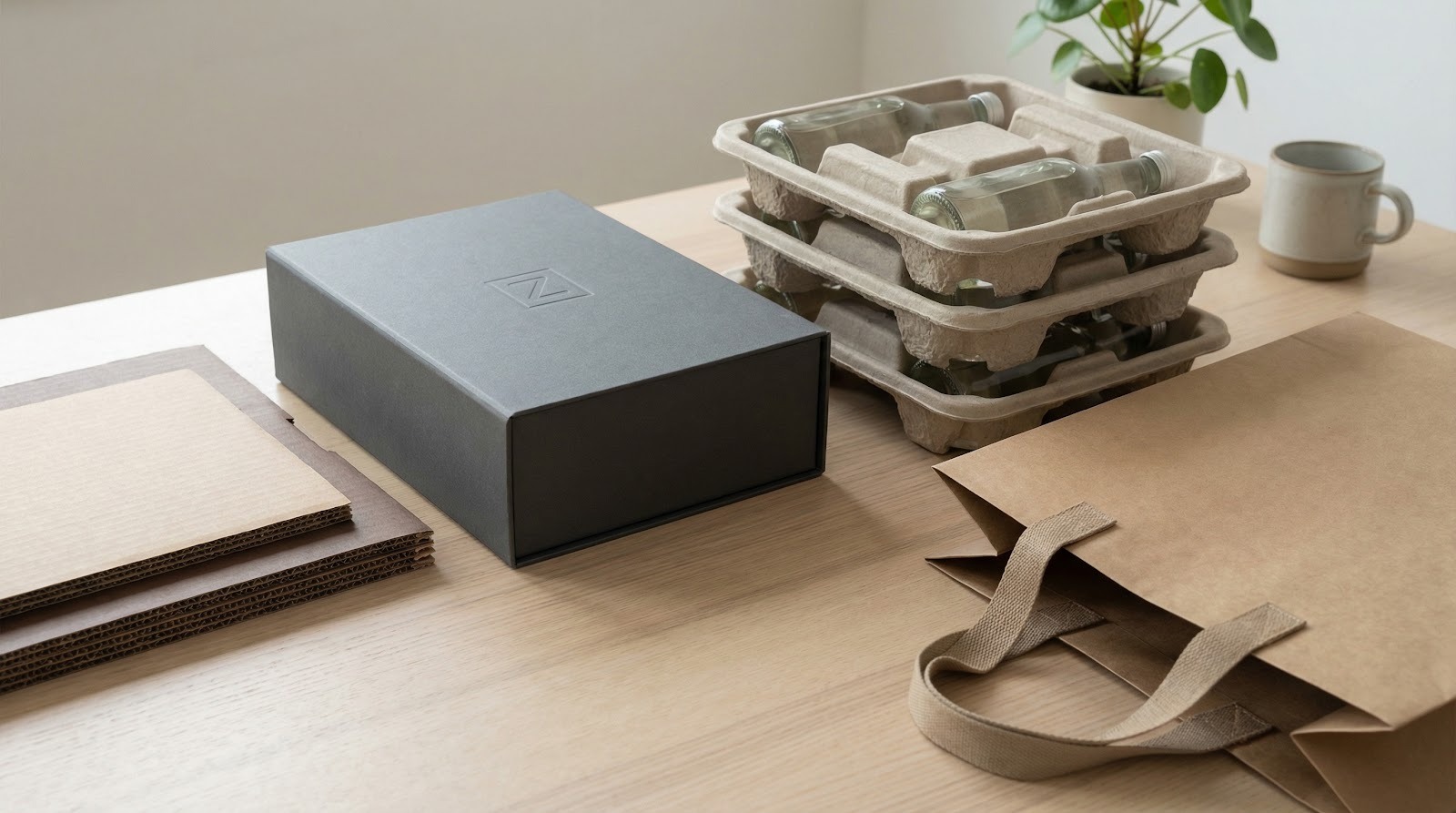
Zenpack custom packaging wears two hats, acting as both creative studio and production powerhouse; that dual role spares founders costly missteps.
Walk through its San Jose headquarters and you move smoothly from strategy sessions to an on-site prototyping lab. Structural engineers work alongside graphic designers, then hand a working mock-up to the production team the same afternoon. Speed like that keeps your launch date intact.
Clients notice the rigor. Zenpack maintains a 5.0-star average on Clutch across a dozen verified reviews, with brands praising “mind-blowing attention to detail” and “zero missed deadlines.”
Sustainability sits at the core of every project. The team tracks material yield down to the gram, swaps virgin fiber for FSC-certified board, and offers carbon-neutral shipping routes. One laptop-accessory client cut packaging weight by 20 percent, trimming freight costs while earning a “Plastic-Free” badge on Amazon.
Global reach adds another advantage. Zenpack runs fulfillment hubs in California, Taiwan, and the Netherlands, so inventory arrives closer to customers and customs surprises stay off your P&L.
Pull these strengths together and you get a one-stop shop for concept, engineering, and scalable manufacturing. It suits growth-stage brands that need to sprint without tripping over supply-chain gaps.
2. SmashBrand: best for consumer-testing-driven design
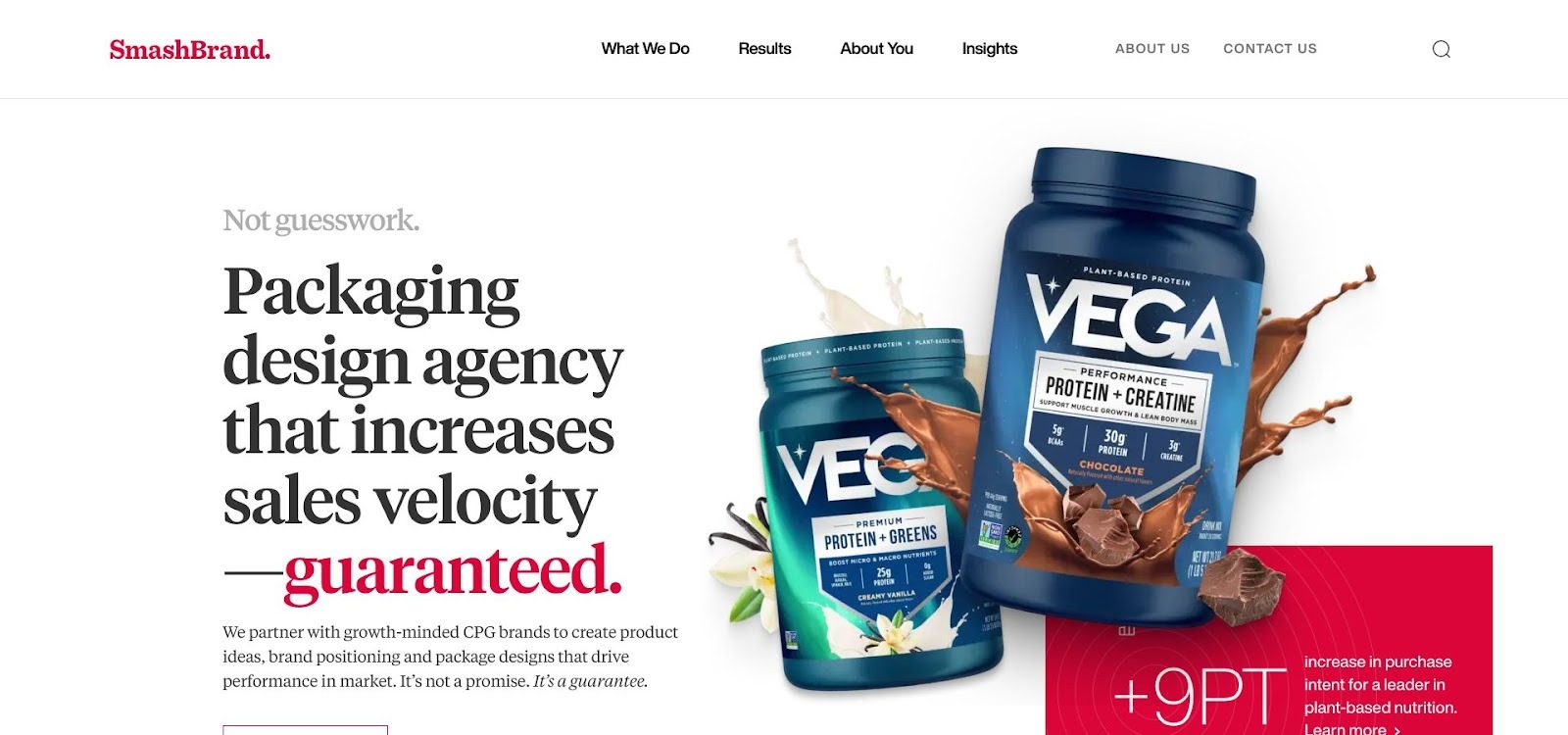
Most agencies bank on gut instinct or creative flair. SmashBrand prefers shopper data.
The Boise team builds every brief around PREformance™ testing, its in-house research platform that puts early concepts in front of real consumers. Eye-tracking heat maps, purchase-intent surveys, and shelf simulations uncover weak messaging before a single box rolls off the line. Results flow straight to designers, tightening every visual cue until it earns the vote.
That scientific loop delivers. SmashBrand maintains a 5.0-star average on Clutch, with founders praising the agency for “clarity that turned into cash at retail.”
Speed stays high. Agile sprints give you validated prototypes in weeks, not quarters. One health-food startup posted an 18 percent velocity lift after launch, enough to grow its grocery footprint from regional to nationwide within six months.
If you want packaging decisions backed by proof instead of slide decks, SmashBrand lets you sleep at night, then celebrate at the next sales meeting.
3. Kaleidoscope: best for integrated brand and structural design
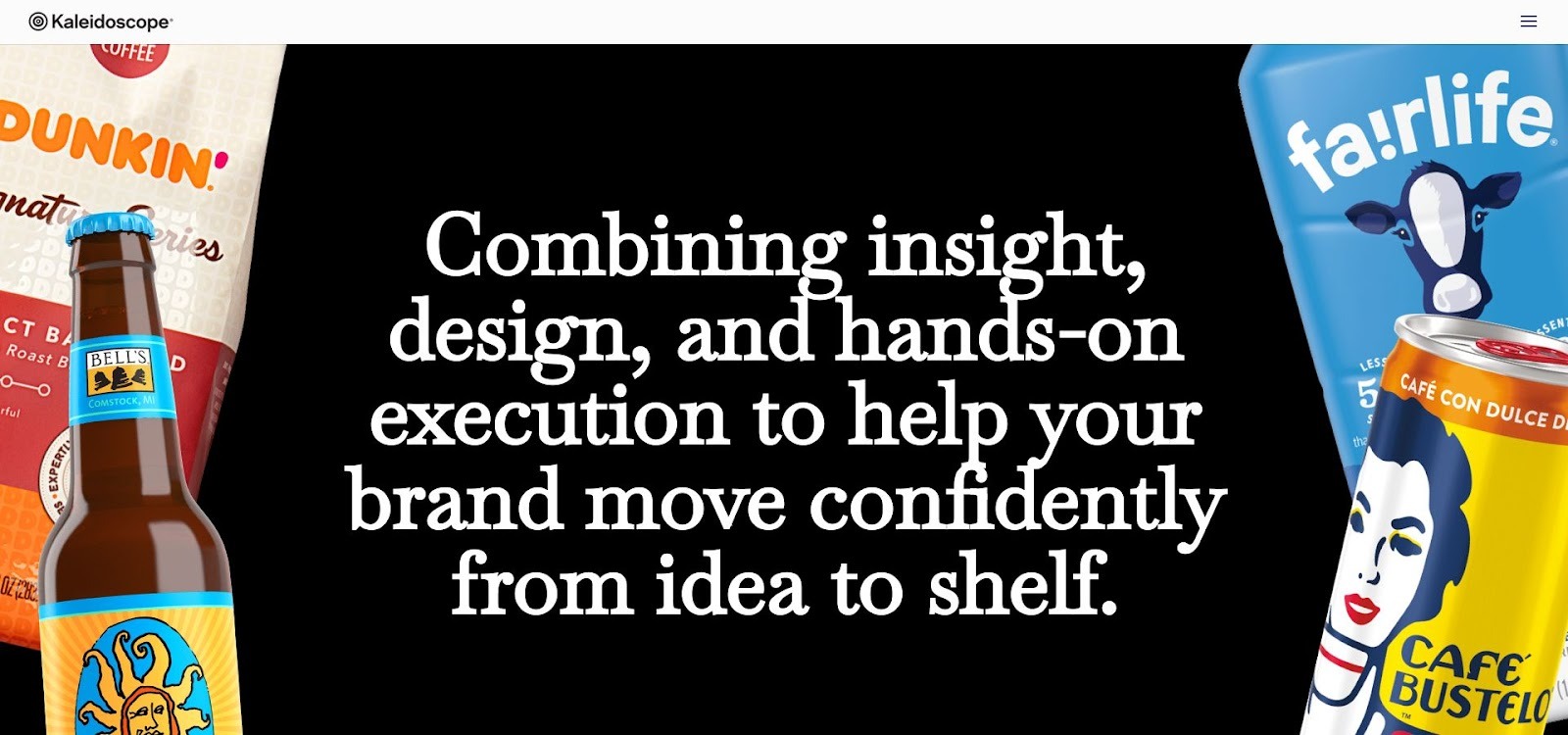
Some agencies perfect the graphics; others engineer clever structures. Kaleidoscope keeps both disciplines together from day one.
Inside its Chicago studio, researchers, industrial designers, and brand strategists sit inches apart, sharing prototypes across the desk. That proximity lets them solve aesthetic and logistical challenges in the same breath, so your carton looks polished and ships flat.
Kaleidoscope’s portfolio spans legacy food giants and craft-beer startups. A recent six-pack redesign cut material weight by 14 percent while boosting shelf impact, a result that earned a Design Effectiveness Award and secured prime eye-level placement for the brewery.
Speed never overrides rigor. Concepts move from mood board to foam model overnight, then into a full-color comp you can photograph for retailer pitches. When deadlines tighten, that sprint capability keeps launch windows intact.
For founders who need strategic storytelling paired with hands-on prototyping, Kaleidoscope can impress both the brand team and the logistics manager.
4. DD.NYC: best boutique studio for visually led branding
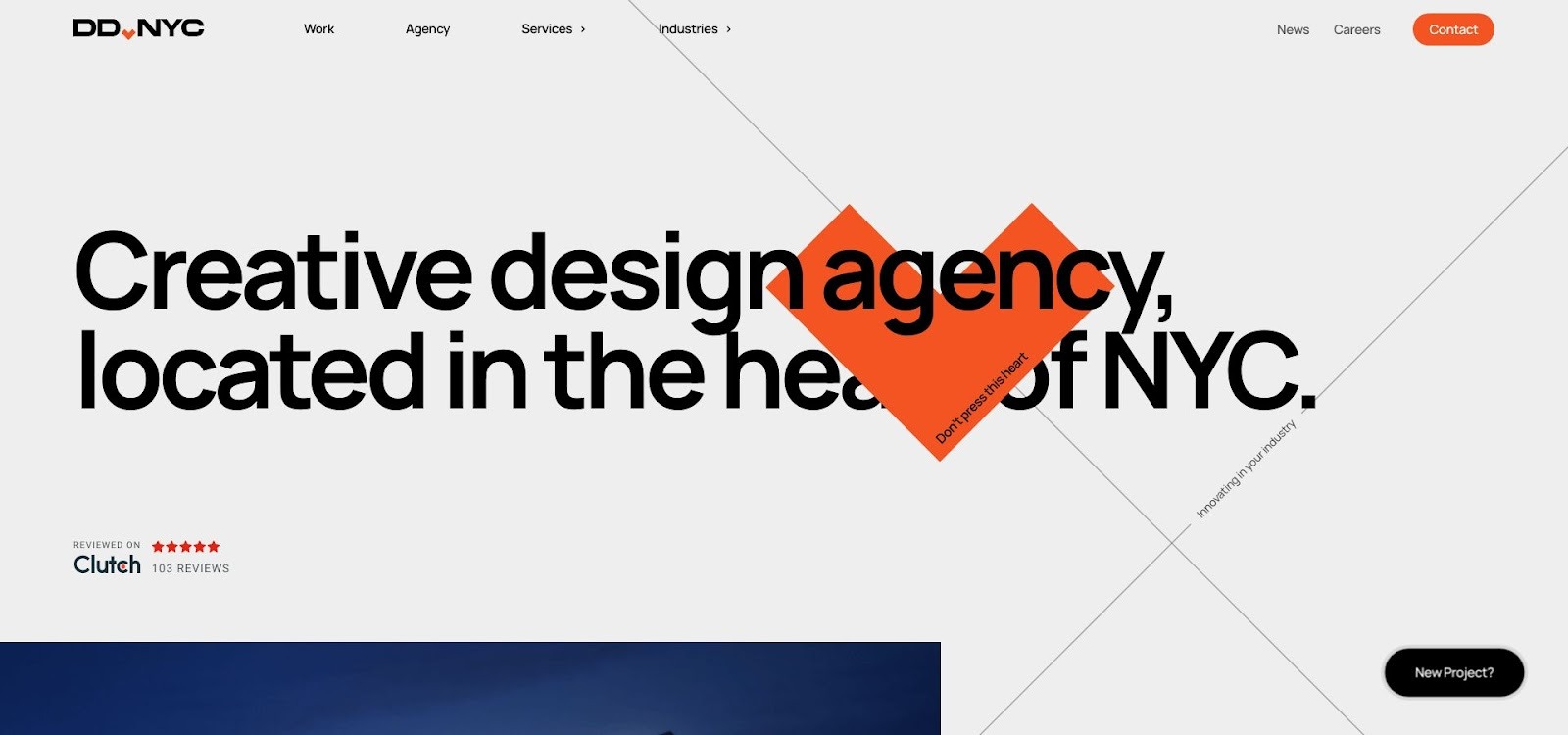
If your product belongs on an Instagram mood board as much as on a retail shelf, DD.NYC can help.
The Manhattan shop built its reputation on bold color stories and typography that stop thumbs mid-scroll. That social-first mindset translates to physical packaging, where a single hero hue or unexpected finish draws shoppers from three paces away.
Startup founders like the pace. DD.NYC schedules projects in tight two-week sprints and shares Loom walkthroughs of every revision, so nothing gets lost in translation. Because the design team also codes e-commerce sites, they watch file weight so 3D mock-ups load instantly on a pitch deck or crowdfunding page.
Cost matters too. Transparent, fixed-fee packages sit well below big-agency retainers yet still give you senior talent. One vegan skincare brand secured its first national retailer after DD.NYC created a pastel-on-matte carton that caught the buyer’s eye; the project stayed within the client’s lean launch budget.
When visual storytelling drives your brand plan and you need partners who move fast, DD.NYC belongs on your shortlist.
5. Bob’s Your Uncle: best for retail shelf impact and shopper marketing
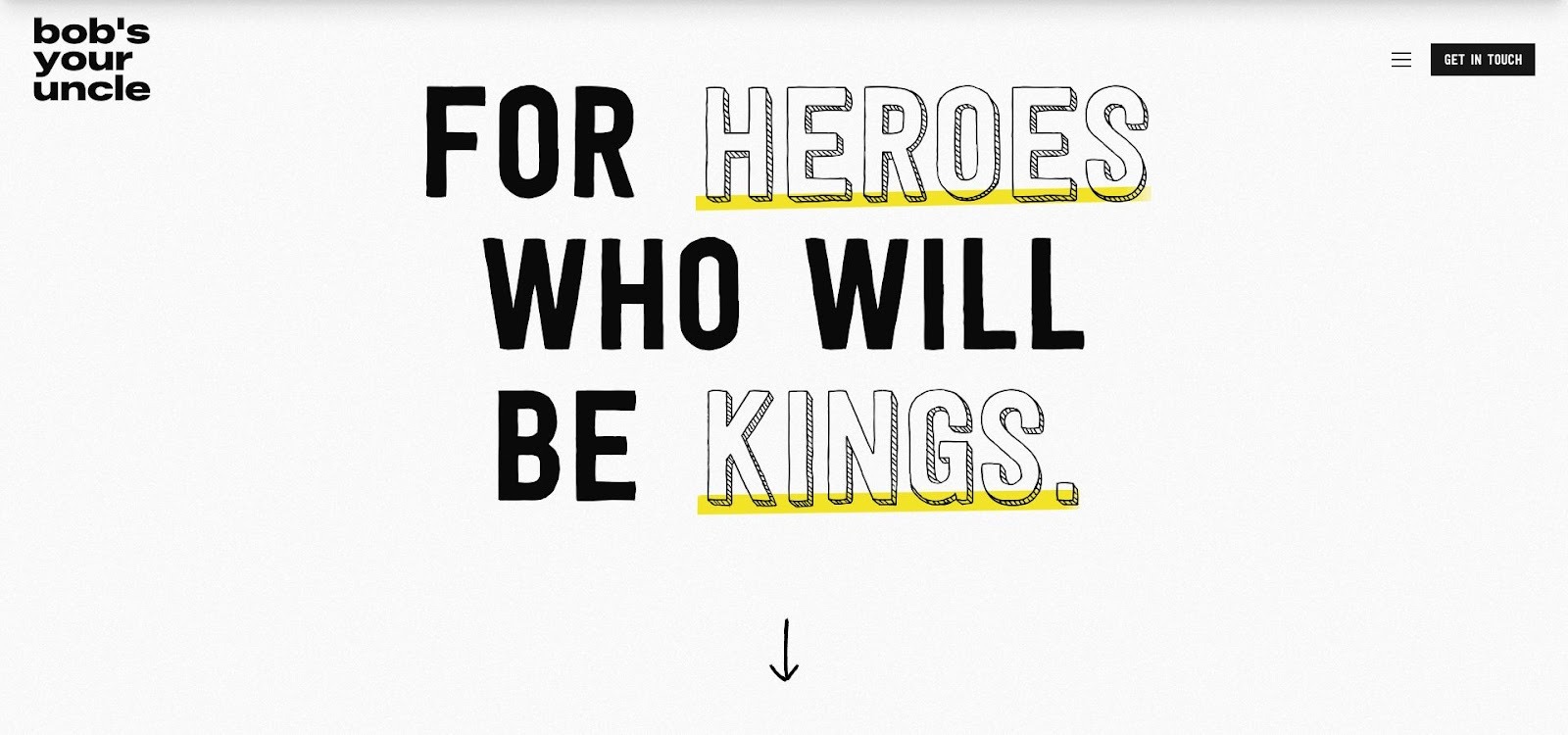
Packaging lives in a crowded aisle, not a design studio, and Bob’s Your Uncle never forgets that simple truth.
Born inside a Toronto ad agency, the team blends shopper-marketing psychology with eye-catching design. Before sketching a single line, strategists map sightlines, category color codes, and competitive claims. The outcome is packaging that speaks retail’s native language: instant, clear benefit statements wrapped in memorable visuals.
Client feedback backs it up. Across 24 verified reviews, Bob’s Your Uncle holds a 4.9-star average on Clutch, with marketers praising “ideas that ring the register.” A snack-food revamp lifted scan-data velocity by 22 percent, convincing national retailers to expand shelf space on the spot.
Cross-border know-how matters too. The agency routinely adapts bilingual and metric–imperial variants, smoothing entry into U.S. and Canadian chains without a redesign scramble.
If your growth plan depends on pleasing buyers as much as consumers, this crew brings the merchandising mindset you need.
Quick-compare cheat sheet
We just covered a lot of ground. If you want the highlights fast, skim the table below; one glance shows which agency fits your timeline, budget, and sustainability goals.
| Agency | Core Specialty | Avg. Clutch Rating | Typical Project Size | Turnaround Speed | Sustainability Focus | HQ / Regions |
| Zenpack | End-to-end design + production | 5.0 | $40k–$250k | 8–12 weeks (concept to pilot) | High (FSC-certified, carbon-neutral lanes) | San Jose / Asia / EU |
| SmashBrand | Consumer-testing-driven design | 5.0 | $30k–$150k | 6–10 weeks | Medium (material swaps on request) | Boise |
| Kaleidoscope | Integrated brand + structural design | 4.8 | $75k–$300k | 10–14 weeks | Medium–High | Chicago |
| DD.NYC | Visually led boutique branding | 4.9 | $20k–$90k | 4–8 weeks | Low–Medium | New York City |
| Bob’s Your Uncle | Shelf impact & shopper marketing | 4.9 | $25k–$120k | 6–10 weeks | Medium | Toronto |
Keep this table handy when you start vendor calls; it will help you frame the right questions and compare quotes against market norms.
Packaging trends shaping 2026 decisions
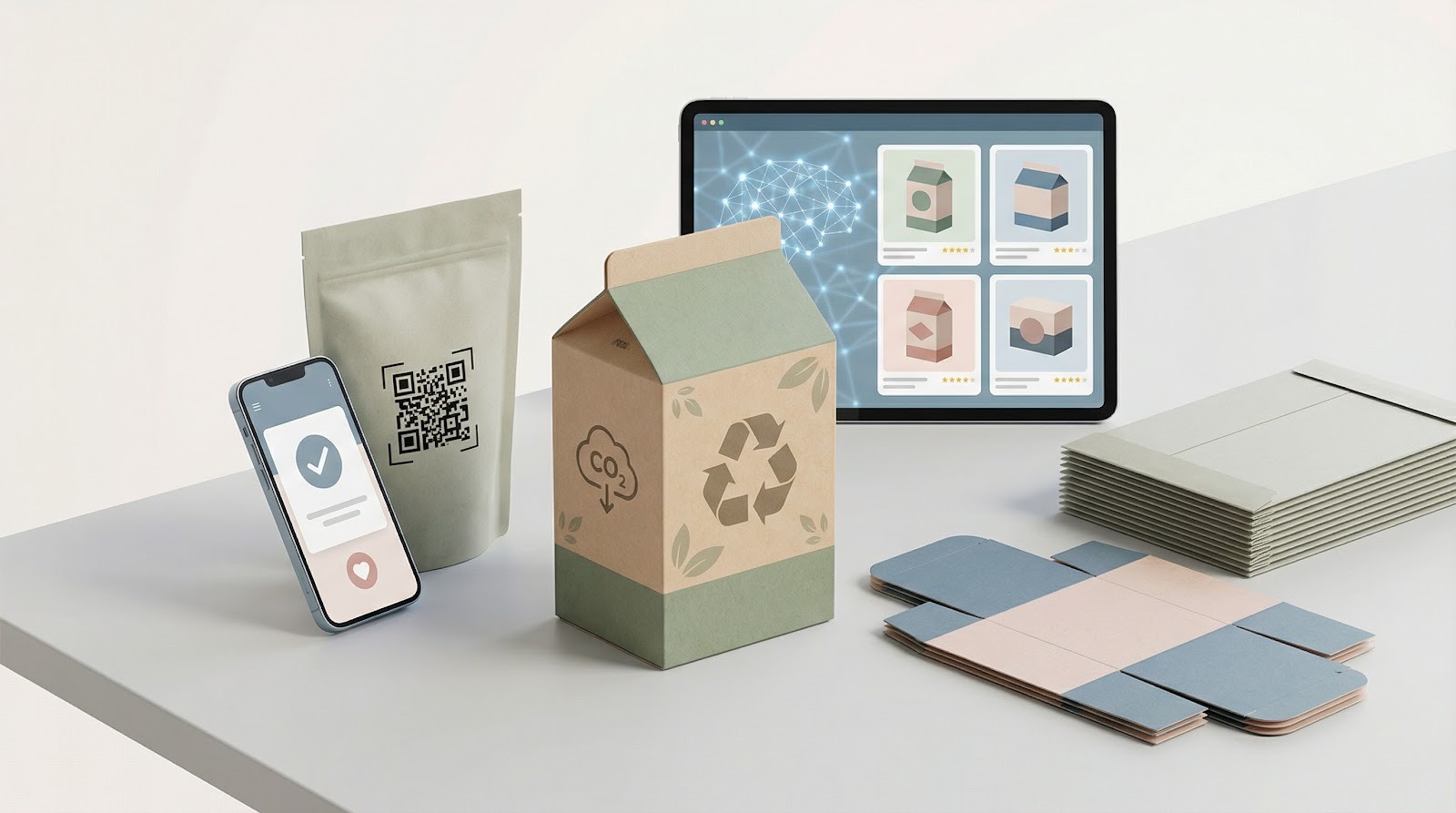
Sustainability has moved from perk to prerequisite, as seen in many sustainable food packaging examples that combine material innovation with strong visual branding. Retailers embed recyclability targets into vendor scorecards, and 68 percent of shoppers choose brands that avoid single-use plastics. Ask each agency how it measures life-cycle impact and which low-carbon substrates it tested in the past six months.
Smart packaging is shifting from pharma to everyday CPG. QR codes that once linked to a product page now launch freshness trackers, loyalty rewards, or refill reminders. Agencies with digital teams, such as Zenpack and SmashBrand, can weave that tech into the dieline instead of treating it as an extra step.
Cost pressure keeps rising. Dim-weight fees push brands toward lighter, flatter structures. Expect more origami-style cartons that pop into shape at the fulfillment center, cutting freight and storage costs.
Artificial intelligence is rewriting concept testing. Rapid image generation plus sentiment models shrink early design cycles from weeks to hours. Agencies that adopt this workflow deliver more iterations for the same budget, letting you pressure-test bold ideas before competitors catch up.
Keep these shifts in view as you evaluate partners. The right agency will have a ready playbook for each one and share it on the first call.
Conclusion
Packaging is no longer a finishing touch—it’s a growth lever. The right agency can help you reduce freight costs, improve retail velocity, meet retailer sustainability scorecards, and create a brand moment that converts browsers into buyers.
If you’re a scaling D2C brand that needs concept, engineering, and global production under one roof, Zenpack stands out as a full-service partner built for momentum. If validated consumer data drives your decisions, SmashBrand brings rigorous testing to every design sprint. For brands that need seamless integration between structural innovation and visual storytelling, Kaleidoscope delivers strategic depth. Startups prioritizing bold, social-first aesthetics will appreciate DD.NYC’s speed and boutique focus, while brands competing in crowded retail aisles can rely on Bob’s Your Uncle for shopper-marketing expertise and shelf impact.
As sustainability mandates tighten, smart packaging becomes standard, and AI accelerates concept testing, the agencies that combine creativity with operational fluency will define the next wave of category leaders.
Before signing a contract, ask three final questions:
- How will this design improve measurable outcomes—velocity, margin, or retailer acceptance?
- Can the agency scale production without reengineering the concept?
- What sustainability metrics will they track and report?
The answers will quickly reveal which partner fits your stage, ambition, and budget.
Frequently Asked Questions (FAQ)
1. How much does professional packaging design cost in 2026?
Project minimums typically range from $20,000 to $75,000 for boutique studios and can exceed $250,000 for fully integrated design-to-production engagements. Costs depend on structural complexity, testing requirements, sustainability sourcing, and manufacturing scale.
2. How long does a packaging design project usually take?
Most agencies deliver validated concepts in 4 to 8 weeks, with full production-ready packaging completed in 8 to 14 weeks. Timelines extend if consumer testing, retailer approvals, or complex engineering are involved.
3. What should growing consumer brands prioritize when choosing an agency?
Look for:
- Verified client ratings (4.7+ stars)
- Proven retail or D2C case studies
- Structural engineering capability (not just graphic design)
- Clear sustainability practices
- Transparent project minimums and scope
4. Is sustainability really a competitive advantage, or just a trend?
It’s both a consumer expectation and a retailer requirement. Many major retailers now embed recyclability and material-reduction targets into vendor scorecards. Sustainable packaging can also reduce shipping weight and lower freight costs, improving margins.
5. Do small brands need consumer testing before launch?
If the budget allows, yes. Even lightweight testing—such as digital shelf simulations or purchase-intent surveys—can uncover messaging gaps early. Agencies that incorporate testing help reduce costly redesigns after launch.
About the Author

Peter Makeshoff
Peter Makeshoff is the founder and main author of Designer Daily.