
Architectural presentations determine how projects are received. Construction drawings serve their purpose during building, but they do not show clients or investors what a finished space will actually feel like. This is why architectural visualization is now a standard part of project delivery.
In the following sections, we break down the core services these studios provide, the project stages where external visualization makes sense, and the criteria we recommend using when selecting a firm to work with.
What Architectural Visualization Studios Do
Archviz studios take 3D models and make them look real and appealing. They’re not just producing pictures — they help designs get approved and sold.
Typical services:
- High-end still renders that are almost impossible to tell from actual photos.
- VR walkthroughs so you can virtually walk through the building.
- Short animated videos showing key views and circulation.
- Finishing work: putting people and context in, color correction, matching real background photos for planning docs or brochures.
Best 3D Rendering Studios for Architectural Projects
We selected these studios based on how they operate. Some prioritize real estate timelines and strategic support. Others focus on visual authorship and craft.
Each has proven experience working with leading architects and developers across different project types.
1. NoTriangle Studio
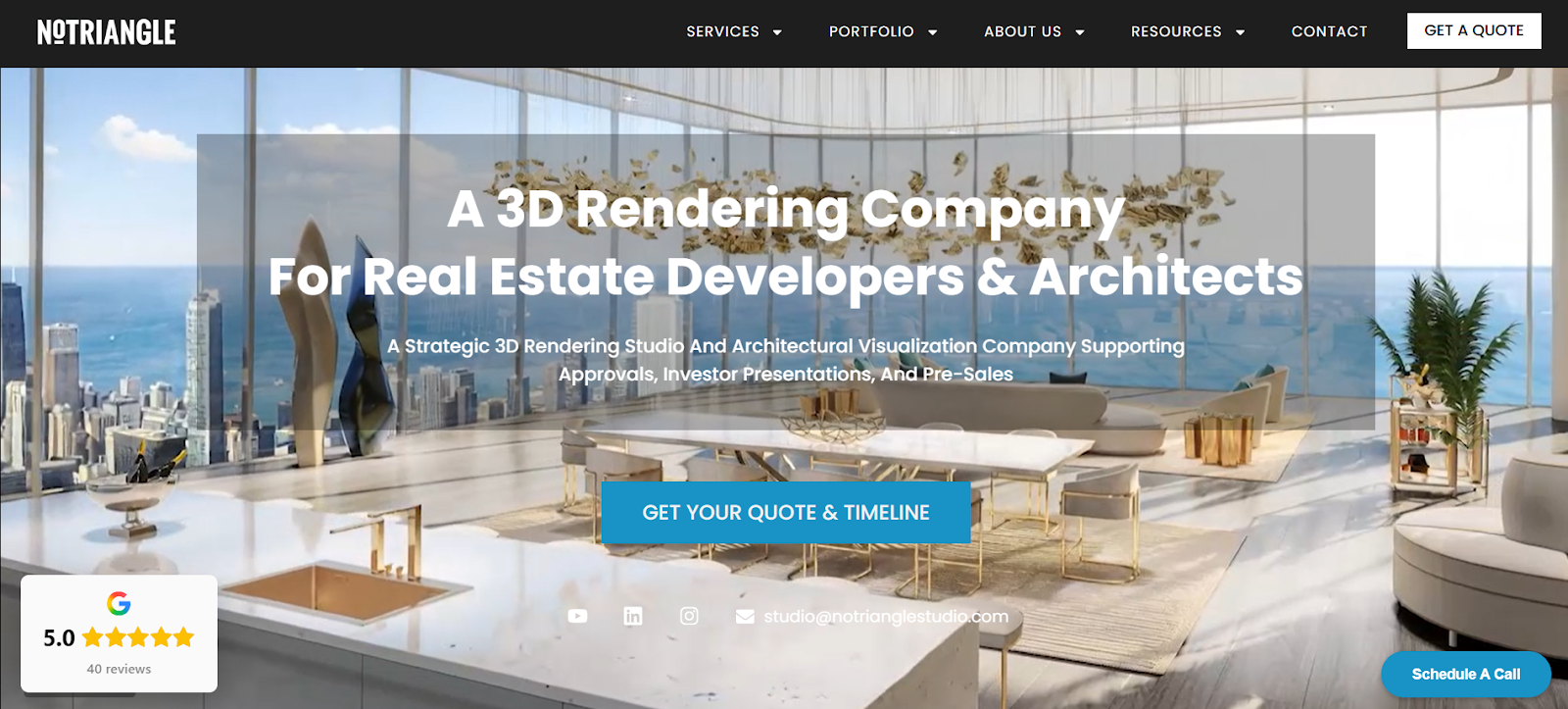
NoTriangle Studio is a California-based 3D rendering and architectural visualization company founded in 2010. They are recognized as one of the best-rated firms in the industry.
The studio works as a strategic partner with real estate developers and architects. They build visualization into development workflows and support projects from initial planning through to market launch.
Services Provided
- Exterior renderings for massing, context, and design intent;
- Interior renderings to finalize layouts, finishes, and positioning;
- Architectural animations explaining scale, flow, and experience;
- VR tours and immersive walkthroughs for design reviews;
- Product rendering services.
Why They Stand Out
NoTriangle Studio differentiates itself by starting with strategy rather than images. Before rendering begins, the team analyzes the client’s approval, investor, and pre-sales goals, as well as market positioning and target audience.
This approach positions their visuals as decision-making tools rather than standalone images, with the stated goal of reducing friction in approvals and accelerating pre-sales.
2. Brick Visual
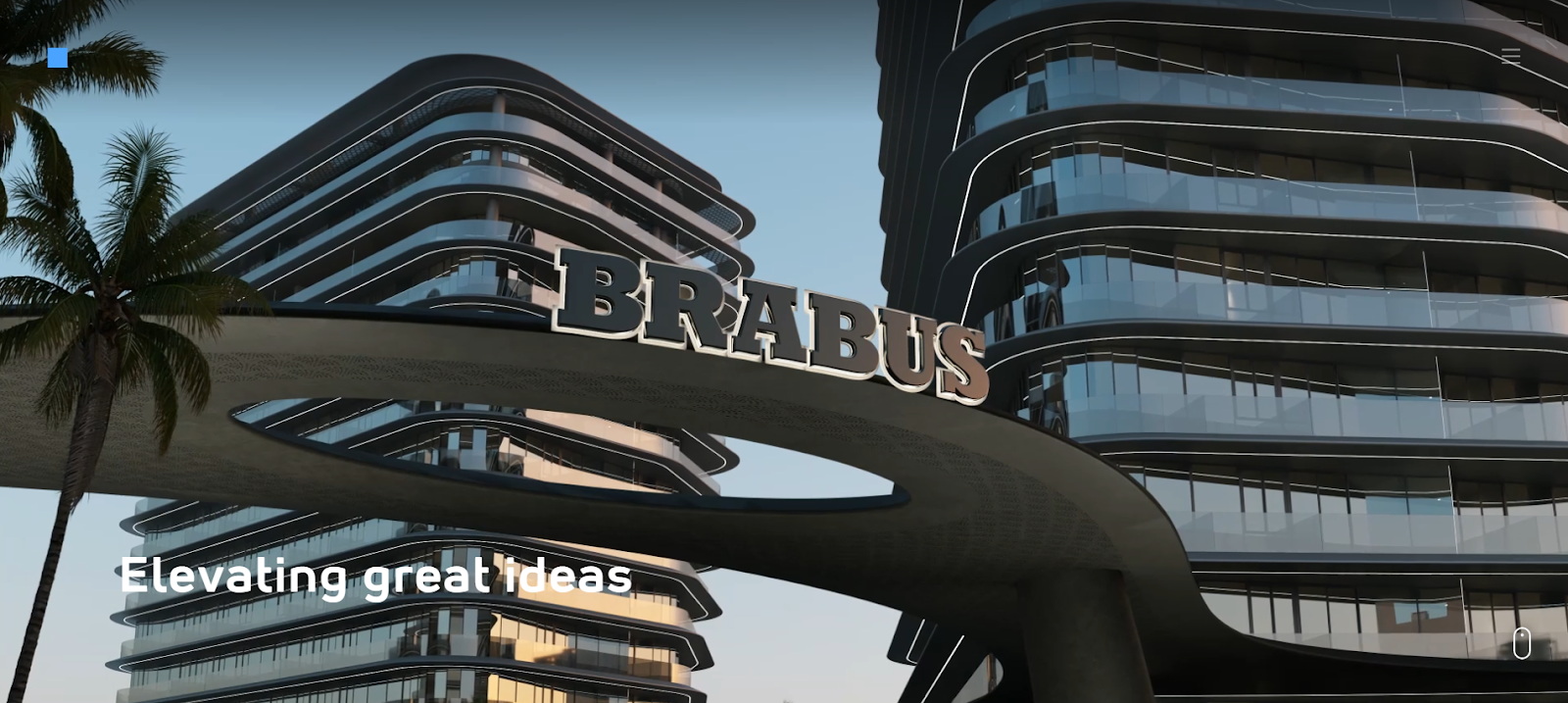
Brick Visual is a Hungarian studio that started in 2012. Their main office is in Budapest. They also have offices in Cluj-Napoca, Verona, and Porto. Around 100 people work there, coming from 24 countries.
They do photorealistic renders, animations, and interactive work. Their approach emphasizes storytelling in architectural projects. They have won awards, including the CGarchitect 3D Awards.
Services Provided
- Photorealistic architectural renderings;
- Animations and interactive visualizations;
- Visualization solutions for architecture, real estate, product and brand, and media and entertainment;
- Educational resources through Brick Academy;
- Software solutions and workflow optimization tools like Pulze;
- Training programs for companies.
Why They Stand Out
Brick Visual produces technically accurate images that also convey a sense of atmosphere. Their work is known for having a narrative quality.
They have collaborated with firms including Zaha Hadid Architects, Foster + Partners, and OMA. The studio also runs Brick Academy for education and develops software tools to improve visualization workflows.
3. DBOX
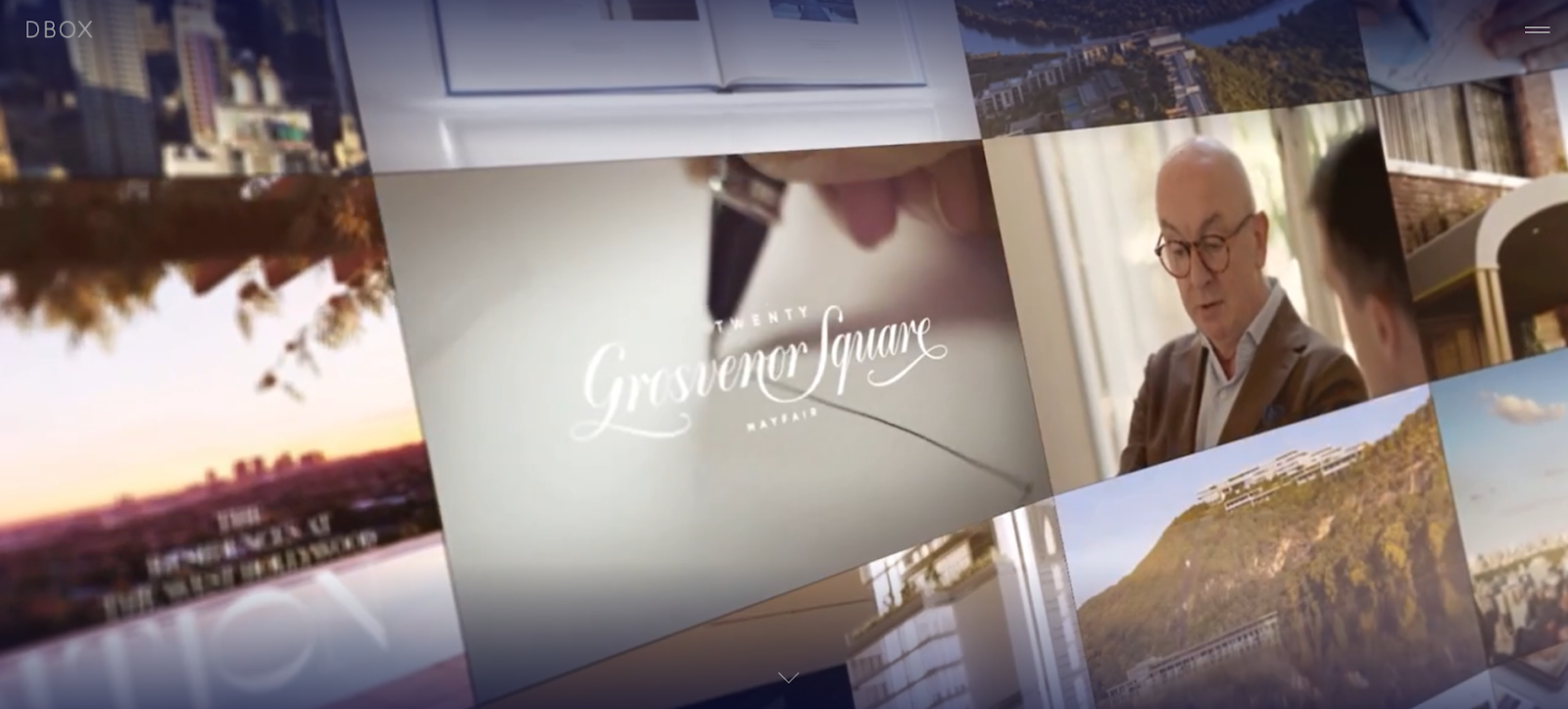
DBOX is an international creative communications agency operating at the intersection of architecture and marketing. With studios across three continents, the company develops strategic marketing campaigns for the luxury residential, hospitality, commercial, and cultural property sectors.
Their work has been exhibited at institutions including The Museum of Modern Art (MoMA) and has received awards from the Academy of Television Arts & Sciences (Emmy Awards) and The Art Directors Club, among others.
Services Provided
- Brand marketing campaigns for the design and luxury sectors;
- Strategic consultancy for residential, commercial, hospitality, destination, and cultural projects;
- Marketing touch points and environment design;
- Visual assets for sales, leasing, planning, and public awareness campaigns.
Why They Stand Out
DBOX operates as a full-service strategic consultancy rather than a traditional rendering studio. Each campaign is led by a partner with expertise in real estate, branding, and digital media.
The company focuses on building brands, creating desire, and adding value to projects, with the stated aim of maximizing project value for clients and their investment partners through innovative marketing campaigns.
4. MIR
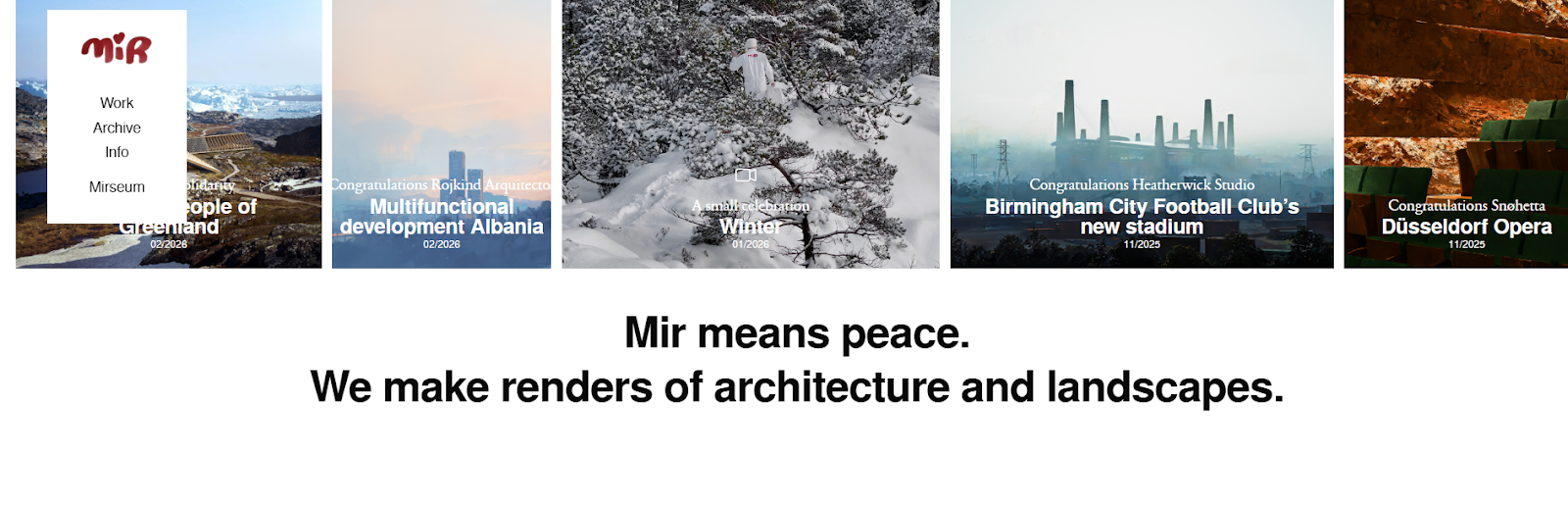
MIR was established in 2000 by Mats Andersen and Trond Greve Andersen in Bergen, Norway. The team includes around ten artists. They produce architectural and landscape imagery. Their work emphasizes the connection between built structures and the environment around them.
Services Provided
- Architectural and landscape images;
- Visualization for museums, operas, bridges, airports, stadiums, and other cultural projects;
- Services for both large-scale, high-profile projects and smaller, low-budget practices;
- Collaboration during various phases of project development.
Why They Stand Out
MIR produces work with close attention to detail and a strong sense of mood. They focus on projects connected to nature and aim to show architecture in relation to its surroundings.
The studio has worked with major firms for over twenty years on well-known projects. They describe their role as providing inspiration, not just producing images.
5. Luxigon
Luxigon is an international architectural visualization studio headquartered in Paris, France, with additional offices in Los Angeles and Milan.
Founded over 20 years ago, the studio has established itself as a key partner for top-tier architects, real estate developers, and public institutions worldwide. They have produced thousands of images, animated movies, real-time 3D experiences, and VR files for projects ranging from urban masterplans to smaller landscapes.
Services Provided
- High-end architectural visualizations and photorealistic renderings;
- Competition-grade imagery and presentations;
- Animated movies and cinematic sequences;
- Real-time 3D and interactive experiences;
- Virtual Reality (VR) content;
- Concept design support for experimental or tight-deadline projects.
Why They Stand Out
Luxigon has established itself through consistent work and relationships with firms such as OMA, MVRDV, REX, BIG, KPF, and SOM. Their renderings have been part of many competition packages. The studio focuses on being adaptable and reliable, with a clear interest in architecture.
They engage with emerging topics like AI, and their projects are often covered in publications like ArchDaily.
When Architects Need 3D Rendering
Timing matters for both budget and schedule. These are the main moments when it’s usually worth it:
During Design Development
Before final construction drawings are locked in, renders help spot problems early. You can check spatial issues, try different materials, and see how daylight actually works. Fixing something in the model costs almost nothing compared to changing it during construction.
For Important Client Meetings
This is when most architects call in a rendering studio. Showing photorealistic images to clients, investors, or boards removes guesswork from 2D plans.
People understand the finished building much better, which usually means quicker sign-off and less back-and-forth.
For Planning Applications and Community Feedback
If locals or planners might object, good contextual renders can make a big difference. A realistic view of the project in its actual surroundings often calms concerns about scale, style, or “it doesn’t fit here,” making approval smoother.
4. For Marketing and Pre-Sales
For developers and real estate marketers, the need for rendering peaks before construction even begins. “Off-plan” sales rely entirely on the promise of the finished product.
High-end marketing collateral—brochures, billboards, and interactive touchscreen tours in sales centers—requires the kind of glossy, aspirational imagery that only a top-tier visualization studio can provide.
Choosing the Right Studio for Your Architecture Firm
Who you hire for visualization matters beyond the images they deliver. The right studio learns your process and produces work that aligns with it. The wrong studio delivers generic results that do not represent your design accurately. Below are the criteria we use to evaluate potential partners.
1. Evaluate Their Portfolio for Your Niche
Review their past work carefully. Different studios have different strengths. Some produce clean, minimalist images. Others are better with detailed landscapes or city scenes.
Check if they have done projects similar to yours. Look at scale and style. If your project is a high-end residence and their portfolio shows mostly industrial buildings, they are probably not the right choice.
2. Assess Their Technical and Artistic Range
A great studio must balance technical accuracy with artistic flair.
- Lighting and Mood: Do their images tell a story? Do they evoke a feeling?
- Attention to Detail: Zoom in on their images. Do the materials look physically accurate? Is the grout in the tile work realistic?
- Technology: Ask about their pipeline. Do they use real-time engines (like Unreal Engine) for VR, or do they focus purely on offline renderers (like V-Ray or Corona) for maximum photorealism?
3. Prioritize Communication and Revisions
The whole rendering thing is back-and-forth: you send notes, they change stuff, you send more notes. If communication is difficult during the quoting phase, it will be worse when you are working under a deadline.
Watch out for vague prices, emails that take days to get answered, or them dodging questions about how many revisions you get.
A good sign is when they actually ask real questions first — what you’re trying to show, who the images are for, what the goal is — before they even mention money.
4. Understand Their Process and Timeline
Real studios usually follow something like blockout → texturing → lighting → rendering → post. Just ask them to quickly explain their steps so you know what to expect.
Also, find out how long the first draft actually takes, and whether they can speed things up if your client suddenly wants big changes. Check if they have enough people to do several views at once without everything slowing down.
5. Consider the “Culture Fit”
You’re basically handing over your design vision to these people, so pick a studio that actually seems into your project. The ones who ask smart questions and throw in their own ideas are way more useful than the ones who just do exactly what you say and nothing else. They end up feeling like part of your team instead of some outside vendor.
Once you get what these studios really do, know the best times to use them, and check them properly against this stuff, your architecture firm can make sure the designs don’t just look okay on paper — people actually feel what the building will be like.
Conclusion
Fit matters when choosing a rendering studio. Firms have different areas of focus. Some are set up for real estate workflows and pre-sales. Others emphasize storytelling or marketing. Some focus on artistic images for cultural projects. Others do competition work and conceptual design.
Review their portfolio for projects similar to yours. Evaluate the technical quality. Note how clearly they communicate. The right studio functions like part of your team and produces images that help move projects forward through approvals and presentations.
About the Author

Peter Makeshoff
Peter Makeshoff is the founder and main author of Designer Daily.