
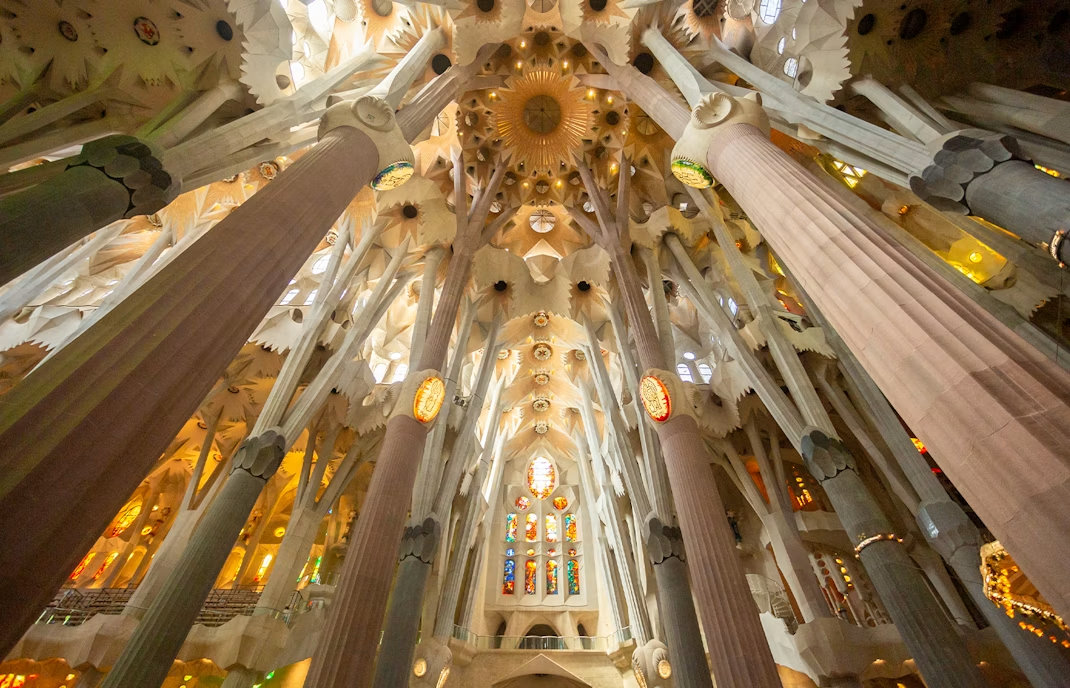
You have felt it. Entering a grand cathedral, a skyscraper lobby, or a cavernous train station. A sudden sense of awe, of smallness, of being dwarfed by something larger than yourself. Entering a different building: a small library, a cozy café, a well-proportioned home. A sense of calm, of protection, of being held.
The feeling is not accidental. It is architectural. It is the result of deliberate decisions about scale, proportion, and the manipulation of human perception. Here is why buildings make us feel the way they do.
The Power of Scale
Scale is the relationship between the size of the building and the size of the human body. A building that is vastly larger than a person creates a feeling of awe. The cathedral is a classic example. The nave is tall, the columns are thick, and the ceiling is distant. The visitor is diminished. This is intentional. The building is designed to make the individual feel small in the presence of the divine.
A building that is closer to human scale creates a feeling of safety. A room with a ceiling that is reachable, with windows at eye level, with doors that are proportional to the body, creates a sense of enclosure. The building is not trying to overpower. It is trying to shelter.
The scale is not just about height. It is about the relationship between the parts. A grand doorway is grand because it is larger than a person. A cozy doorway is cozy because it is just slightly larger than a person. The difference is subtle but profound.
The Manipulation of Light
Light is a tool of emotional control. A building that is flooded with light feels open, optimistic, and welcoming. A building that is dimly lit feels intimate, mysterious, or even oppressive.
The cathedral uses light dramatically. The windows are high, the light is filtered, and the interior is dim. The visitor is in a world of shadows and highlights, of mystery and reverence. The light is not illuminating. It is revealing, selectively.
A safe building uses light differently. It is even, predictable, and warm. The visitor can see clearly. There are no dark corners to fear. The light is not dramatic. It is reassuring.
The manipulation of light is not just about windows. It is about the materials, the colors, and the surfaces. A reflective surface bounces light around the room, making it feel larger. A matte surface absorbs light, making it feel smaller. The choice is a choice of feeling.
The Geometry of Enclosure
The shape of a space determines how it is perceived. A square room feels stable, predictable, and grounded. A circular room feels fluid, dynamic, and slightly disorienting. A long, narrow corridor feels like a passage, not a destination.
The cathedral is long and narrow, directing the eye toward the altar. The visitor is guided, not free. The geometry is a path, not a place.
A safe building often uses more complex geometry. It has alcoves, corners, and niches. The visitor can find a place to rest, a place to be unseen. The geometry is not a path. It is a collection of places.
The geometry also affects acoustics. A room with hard surfaces reflects sound, making it feel larger and more chaotic. A room with soft surfaces absorbs sound, making it feel smaller and more intimate. The sound of the space is part of the experience.
The Threshold Effect
The transition from outside to inside is critical. A building that has a clear threshold, a moment of change, creates a sense of arrival. The visitor knows they are entering a different space.
The cathedral has a grand threshold. The door is large, the entrance is dramatic, and the visitor passes from the outside world into a sacred space. The transition is intentional and powerful.
A safe building has a gentle threshold. The door is not intimidating. The entrance is not overwhelming. The visitor passes from outside to inside without a jolt. The transition is smooth and reassuring.
The threshold is not just about the door. It is about the approach. The path to the building, the landscape around it, the materials underfoot. All of these contribute to the feeling of arrival.
The Memory of the Body
The body remembers spaces even when the mind does not. A building that is well-proportioned, that respects the dimensions of the human body, feels right. A building that is out of proportion, that ignores the body, feels wrong.
The body knows when a ceiling is too low, a corridor is too narrow, or a stair is too steep. It is not a conscious calculation. It is a physical response. The body is evaluating the space before the mind has time to think.
A safe building is a building that the body can trust. It is a building that does not challenge the body’s sense of balance, orientation, or safety. It is a building that supports the body, not confronts it.
The Bottom Line
Buildings are not neutral. They shape how we feel, how we think, and how we behave. A building that makes you feel small is using scale, light, and geometry to create a specific emotional response. A building that makes you feel safe is doing the same, but with different intentions.
The difference is not in the materials. It is in the design. The architect who understands the psychology of space can create feelings as precisely as a painter creates colors.
The next time you enter a building, notice the feeling. Is it awe? Is it comfort? Is it unease? The building is communicating with you. The question is whether you are listening.
About the Author

Peter Makeshoff
Peter Makeshoff is the founder and main author of Designer Daily.