
The stopwatch says 1.2 seconds. The user says “this is slow.” Both are correct. Performance is not a number. It is a feeling. And the feeling is shaped by factors that have nothing to do with the actual duration of the wait. Understanding this gap between measured performance and perceived performance is essential for anyone designing digital products.
The Perception Gap
Research consistently shows that perceived wait time is a better predictor of user satisfaction than actual wait time. A study of Dutch hospital polyclinics found that the attractiveness of the waiting environment was a stronger determinant of satisfaction than the objective duration of the wait. The same principle applies to digital interfaces. How long the user waits matters less than how the wait feels.
This is not irrational. It is human. The brain processes time subjectively, influenced by attention, emotion, expectation, and context. A two-second wait that feels uncertain and uncontrolled can feel longer than a five-second wait that feels predictable and purposeful.
The Factors That Shape Perception
Several factors determine whether a wait feels fast or slow.
Occupied time feels shorter than unoccupied time. A spinning loader with nothing else happening is the worst-case scenario. The user has nothing to do but wait. A skeleton screen that shows the structure of the incoming content gives the user something to look at. A progress bar that updates gives the user something to track. The activity does not need to be productive. It just needs to exist.
Uncertain waits feel longer than known waits. A wait with no end in sight triggers anxiety. A wait with a clear endpoint triggers patience. This is why progress bars are more satisfying than spinners, even when the total wait is identical. The user knows what to expect.
Unexplained waits feel longer than explained waits. A brief message that explains what is happening, even a simple “Fetching your data,” reduces the perception of duration. The user understands that something is happening, and that understanding reduces frustration.
Unfair waits feel longer than fair waits. A user who is stuck behind a slow process while watching others proceed quickly will feel the wait more acutely. This is why progress indicators that show the user’s position in a queue are more tolerable than generic spinners. The user can see that the system is working through the queue fairly.
The Technical Illusion
The perception gap is not just psychological. It is also technical. The way an app loads content can create the impression of speed even when the underlying performance is unchanged.
Optimistic UI. When a user performs an action, the interface updates immediately, before the server confirms the result. The user sees the change instantly. The server catches up in the background. This technique makes actions feel instantaneous even when they are not.
Progressive loading. Instead of waiting for the entire page to load, the interface renders the most important content first. The user can begin interacting with the page before everything is ready. The perceived load time is determined by the first meaningful paint, not the last asset.
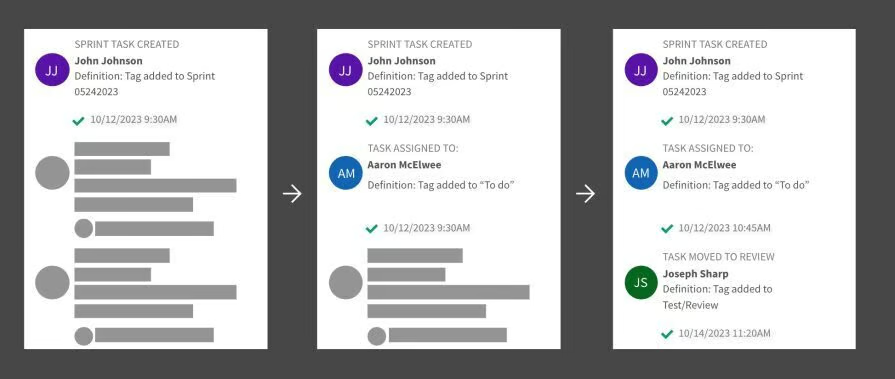
Skeleton screens. A gray placeholder that mimics the layout of the incoming content creates the impression that the page is already there. The content simply fills in the blanks. This feels faster than a blank screen with a spinner, even if the actual load time is identical.
Instant feedback. Every interaction should have an immediate visual or haptic response. A button that depresses. A toggle that animates. A sound that plays. The feedback does not change the performance. It changes the perception.
The Context Effect
The perceived speed of an app is not determined in isolation. It is shaped by the user’s context.
A user who is in a hurry will perceive a wait as longer than a user who is relaxed. A user who is on a slow connection will blame the connection, not the app. A user who has used a faster competitor will judge the app against that benchmark.
This means that improving perceived performance is not just about the app. It is about managing expectations, communicating clearly, and understanding the user’s situation.
The Bottom Line
Your app feels slower than it is because perception and measurement are not the same thing. The stopwatch measures duration. The user experiences time, and time is shaped by attention, expectation, and emotion.
The designer who understands this has an advantage. They can make an app feel fast without changing a single line of performance code. They can occupy the user’s attention. They can set expectations. They can explain what is happening. They can provide immediate feedback.
The stopwatch is not the truth. The user’s feeling is the truth. Design for the feeling. The numbers will follow.
About the Author
Peter Makeshoff
Peter Makeshoff is the founder and main author of Designer Daily.