
Fashion Week isn’t a single event. It’s a moving spectacle that traverses New York, London, Milan, and Paris twice a year, each city layering its own identity over a global brand. Behind the runway shows and street style photography is a massive design operation. Every season, creative teams rebuild the visual language of an event that millions watch, thousands attend, and the entire fashion industry uses to set its calendar.
Here’s how they do it.
The Architecture of a Fashion Week Identity
A Fashion Week identity is more than a logo. It’s a system that must function across:
- Physical environments: Venue signage, runway backdrops, press walls, invitation design
- Digital platforms: Websites, livestream interfaces, social media assets, digital press kits
- Broadcast and media: On-screen graphics, title cards, commercial breaks
- Merchandise and accreditation: Badges, lanyards, gift bags, limited edition products
- City integration: Street banners, transit ads, wayfinding systems across host cities
Each season, this system is rebuilt. The challenge is maintaining recognition while delivering something fresh.
The New York Fashion Week: A Case Study in Rebranding
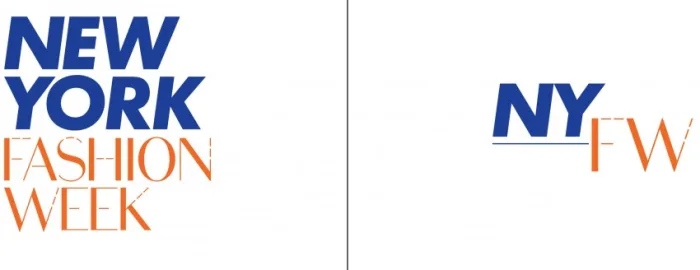
In 2015, the Council of Fashion Designers of America (CFDA) relaunched New York Fashion Week under a new name: NYFW: The Shows. The identity, designed by The Made Shop, introduced a stark, graphic language that broke from the decorative aesthetic of previous years. Bold black-and-white typography, modular layouts, and a flexible grid system allowed the identity to adapt across hundreds of applications while maintaining instant recognition.
The redesign was more than cosmetic. It signaled a strategic shift: consolidating multiple independent shows into a cohesive, professionally managed event. For sponsors, advertisers, and international press, the unified identity created a marketable product.
The system was designed for adaptability. The core typographic lockup could be paired with seasonal color variations, guest artist collaborations, and event-specific treatments. The identity didn’t dictate every application. It provided a framework for endless variation.
The Seasonal Refresh: Fresh Without Starting Over
Fashion Weeks change twice a year. The identity must follow.
The Milan Fashion Week identity, designed by Studio FM Milano, uses a system of interchangeable elements that shift seasonally. The core structure remains consistent, but color palettes, patterns, and typographic treatments rotate to reflect autumn/winter or spring/summer collections. The result is an identity that feels current without confusing audiences.
This approach solves a critical design problem: recognition requires consistency, but fashion requires novelty. By fixing the structure and varying the surface, the identity achieves both.
Venue Design: The Physical Experience
For attendees, Fashion Week is as much about the spaces between shows as the shows themselves. Venue design has become a discipline unto itself.
At the Spring Studios hub during NYFW, identity extends across multiple floors. The Made Shop’s work includes directional signage, lounge environments, photo backdrops, and branded spaces for sponsors like American Express and Maybelline. Each element is treated as part of the same system, creating a cohesive environment that feels professionally managed rather than haphazard.
The physical identity serves a practical function: helping thousands of attendees navigate complex venues under tight schedules. Clear typography, logical wayfinding, and consistent color coding are as important as visual impact.
Digital Presence: The Global Audience
Fashion Week’s audience is no longer just the 2,000 people in the room. Millions watch livestreams, follow social media, and consume editorial coverage. The digital identity must work at both scales.
The NYFW livestream platform carries the same visual language as the physical event: bold typography, clean layouts, sponsor integration. For remote viewers, the interface is the event. Its design must communicate the same prestige and professionalism that attendees experience in person.
Social media presents a different challenge. The NYFW identity must compress to Instagram squares, TikTok verticals, and Twitter banners while remaining recognizable. The modular system, with its flexible layouts and scalable typography, handles this compression gracefully.
The Sponsor Ecosystem
Fashion Weeks are sponsored events. The identity must accommodate sponsor integration without becoming cluttered.
The solution is architecture: creating designated zones where sponsor identities can appear without disrupting the core event identity. At NYFW, sponsor lounges, branded photo walls, and sponsored runway segments are designed as discrete elements within the overall system. The sponsor’s identity can be prominent without competing with the event’s visual language.
This requires advance planning. Sponsor placement is built into the identity system from the start, not added as an afterthought when contracts are signed.
The Future: Sustainability and Digital Extension
Fashion Weeks are facing pressure to reduce their environmental footprint. The design response includes digital showrooms, virtual attendee experiences, and reduced printed materials. These shifts require designing for new platforms: virtual reality environments, interactive digital lookbooks, and hybrid events that serve both physical and remote audiences.
The identity system must now function across physical and digital realms simultaneously. A design that works on a venue banner and a phone screen, on a printed invitation and an NFT, is the new baseline.
The Bottom Line
Fashion Week identity is event design at its most demanding: seasonal, global, and subject to the relentless pace of fashion cycles. The successful systems are those that provide enough structure to be recognizable while enough flexibility to evolve. They don’t dictate every application. They create frameworks that make good decisions inevitable.
When the identity works, it disappears. Attendees navigate without confusion. Sponsors integrate without clashing. The event feels cohesive without feeling designed. That’s the goal: an identity that organizes chaos and gets out of the way.
About the Author
Peter Makeshoff
Peter Makeshoff is the founder and main author of Designer Daily.