
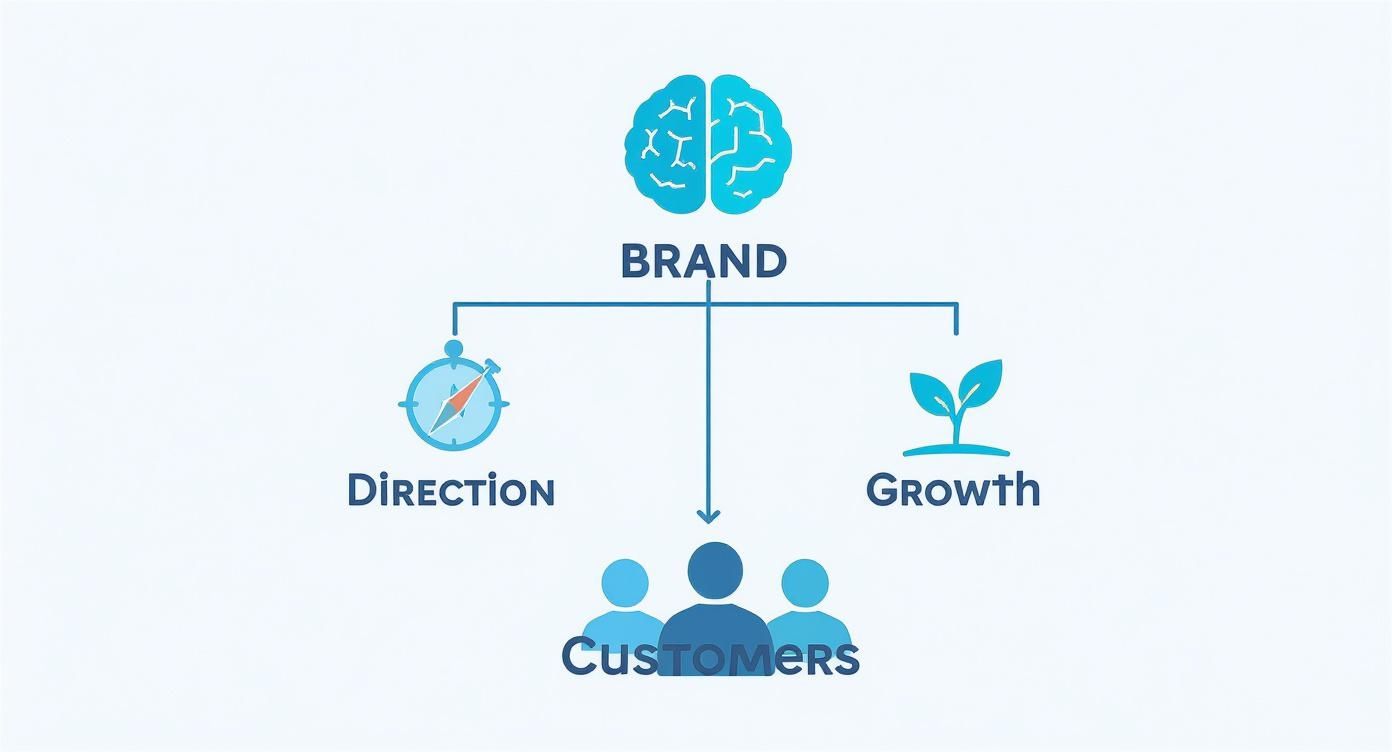
Startups face a fundamental branding paradox. They need a professional, memorable brand to attract customers, investors, and talent. But they have limited budgets, compressed timelines, and often only a vague sense of their target audience. Spending six figures on a comprehensive identity system is impossible. Spending nothing on brand is equally impossible.
Here is how to build effective startup branding with limited resources. The goal is not perfection. The goal is enough.
The Minimum Viable Brand
A startup brand needs three things to function. A logo that works at small sizes (favicon, app icon, social avatar). A color palette of three to five colors that provides contrast and hierarchy. A typography system of two typefaces (one for headlines, one for body text). That is it. Anything beyond this is enhancement, not necessity.
Do not start with a full brand guideline document. Start with a one-page brand cheat sheet that answers: What is our logo and how do we use it? What are our primary colors (with hex codes)? What fonts do we use for what purposes? What is our tone of voice in one sentence?
This cheat sheet is your brand bible until you have the resources to expand it. It is enough to get a website built, social templates created, and sales decks designed.
The Logo: Simple and Scalable
The most expensive logo is not always the best logo for a startup. Complex marks with custom lettering and intricate icons look impressive on a designer’s portfolio but become illegible as a favicon or on a phone screen.
A simple, well-executed wordmark or lettermark is often the smarter investment. It scales reliably, works in black and white, and is easy to describe to developers and printers. If you have no budget for a designer at all, start with a clean, well-spaced wordmark set in a distinctive typeface from a free library like Google Fonts. “Space Grotesk” or “Inter” set in an unexpected weight or arrangement can look intentional, not desperate.
When you have budget, pay a designer to refine that initial wordmark. Do not ask them to start from scratch. Ask them to elevate what you already have.
Color: Borrowed and Strategic
Startups rarely need a completely original color palette. Borrowing from an existing, recognizable palette is not plagiarism. It is pattern recognition. A palette built around deep navy and bright coral reads differently than a palette built around forest green and cream. Choose colors that signal the emotional territory you want to occupy, then adjust slightly to make them yours.
Limit your palette to three colors. A primary brand color, a secondary accent color, and a neutral (white, off-white, or dark gray). More colors require more design decisions, more assets, and more maintenance. Startups do not have the overhead for that.
Make sure your primary brand color has sufficient contrast with white and black. A color that looks beautiful in a logo but fails accessibility standards on a website is a liability, not an asset.
Typography: Two Faces, Unlimited Combinations
Google Fonts has eliminated the excuse for bad startup typography. The library includes professional-grade typefaces that are free, web-optimized, and easy to implement.
Choose one expressive typeface for headlines and one highly readable typeface for body text. “Playfair Display” with “Source Sans Pro.” “Montserrat” with “Lora.” “Space Grotesk” with “Inter.” These combinations are proven. They are not groundbreaking, but they do not need to be. They need to be readable and professional.
Avoid using more than two typefaces in your first year. Every additional font adds complexity, requires licensing checks, and increases the chance of inconsistency across materials.
Templates Over Custom
The most efficient startup branding asset is a template library. A presentation deck template. A social graphic template. A one-pager template. An email signature template. A business card template (designed for printing on demand, not pre-printed inventory).
Templates ensure consistency without requiring a designer for every asset. The sales team can create their own pitch decks by swapping text and images into the branded template. The marketing team can launch social campaigns by updating the graphic template with new headlines and URLs.
Invest in templates early. They protect the brand while your team is too small to have dedicated design support.
What to Outsource, What to Keep In-House
Startups should outsource strategic brand work and keep tactical execution in-house.
Outsource: Logo design, color palette development, typography selection, and the creation of core templates. These decisions have long-term consequences. A professional designer makes them once, correctly.
Keep in-house: Daily social graphics, presentation updates, one-off email headers, and iterative improvements to templates. Tools like Canva or Figma (with the brand cheat sheet installed) empower non-designers to execute within established guardrails.
The goal is not to eliminate design expertise. The goal is to concentrate that expertise where it matters most.
When to Invest More
A startup’s brand needs are not static. As the company grows, the brand requirements grow with it.
Invest in expanded guidelines when: You hire your first dedicated marketing hire who needs clear rules. You launch a website with more than five pages. You start running paid ads where inconsistent creative will hurt performance.
Invest in custom illustration or photography when: Your product is visually undifferentiated (e.g., a SaaS dashboard) and needs personality. Your audience is creative (designers, artists, agencies) and expects visual ambition. Your competitor landscape is crowded and you need to stand out.
Invest in a full design system when: You have multiple product surfaces (web, mobile, email, admin). You have a team of three or more designers. You are rebuilding your product from scratch and can bake the system in from the start.
Until those triggers fire, the minimum viable brand is enough.
The Bottom Line
Startup branding is not about having the most beautiful logo. It is about having a logo that works everywhere it needs to work. It is not about having a 100-page brand guideline. It is about having a one-page cheat sheet that everyone actually uses. It is not about custom illustration and premium finishes. It is about consistent execution of simple, professional choices.
Do the minimum well. Then add complexity only when the business can afford the overhead. The brand that launches is always better than the brand that waits for perfection.
About the Author

Peter Makeshoff
Peter Makeshoff is the founder and main author of Designer Daily.